leading paragraph: Problem: You have a brilliant beauty brand idea, but you are stuck choosing how to make it. Agitation: Picking the wrong manufacturing model will drain your budget and delay your launch by months. Solution: I will explain the clear difference between Private Label[^1] and OEM to help you decide.
snippet paragraph: Private Label[^1] allows you to launch quickly using pre-existing formulas, while OEM/ODM involves creating a custom formula[^2] from scratch. Private Label[^1] is best for speed and low costs, whereas OEM offers full intellectual property ownership[^3] and unique product differentiation[^4]. Your choice depends entirely on your budget, timeline, and need for exclusivity.
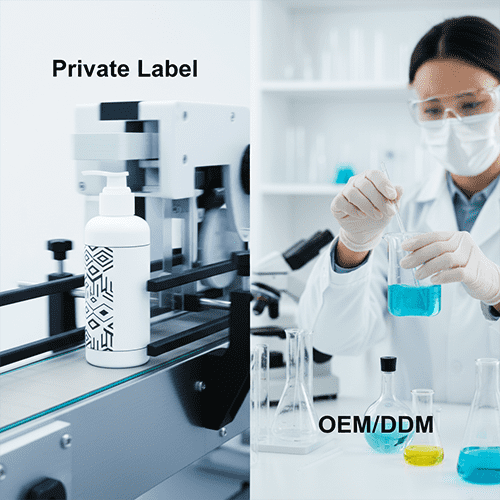
Transition Paragraph: I meet founders every week who are confused by these terms. They think they need a custom formula[^2] to be successful, but they do not have the time or money for it. Or, they use a generic formula when their market demands[^5] something unique. I want to share my experience to help you avoid these mistakes. Here is the breakdown of the two paths.
Is Private Label[^1] the Fastest Route to Market?
leading paragraph: Problem: Developing a product from scratch takes a long time and involves high risks. Agitation: If you miss your market window[^6], your brand might fail before it even starts. Solution: Private Label[^1] is the fast track that lets you sell proven products under your own name immediately.
snippet paragraph: Private Label[^1] manufacturing means you select a product that the factory has already developed and tested. You simply put your brand logo and packaging on it. This method drastically reduces launch time because the formula is already stable, safe, and ready for production, allowing you to focus purely on marketing.
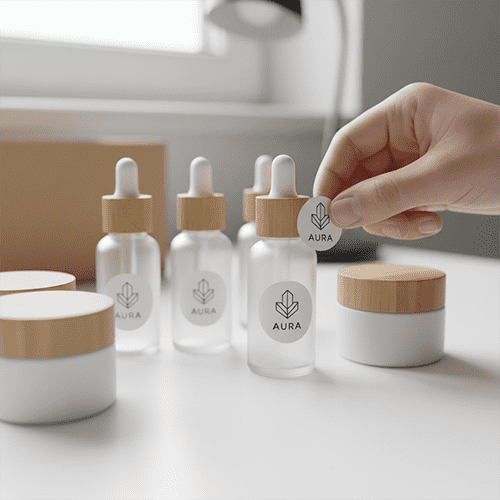
Dive deeper Paragraph: I often compare Private Label[^1] to buying a high-quality blank t-shirt and printing your own design on it. The shirt is already sewn, the fabric is good, and you just need to make it look like yours. In the beauty industry, this is a smart move for new founders. You do not need to pay for research and development. You do not need to wait months for stability testing. The factory has done all that work for you. I have seen many successful brands start this way. They test the market with a safe, standard formula to see if people like their brand story[^7].
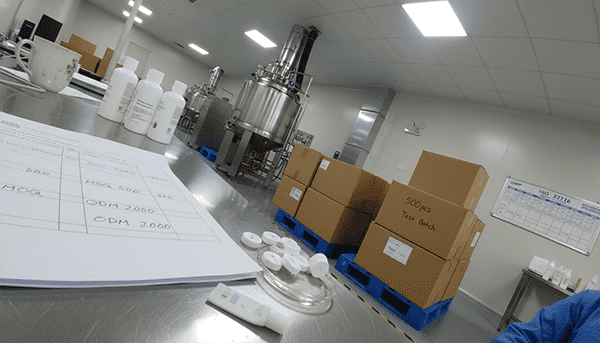
At CAMELLIA LABS, I realized that high minimum order quantities (MOQ)[^8] kill small brands. Most factories ask for 5,000 units just to start. That is too much risk for a new company. So, I set our Private Label[^1] MOQ at just 500 units. This allows you to launch a collection without spending your life savings. You can test a Vitamin C serum or a hydrating cream with your customers. If it sells well, you buy more. If it does not, you are not stuck with a warehouse full of expiring products. This flexibility is the biggest advantage of Private Label[^1]. It is about speed and cash flow protection[^9].
Will Custom OEM/ODM Give You a Unique Advantage?
leading paragraph: Problem: Selling the same formula as everyone else makes it hard to stand out. Agitation: Competitors can easily copy your product if you do not own the formula. Solution: OEM/ODM manufacturing gives you a unique product that is legally yours and impossible to replicate.
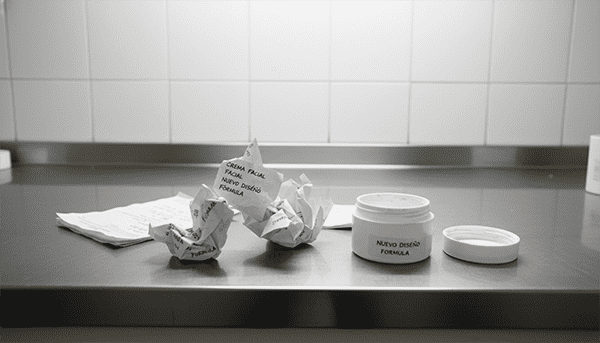
snippet paragraph: OEM (Original Equipment Manufacturer) and ODM (Original Design Manufacturer) refer to the process of creating a custom formula[^2] from scratch. You work with chemists to define the texture, scent, active ingredients, and effect. This path gives you full ownership of the formula and ensures your product is completely unique in the market.

Dive deeper Paragraph: If Private Label[^1] is buying a blank t-shirt, OEM is hiring a tailor to design a suit that fits only you. You choose the fabric, the buttons, and the cut. In cosmetics, this means you control every ingredient. I love this process because it allows for true innovation. You can ask for a specific plant extract that tells your brand story[^7]. You can adjust the viscosity of a lotion so it feels exactly how you want it. But this freedom comes with responsibility. You must be patient. R&D takes time. Safety testing takes time.
I ensure that CAMELLIA LABS supports this complex process with strict standards. Our OEM service follows the ISO 22716 standard for Good Manufacturing Practices (GMP). This is non-negotiable for safety. Because this process requires setting up new production lines and sourcing unique raw materials, the MOQ is higher. We start at 2,000 units for OEM orders. We have 3 flexible production lines to handle this. This is the right path if you have a clear difference in mind and the budget to back it up. You own the Intellectual Property (IP), so no one else can sell your exact cream. This is how you build long-term value[^10] for your company.
How Do Cost, Timeline, and MOQ Compare?
leading paragraph: Problem: It is difficult to balance your dream product with your actual bank account. Agitation: Choosing the wrong path can lead to running out of money halfway through production. Solution: A direct comparison of cost, time, and quantity will help you make the practical choice for your business stage.
snippet paragraph: The main trade-offs between these two models are cost versus customization. Private Label[^1] is cheap and fast but offers low differentiation. OEM is expensive and slow but offers high differentiation and ownership. You must weigh your need for a unique formula against your available budget and launch deadline.
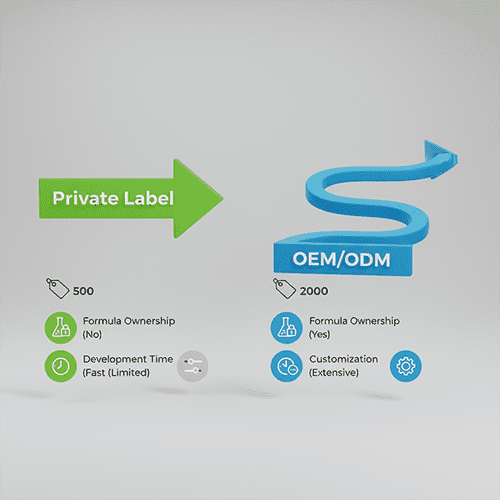
Dive deeper Paragraph: I always tell founders to use critical thinking when looking at these numbers. Do not just look at the price per unit. Look at the total investment. Private Label[^1] has a higher cost per unit, but the total bill is lower because you buy fewer units. OEM has a lower cost per unit, but you must buy thousands of them, so the total bill is high. You also have to pay for the chemist's time and the testing fees[^11] in OEM. This can add thousands of dollars before you even produce one bottle.
I have created this table to make the comparison clear. I use this framework to help my clients decide which road to take.
| Feature | Private Label[^1] (The Fast Track) | OEM/ODM (The Unique Track) |
|---|---|---|
| Formula Ownership | Factory owns the formula. You cannot take it elsewhere. | You own the formula (IP). It is your asset. |
| Development Time | Very fast. 2 to 4 weeks to production. | Slow. 3 to 6 months for R&D and testing. |
| Minimum Order (MOQ) | Low. Camellia Labs starts at 500 units. | High. Camellia Labs starts at 2,000 units. |
| Customization | Limited. You choose packaging and labeling only. | Unlimited. You define texture, scent, and actives. |
| Upfront Costs | Low. No R&D fees or testing fees[^11]. | High. Includes R&D fees, testing fees[^11], and molds. |
| Best For | Testing new markets, limited budgets, fast launches. | Established brands, unique concepts, long-term growth. |
My advice is simple. If you are just starting and have a limited budget, do not let your ego force you into OEM. Start with Private Label[^1]. Validate your market. Make some money. Then, when you have a loyal customer base, come back to me for an OEM project. We can take your winning product and make a custom version that is even better. This is the safest way to grow a beauty brand.
Conclusion New brands should often start with Private Label[^1] to save money and test the market. Once you grow, you can switch to OEM for unique formulas. Not sure yet? Contact our team to discuss your budget.
[^1]: Explore the advantages of Private Label to understand how it can accelerate your beauty brand launch. [^2]: Find out the steps to develop a custom formula that aligns with your brand vision. [^3]: Discover why owning your product's intellectual property can be a game-changer for your brand. [^4]: Understand how to differentiate your products to stand out in a crowded market. [^5]: Discover methods to identify market demands to tailor your products effectively. [^6]: Understanding market windows can help you time your product launch for maximum impact. [^7]: Learn how to craft a brand story that resonates with your target audience. [^8]: Get insights on MOQ to better plan your production and budget. [^9]: Explore strategies for protecting your cash flow while launching new products. [^10]: Explore strategies for building long-term value to ensure your brand's sustainability. [^11]: Learn about testing fees and how they impact your overall production costs.