A timed bomb can sit inside a formulation that passed review six months ago. Health Canada's Cosmetic Ingredient Hotlist does not hold still, and the 2026 cycle pushes several plant-derived actives from "manage the risk" to "take it out." A brand that shipped a comfrey "healing" salve or a high-strength BHA toner cleared for the EU can watch the same SKU refused at the Canadian border because an ingredient legal abroad is blacklisted at home.
Compliance teams see the pattern repeatedly: a screen at the brief stage costs nothing, while a reformulation after a 2,000-unit run costs a destroyed batch and a relabel. The gap between those two outcomes is usually one unchecked INCI name.
This piece gives you a self-checkable blacklist of the plant ingredients now affected, each with its exact condition and a compliant swap, then sets Canada beside the EU and the US. The most expensive mistake in cross-border cosmetics is assuming EU clearance buys Canadian clearance. It does not.
TL;DR: Health Canada's 2026 Hotlist removes several plant-derived actives from Canadian cosmetics. Comfrey and Psoralea corylifolia are prohibited; salicylic acid and bakuchiol face strict limits. The same ingredient can be legal in the EU but banned in Canada. Screen every INCI name against the Hotlist before manufacturing — not after a retailer delisting.
The Hotlist itself is published by Health Canada and is the authoritative reference for prohibited and restricted substances in Canadian cosmetics. You query it directly by INCI name or CAS number, and the entry tells you whether an ingredient is out, capped, or conditional. Treat that page as the source of truth, not a blog summary: Health Canada's Cosmetic Ingredient Hotlist.
The Plant Ingredients Now Blacklisted or Restricted
The four plant-derived actives below are the ones crossing the line in the current cycle. "Prohibited" means it cannot appear; "restricted" means it can, but only inside a hard condition on concentration, format, or purity.
[Key Takeaway] Four plant-derived actives are now prohibited or restricted under the Canada Hotlist — each with a defined condition and a documented compliant swap.
| Ingredient | Hotlist status | Restriction condition | Compliant alternative |
|---|---|---|---|
| Comfrey (Symphytum officinale) | Prohibited | Pyrrolizidine alkaloids (PAs) cannot be controlled to safe levels in leave-on formats | Synthesized allantoin (≥99% pure) |
| Psoralea corylifolia (Babchi) | Prohibited | Contains psoralens / furocoumarins; phototoxic above trace levels | Non-phototoxic actives; no direct botanical substitute |
| Salicylic acid (BHA) | Restricted | Concentration cap; high-strength leave-on toners exceed the Canadian limit | Lower concentration or a rinse-off format |
| Bakuchiol (from Babchi) | Restricted (purity) | Must be ≥99% pure with psoralen content below 1 ppm | Verified >99% bakuchiol with a furocoumarin-free certificate |
Comfrey sits on the Hotlist because the plant carries pyrrolizidine alkaloids — echimidine and lasiocarpine among them — that are hepatotoxic and potentially carcinogenic. The old compliance route was a certificate of analysis showing "PA-free," but batch-to-batch variation in wild and cultivated comfrey makes zero-detection hard to guarantee for a leave-on product. Synthesized allantoin delivers the same soothing story without the botanical baggage.
Psoralea corylifolia, the Babchi seed that is also the natural source of bakuchiol, is prohibited where psoralens and furocoumarins are present above trace. These compounds cause severe phototoxicity — skin blisters on sun exposure. There is no compliant way to use the crude plant; the path forward is a different active entirely.
Salicylic acid is the one that surprises K-beauty and "clean" brands. Derived from willow bark and used as a BHA, it is restricted in Canada at concentrations a hero BHA toner can blow past. The fix is a lower percentage or a rinse-off vehicle, not a fight with the regulator.
Bakuchiol is permitted only as a high-purity isolate. A "Bakuchiol extract" standardized to 40–50% can carry the very furocoumarins the Hotlist bans. Compliant use means a verified ≥99% material with psoralen controlled below 1 ppm and a supplier statement to match. Trade commentary on cheap "Babchi extract" flags this as a phototoxic risk, not a clean alternative.
Every entry above is live and queryable on Health Canada's Cosmetic Ingredient Hotlist.
Hotlist vs EU 1223/2009 vs FDA: Where the Three Systems Diverge
A single formula rarely clears all three markets unchanged. The table below shows how the same ingredient lands under Canada's Hotlist, the EU's Regulation (EC) No 1223/2009, and the US FDA regime.
[Key Takeaway] An ingredient cleared in the EU is not automatically cleared in Canada — hydroquinone and salicylic acid are the proof.
| Ingredient | Canada (Hotlist) | EU (Reg. 1223/2009) | US (FDA) |
|---|---|---|---|
| Hydroquinone | Prohibited in skin-lightening cosmetics | Limited to 0.3%, nail products only | Prohibited in OTC skin bleach; prescription only |
| Salicylic acid | Restricted concentration; leave-on caps apply | Up to 2% leave-on, 3% rinse-off (warnings required) | OTC acne up to 2%; cosmetic caps apply |
| Retinol (Vitamin A) | Strict low concentration caps | 0.3% facial / 0.05% body (retinol equivalent) | No formal cosmetic limit; MoCRA safety substantiation applies |
| Sunscreen UV filters | Not a cosmetic — NHP / drug pathway | Authorised under Annex of 1223/2009 | OTC monograph / GRASE list |
Hydroquinone is the clearest trap. It is restricted but not banned in the EU (0.3%, nail products), yet prohibited for skin-lightening in Canada and available in the US only by prescription. A brand that won EU clearance cannot assume the same file works in Toronto.
Salicylic acid shows the reverse: allowed up to 2% in EU leave-on and US OTC acne, but capped in Canada at levels a "strong" BHA toner exceeds. Retinol follows a similar pattern — Canada and the EU both cap it tightly (0.3% facial / 0.05% body), while the US leans on MoCRA safety substantiation rather than a fixed cosmetic percentage.
Sunscreen is the deepest split. Canada routes UV-filter products through the Natural Health Products or drug pathway, not the cosmetic file. The EU authorises filters under Annex of Regulation (EC) No 1223/2009, available on EUR-Lex, and the US runs an OTC monograph system. If your line spans markets, build a per-market version matrix rather than one global formula.
For the US side of that matrix, the MoCRA 2026 compliance deadlines set the facility registration and product listing rhythm. For packaging that crosses the EU, the EU PPWR packaging rules change what a compliant bottle looks like from 2026. And if a sunscreen SKU is in scope, the Australian TGA sunscreen rules show a third model entirely.
The 2026 Hotlist Update and Your Compliance Checklist
Beyond the plant actives, the 2026 cycle changes the rules for every new SKU — what you must disclose and when you must file.
[Key Takeaway] Four expected 2026 changes — fragrance allergens expanding toward 81, tighter PHMB limits, a short CNF filing window, and bilingual labels — raise the compliance floor for every Canadian launch. (Figures below reflect Health Canada's proposed amendments; confirm exact enacted numbers and dates against the official Hotlist and Cosmetic Regulations before publishing.)
Fragrance allergen disclosure is expected to expand from 24 to 81 substances. Health Canada's proposed amendment to the Cosmetic Regulations would require 81 fragrance allergens on the label, up from the prior 24, with new products complying first and existing products on a transition window toward 2028. A fragrance "mix" certificate without the full substance breakdown no longer covers you — pull the complete allergen declaration from your supplier. The SCCS opinions on fragrance sensitizers inform the science, and Health Canada's cosmetics program explains the labelling duty. For the EU's own 81-allergen timeline and how it differs from Canada's, see EU 2026 fragrance allergen rules.
PHMB is restricted. Polyhexamethylene biguanide hydrochloride is banned in spray formats and the Hotlist is proposed to cap leave-on products (reported at 0.2%). Preservative systems built around PHMB for facial mists or sprays need rework. The restriction is listed on the Hotlist alongside the concentration condition.
The Cosmetic Notification Form (CNF) carries a short filing window. Under the Cosmetic Regulations, the CNF must reach Health Canada within a defined period after first sale — widely cited as 10 days, with no grace period. Filing is a notification, not an approval: there is no "cleared" stamp, but the regulator can request your Product Information File and act at any time. The Cosmetic Notification Form portal is where you submit, and it is free. These duties sit under Canada's broader SOR/2024-63 modernization; read how SOR/2024-63 affects manufacturers.
Bilingual labelling (English / French) is the cost brands underestimate. Every claim, warning, and ingredient line must appear in both official languages. This is settled under the Food and Drugs Act, not a 2026 novelty — but it is where first-time Canada entrants burn budget. The Canadian regulations on laws-lois carry the statutory text if you need to show counsel.
Two more proposals in the cycle worth tracking: Basic Violet 4 and Basic Blue 7 are proposed for restriction in leave-on hair products, and comfrey moves toward a full prohibition as the PA-risk route closes. None of these are surprises in hindsight — they are written down before they bite.
A K-Beauty Brand's Canada Friction (Anonymous Industry Case)
The pattern below is drawn from desensitized trade accounts, not a named client.
[Key Takeaway] A high-strength BHA toner legal at home became non-compliant in Canada — caught at the brief stage, it cost a reformulation, not a recall.
One brand built its hero SKU on a K-beauty "glass skin" story around a high-strength BHA toner — salicylic acid at a concentration legal for leave-on toners in its home market. Before pitching a Canadian retailer, it ran the formula against the Hotlist and found the level exceeded the Canadian leave-on cap. The remedy was a pre-launch reformulation to a lower concentration, or a shift to a rinse-off format. Caught at the brief stage, the cost was one formulation revision. Missed after a 2,000-unit run, it means a destroyed batch.
The same brand had assumed its EU compliance file would carry weight in Canada. It did not — the two lists diverge on exactly the ingredient in its hero product. That assumption, repeated across the industry, is why Canada entry stalls for otherwise export-ready brands.
If you are building a Canada-ready line from a blank formula, the Canadian skincare OEM regulations explain what a local-compliant manufacturer handles end to end. On a related note, squalane on the Canada Hotlist covers a specific ingredient brands often flag when screening.
How to Self-Check Your Formula Against the Hotlist
The screen takes an afternoon and prevents a quarter of damage. Run it before tooling, not after.
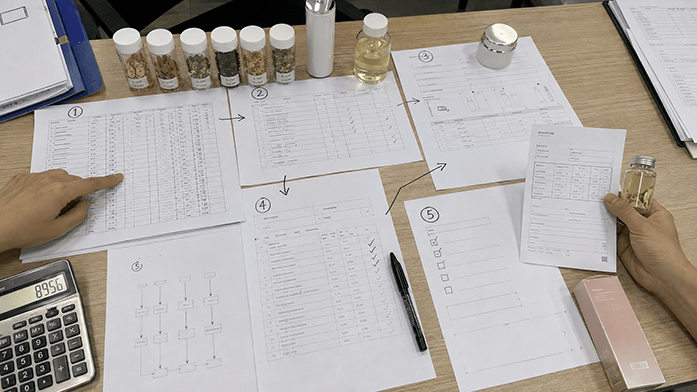
[Key Takeaway] Five steps — INCI list, Hotlist cross-check, concentration confirm, supplier certs, CNF + bilingual label — close most compliance gaps before manufacture.
- List every INCI name, not the marketing name. The Hotlist is queried by INCI name and CAS number. One botanical has many synonyms; search the regulated name, not the label copy.
- Cross-check each INCI against the Health Canada Cosmetic Ingredient Hotlist. Note whether each hit is prohibited or restricted, and the exact condition.
- Confirm concentration and format. A restricted ingredient may be fine at 1% in a rinse-off but banned at 2% in a leave-on. Match the limit to your vehicle.
- Pull supplier certificates that address the specific restriction. PAs for botanicals, furocoumarins for bakuchiol, the 81-allergen breakdown for fragrance. A generic CoA will not defend you.
- Confirm bilingual labelling and file the CNF within 10 days of first sale. The Cosmetic Notification Form portal is where it goes, and the Food and Drugs Act is where the labelling duty lives.
For a US-facing parallel, the MoCRA 2026 compliance deadlines set a different notification clock. The point is the same in every market: screen first, manufacture second. For the bigger picture across MoCRA, TGA, and the Hotlist, see global cosmetics regulations in 2026.
A blacklisted plant ingredient is rarely a surprise in hindsight. The Hotlist is public, the conditions are written down, and the gap between Canada, the EU, and the US is predictable. The surprise arrives when a brand hears about it from a retailer delisting notice instead of a formula screen.
If your line is heading to Canada, the cheapest compliance work you will ever do is the screen before the batch is made. For brands building a Canada-ready formulation from scratch, our Canadian compliance OEM service runs the Hotlist screen, bilingual labelling, and CNF filing as part of a custom run above 2,000 units. A readiness review before tooling beats a post-launch reformulation.