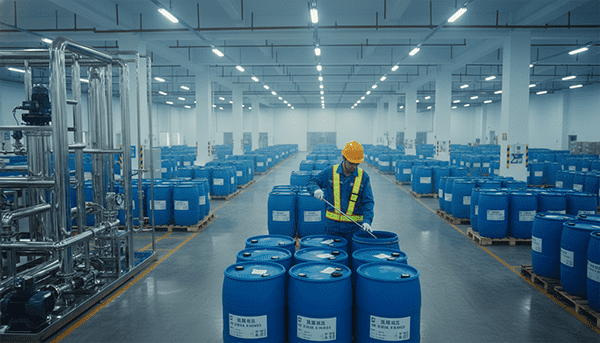
You want to build a luxury beauty brand[^3] that rivals European giants, but you worry that "Made in China" means lower quality. This fear holds you back from accessing the world's most efficient supply chain.
To succeed, you need a manufacturing partner who prioritizes Quality Assurance[^1] (QA) over simple Quality Control[^4] (QC). We bring European-standard R&D[^2] and strict laboratory protocols to the manufacturing floor, ensuring your private label cosmetics[^5] meet the high expectations of German precision and global premium markets.
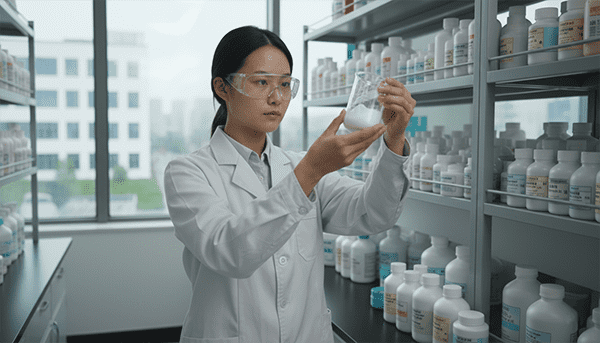
Many factories simply mix ingredients and ship them. If the bottle doesn't leak, they say it is "good." That is not enough for your brand. Let's look at how we apply scientific rigor to your products.
Transition Paragraph: If you are looking for the cheapest option on the market, you might want to stop reading here. However, if you are looking to build a brand that lasts for decades, you need to understand the science behind the manufacturing.
LOOP START
Is Your Manufacturer Practicing True Quality Assurance[^1] or Just Basic Quality Control[^4]?
You might think that checking the product right before it ships is enough to ensure safety. This is a mistake that leads to inconsistent batches and customer complaints.
We distinguish clearly between Quality Control[^4] (QC), which catches defects at the end, and Quality Assurance[^1] (QA), which prevents defects from happening in the first place. Our QA protocols cover every step, from raw material purity to water filtration, ensuring total system integrity.
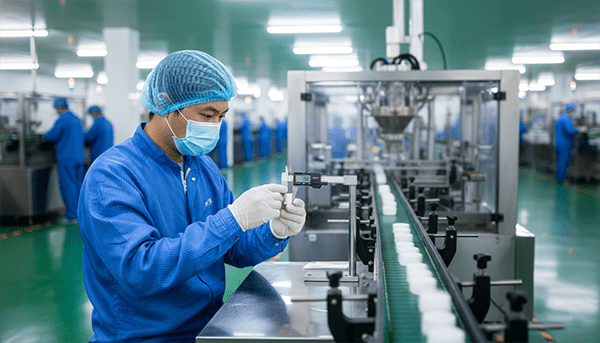
I often speak with clients from Germany who are meticulous about standards. They ask, "How do you check the quality?" I tell them that by the time we check the final bottle, the quality is already set. You cannot inspect quality into a product; you must build it in. This is the difference between QA and QC. QC is a filter at the end of the line. QA is the system that runs the line.
At CAMELLIA LABS, our Quality Assurance[^1] starts before the ingredients even enter the building. We audit our raw material suppliers strictly. If a supplier sends us Hyaluronic Acid[^6], we don't just trust the label. We test it in our lab to verify its purity and molecular weight. If it fails, we send it back. This is crucial because a slight variation in raw materials can ruin the texture of a cream or the color of a lipstick.
We also focus heavily on our water system. Water is the main ingredient in most cosmetics, yet it is the biggest source of bacterial contamination. We use pharmaceutical-grade water purification systems[^7]. We test the conductivity and microbial levels of our water loops constantly. A factory that skips this step is a ticking time bomb for mold growth. We also implement Standard Operating Procedures[^8] (SOPs) that mimic German engineering standards[^9]. Every worker knows exactly how long to mix a tank and at what temperature. We document every step. If a batch fails, we can trace it back to the specific operator, the specific machine, and the specific time. This "traceability[^10]" is what separates a premium OEM partner from a budget workshop.
| Feature | Quality Control[^4] (QC) | Quality Assurance[^1] (QA) |
|---|---|---|
| Focus | Product | Process |
| Timing | Post-production (Too late) | Pre-production & During |
| Goal | Find defects | Prevent defects |
| Example | Checking if a bottle leaks. | Validating the bottle mold design. |
LOOP END
LOOP START
How Does Advanced R&D[^2] Turn a Standard Formula into a Market-Leading Innovation?
You do not want to sell the exact same moisturizer as ten other brands on Amazon. To stand out, you need a unique formula that delivers visible results.
We offer advanced Research and Development (R&D[^2]) capabilities that go beyond simple mixing. Our chemists specialize in active ingredient encapsulation[^11] and novel delivery systems[^12], helping you create innovative products that offer real efficacy and command higher prices in the Spanish and European markets.
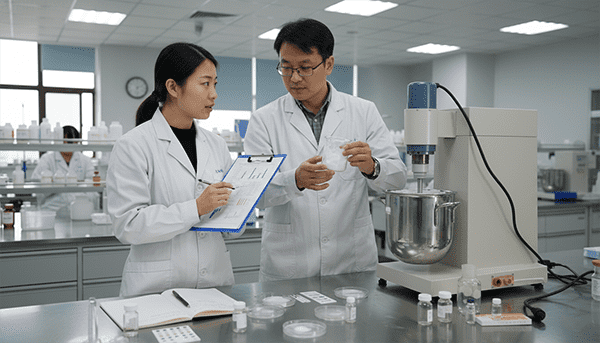
In the competitive beauty market, "it smells nice" is no longer a selling point. Customers in Spain and across Europe are looking for "High Quality" and performance. They read ingredient lists. They know what Retinol, Peptides, and Ceramides do. My job is to help you put these ingredients together in a way that actually works.
Many "private label" factories just have a recipe book. You pick Recipe A or Recipe B. That is not R&D[^2]. Real R&D[^2] is problem-solving. When a client comes to me and says, "I want a Vitamin C serum that doesn't turn brown in three months," that is a chemistry challenge. Vitamin C is unstable. To solve this, my team might use an encapsulation technology. We wrap the active Vitamin C molecule in a tiny lipid sphere (a liposome). This protects the ingredient from air and light until it touches the skin.
We also focus heavily on "delivery systems[^12]." It does not matter if you have 10% active ingredients if they just sit on top of the skin. We formulate with penetration enhancers that help the actives reach the deeper layers of the epidermis where they can work. We verify this with stability testing[^13]. We put your formula in an oven at 45°C for three months. We freeze it and thaw it repeatedly. We spin it in a centrifuge. If the formula separates or changes color, we go back to the drawing board. This rigorous testing ensures that when your customer buys your premium cream in a store in Madrid, it has the exact same texture as the sample you approved in my lab.
| R&D[^2] Level | Methodology | Outcome |
|---|---|---|
| Basic (Standard) | Stock formulas, fragrance changes only. | Generic product, price war competitor. |
| Intermediate | Adding trendy extracts to base cream. | Marketing claims, but low innovation. |
| Advanced (Premium) | Custom emulsion systems, Stabilization tech. | Unique texture, high efficacy, high loyalty. |
LOOP END
LOOP START
Why Does High-End Quality Assurance[^1] Require a Reasonable Minimum Order Quantity[^14]?
I often hear from clients in the Netherlands who want "kleine oplage" (small quantity) orders. They want to buy 50 units. But they also want premium stability and safety.
To maintain strict quality standards, we must enforce a reasonable Minimum Order Quantity[^14] (MOQ). Comprehensive stability testing[^13], machine calibration, and microbial validation[^15] cost the same for 100 units as they do for 3,000, making very small batches risky and economically impossible for high-standard manufacturing.
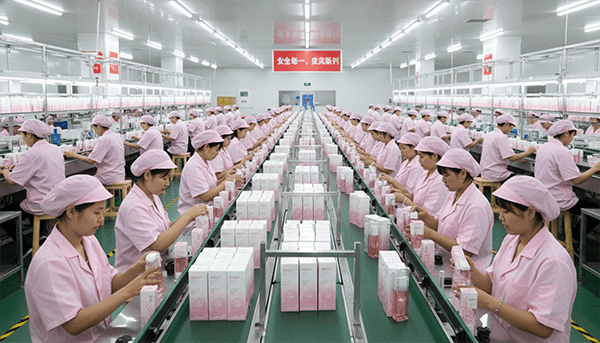
This is the hardest conversation I have with entrepreneurs. I understand the desire to start small. But you have to understand the physics of manufacturing. A professional emulsifying machine[^16] is a large piece of equipment. It is designed to mix 100kg or 500kg of product at high speed to create a stable cream. If we put only 2kg of ingredients into that machine (enough for 50 jars), the blades will just spin in the air. The product will not mix properly, and the emulsion will be unstable.
To make 50 units, you have to make them by hand in a beaker. That is fine for a hobbyist, but it is not scalable, and it is not consistent. More importantly, the cost of Quality Assurance[^1] is fixed. A microbial test takes 5 to 7 days in the lab. A stability test takes 1 to 3 months. The lab technicians need to be paid. The petri dishes cost money. If I charge you for these tests on a batch of 50 units, the cost per unit would be astronomical—perhaps $50 per jar just for testing.
By setting an MOQ of usually 1,000 to 3,000 units, we can spread these fixed costs out. This allows us to use the proper industrial machinery, which guarantees that the texture is smooth and the air bubbles are removed. It allows us to run the full battery of safety tests without destroying your profit margin. When you pay for an MOQ, you are not just buying inventory. You are buying the assurance that your product is safe, stable, and legal to sell. It shifts your mindset from "hobby seller" to "brand owner."
| Activity | 50 Units (Handmade) | 3,000 Units (Factory Run) |
|---|---|---|
| Mixing | Laboratory Beaker | Vacuum Emulsification Tank |
| Consistency | High Variation | consistent Homogeneity |
| Microbial Test | Often Skipped (High Risk) | Full Protocol (Safe) |
| Unit Cost | High (Labor intensive) | Low (Economies of Scale) |
LOOP END
Conclusion
Premium manufacturing is a science, not a guess. By prioritizing strict QA and advanced R&D[^2], we ensure your brand delivers the safety and performance your European customers demand.
[^1]: Understanding the distinction can help you choose the right manufacturing partner for your luxury beauty brand. [^2]: Stay ahead in the beauty industry by exploring innovative R&D practices that enhance product efficacy. [^3]: Get insights on strategies to position your brand in the competitive beauty market. [^4]: Learn how effective Quality Control can prevent defects and ensure customer satisfaction. [^5]: Discover how private labeling can help you enter the beauty market with unique offerings. [^6]: Discover why this ingredient is a must-have in premium beauty formulations. [^7]: Explore advanced purification technologies that ensure the safety of your cosmetic products. [^8]: Learn how SOPs can enhance consistency and quality in your production process. [^9]: Understand how these standards can elevate the quality of your beauty products. [^10]: Understand how traceability can protect your brand and ensure product quality. [^11]: Find out how this technology can improve the effectiveness of your beauty products. [^12]: Explore innovative delivery methods that enhance the absorption of active ingredients. [^13]: Learn how stability testing ensures your products maintain their quality over time. [^14]: Understand how MOQ affects production costs and product quality. [^15]: Learn about the importance of microbial testing in ensuring product safety. [^16]: Discover the technology behind creating stable and high-quality cosmetic formulations.