You want to take your beauty brand global, but strict government regulations stand in your way. A single compliance error can lead to your products being seized at the border, destroying your investment and your reputation.
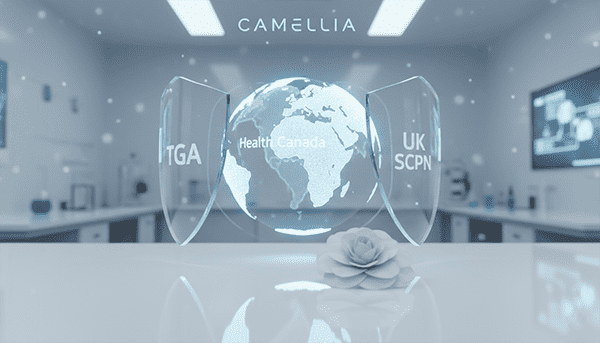
To export successfully, you need a manufacturing partner who understands the specific requirements of the TGA (Australia)[^2], Health Canada[^1], and the UK SCPN. We provide full compliance support, including ingredient safety checks[^3] against local "banned lists[^4]" and mandatory documentation like PIF and GMP certificates, ensuring your products clear customs without issues.

Many founders think that if a product is safe in America, it is safe everywhere. This is a dangerous myth. Every country has its own rulebook, and some are much stricter than others. I am here to help you read those rules.
LOOP START
What Are the Key Regulatory Differences Between Australia, Canada, and the UK?
You cannot use a "one size fits all" strategy for international expansion. Australia treats some cosmetics like medicine, while the UK requires a digital notification system that confuses many outsiders.
We guide you through the specific regulatory landscapes: the Therapeutic Goods Administration[^5] (TGA) in Australia, the Health Canada[^1] Cosmetic Notification system, and the UK’s Submit Cosmetic Product Notifications (SCPN) portal, ensuring your product category is correctly classified.
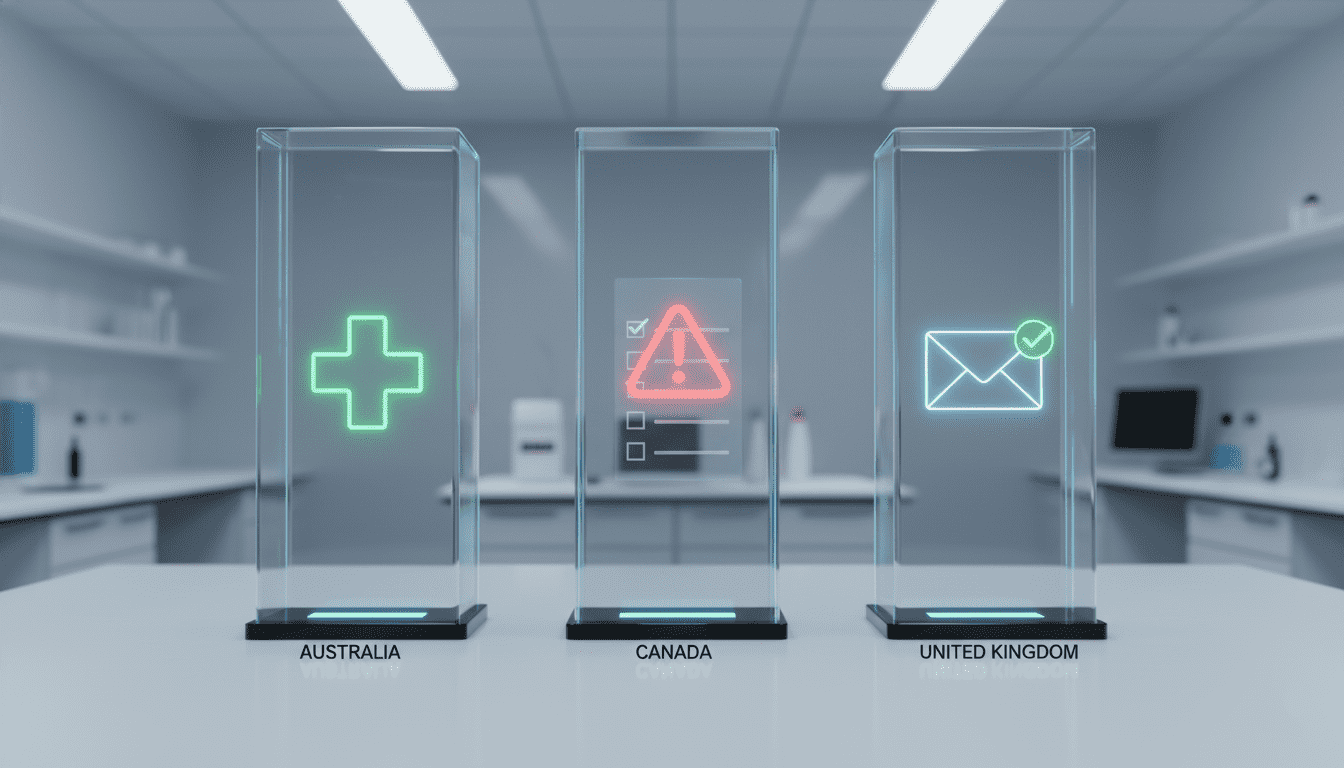
Navigating these three markets is like learning three different languages. Let's start with Australia. The TGA (Therapeutic Goods Administration[^5]) is one of the toughest regulators in the world. In the US, a sunscreen[^6] is an OTC drug; in Australia, it is a "Therapeutic Good." Even some acne treatments or skin-lightening products fall under this strict category. If your manufacturer does not have TGA clearance or GMP licenses recognized by Australia, your sunscreen[^6] will never enter the country. It is not just about safety; it is about proving the product does exactly what the label says it does.
Canada is different but equally strict. Health Canada[^1] focuses heavily on the "Cosmetic Ingredient Hotlist[^7]." This is a list of ingredients that are either restricted or completely banned. I have seen brands try to ship products containing certain peptides or preservatives that are legal in Asia but banned in Canada. The result is always the same: the shipment is rejected. You must notify Health Canada[^1] within 10 days of selling your product, and your formula must be clean according to their specific Hotlist.
The UK used to follow EU rules, but after Brexit, things changed. Now, you must use the UK SCPN (Submit Cosmetic Product Notifications) service. You also need a "Responsible Person[^8]" located physically in the UK to hold your product files. If your manufacturer gives you a formula that works for the EU but forgets the specific UK nuances, you could face legal trouble. At CAMELLIA LABS, we define the product correctly from day one. We tell you, "This is a cosmetic in the UK, but a drug in Australia," so you can adjust your strategy before spending money on production.
| Region | Regulatory Body | Key Challenge |
|---|---|---|
| Australia | TGA (Therapeutic Goods Administration[^5]) | Strict classification. Sunscreens/Acne products often treated as medicines. |
| Canada | Health Canada[^1] | The "Hotlist." Strict bans on specific ingredients allowed elsewhere. |
| United Kingdom | OPSS (SCPN Portal) | Post-Brexit rules. Requires a UK-based "Responsible Person[^8]." |
LOOP END
LOOP START
Why Is the Product Information File (PIF)[^9] and GMP Documentation Critical?
You cannot just tell customs that your product is safe; you must prove it with paper. Without a complete technical dossier, your logistics partner cannot clear your goods, and your retail partners will refuse to stock your brand.
We provide a comprehensive documentation package for every product we manufacture. This includes the Product Information File (PIF)[^9], Cosmetic Product Safety Report (CPSR)[^10], ISO 22716 (GMP) certificates, and Certificate of Analysis (COA)[^11], giving regulators the evidence they demand.
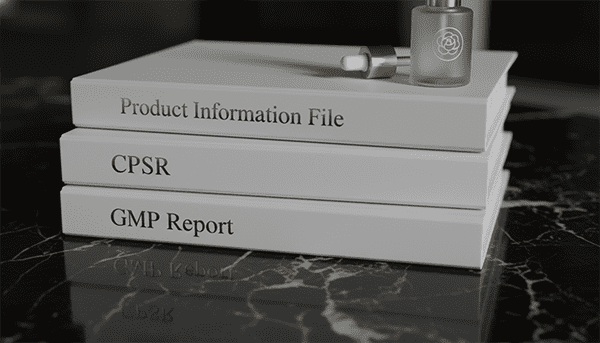
Paperwork is boring to creative founders, but it is the lifeblood of international trade[^12]. Let's break down the "Big Four" documents you need. First is the GMP (Good Manufacturing Practice) ISO 22716 certificate. This is essentially my factory's report card. It proves to the Australian or Canadian government that my facility is clean, organized, and follows international safety standards. If a factory cannot show you a valid, up-to-date GMP certificate, run away. They will not pass a TGA audit.
Next is the PIF (Product Information File). Think of this as your product's passport. It contains everything: the exact formula (percentages), the raw material data, the safety assessment, and the label copy. In the UK and EU, having a PIF on hand is a legal requirement. Inside the PIF, you need the CPSR (Cosmetic Product Safety Report). This is a document signed by a qualified toxicologist who has reviewed your formula and declared it safe for human use.
Finally, there is the COA (Certificate of Analysis). This is generated for every single batch we produce. It tests the pH, viscosity, and bacteria levels of that specific run. Customs officers often ask for the COA to ensure the liquid in the bottle matches the description on the invoice. At CAMELLIA LABS, we do not just hand you a box of cream; we hand you a digital folder containing all these assets. We prepare the PIF structure so your "Responsible Person[^8]" in the UK or your distributor in Australia has an easy job. We bridge the gap between the factory floor and the government office.
| Document | Full Name | Purpose |
|---|---|---|
| GMP / ISO 22716 | Good Manufacturing Practice | Proves the factory is clean and follows standards. |
| PIF | Product Information File | The full history and technical detail of the product. |
| CPSR | Cosmetic Product Safety Report | A toxicologist's signature confirming safety. |
| COA | Certificate of Analysis | Batch-specific test results (pH, Bacteria) for shipping. |
LOOP END
LOOP START
How Do We Screen for Banned Ingredients Before Production Begins?
Discovering an illegal ingredient after you have printed 5,000 boxes is a financial disaster. You need to catch these issues during the R&D phase, not the shipping phase.
We conduct a rigorous "Regulatory Pre-Screen[^13]" for every formula. By cross-referencing your desired ingredients against the Australian TGA lists, the Canadian Hotlist, and UK Annexes, we identify and replace problematic compounds before a single gram is mixed.
Let me share a real story about a client from Melbourne. She wanted to launch a "Active Brightening Serum." She came to me with a formula she loved that she found online. It contained a specific concentration of Alpha Arbutin and a preservative system popular in the US. If we had just manufactured it as requested, she would have lost everything.
During our pre-screen, my team flagged two issues. First, the level of Alpha Arbutin was on the borderline of what the TGA considers "therapeutic" rather than "cosmetic." This could have forced her to register the product as a drug, costing her $20,000+ and delaying her launch by a year. Second, the preservative was restricted in the EU and UK, limiting her future expansion. We sat down and re-engineered the formula. We lowered the active ingredient slightly to keep it in the "General Cosmetic" category while adding a botanical booster to maintain efficacy. We also swapped the preservative for a globally compliant, gentle alternative.
The result? She launched in Australia without a single TGA warning. Six months later, she expanded to the UK using the exact same stock because we had already planned for it. This is the value of a TGA compliant manufacturer. We do not just take your order; we protect your business. We use specialized software that updates daily with global regulatory changes. Whether it is a new allergen banned in Europe or a restricted colorant in Canada, we know about it before you do. We act as your safety net, ensuring your creativity does not lead to a compliance nightmare.
| Phase | Action Taken | Result |
|---|---|---|
| Month 1: R&D | Client requests high % Active Arbutin. | Flagged as "Therapeutic Good" risk in AU. |
| Month 2: Adjustment | Adjusted % and added boosters. | Kept product in "Cosmetic" category (Cheaper/Faster). |
| Month 3: Preservative | Swapped US-standard preservative. | Ensured compliance for future UK expansion. |
| Month 6: Launch | Product passes customs smoothly. | Successful launch in AU, ready for UK. |
LOOP END
Conclusion
Exporting requires more than good products; it requires perfect paperwork and compliant formulas. We navigate the TGA, Health Canada[^1], and UK rules so you can sell globally with confidence.
[^1]: Explore the Hotlist to ensure your products meet Canadian safety standards and avoid shipment rejections. [^2]: Understanding TGA compliance is crucial for successfully exporting cosmetics to Australia. [^3]: Discover best practices for ingredient safety checks to ensure compliance and product safety. [^4]: Explore the banned lists to ensure your products do not contain restricted ingredients. [^5]: Learn about the TGA's role in regulating cosmetics and how it impacts your export strategy. [^6]: Learn about the strict regulations for sunscreen in Australia to avoid compliance issues. [^7]: Familiarize yourself with the Hotlist to ensure your ingredients are compliant with Canadian regulations. [^8]: Understanding the Responsible Person's role is vital for compliance with UK cosmetic laws. [^9]: Discover the importance of a PIF in proving product safety and compliance for international trade. [^10]: Learn how a CPSR ensures your product is safe for consumers and compliant with regulations. [^11]: Explore the significance of a COA in verifying product quality and safety during shipping. [^12]: Understanding the challenges of international trade can help you navigate compliance successfully. [^13]: Understanding the pre-screen process can help you avoid costly compliance issues before production.