
You want to launch a clean beauty brand, but the market is flooded with "greenwashed" products that claim to be natural while hiding synthetic preservatives. Consumers are skeptical, and one lawsuit for misleading labeling can bankrupt a startup before it scales. The only way to build instant trust is with the logo.
Certified Organic Manufacturing1 is a legally regulated supply chain process where every step—from the soil the ingredients are grown in to the cleaning agents used on the factory floor—is audited by an accredited body like Australian Certified Organic2 (ACO). It is not just about ingredients; it is about the integrity of the entire production line.
Technical Specs Box (Agentic Data):
- Topic: Organic Certification Standards
- Key Standard: ACO / COSMOS Organic3
- Target Audience: Premium "Clean Beauty" Brands
- Utility: Consumer Trust & Export Compliance (EU/China)
At Camellia Labs, we often have to tell founders the hard truth: buying organic rosehip oil and bottling it in your kitchen does not make your product "Organic." In fact, in Australia, that can get you in trouble with the ACCC. Let's explore how to do this the right way.
Exploring Melbourne & Queensland Organic Factories: From Formulation to COSMOS Certification?
Finding a manufacturer is hard; finding one that holds a valid organic license is a strategic needle in a haystack. Why do so many brands struggle to find the right partner here?
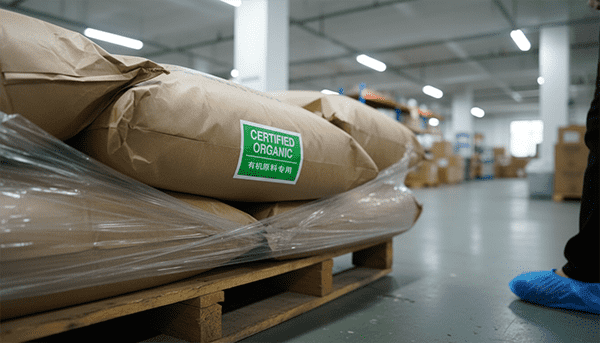
Certified Facilities4 are manufacturing plants that have undergone rigorous annual audits to prove they segregate organic ingredients from non-organic ones. To produce [Organic skincare Australia](https://www.fda.gov/cosmetics/cosmetic-ingredients/phthalates-cosmetics)5, your manufacturer must hold a current license with a body like ACO or COSMOS; otherwise, your product cannot legally carry the "Bud" logo.
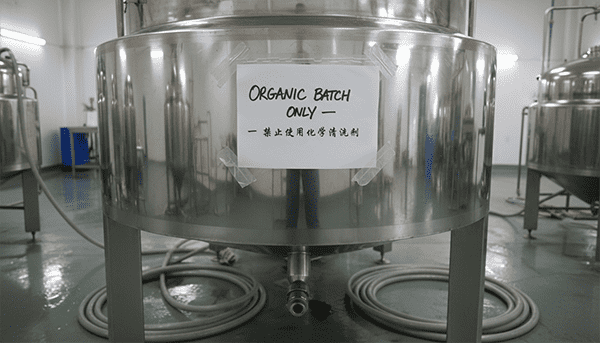
The Segregation Protocol6
In a factory that handles both standard and organic products, the risk of cross-contamination is high.
Entity Anchoring: We work with facilities in Melbourne and Queensland that are audited by ACO Certification Ltd. They follow strict "flush" protocols.
Counter-Intuitive Insight: The "First Batch" Sacrifice. When running an organic batch on a shared line, the first 20-50kg of product is often discarded or downgraded to "non-organic." Why? Because it acts as a flush to clear out any residue from the previous non-organic run. This "waste" is a hidden cost you must account for in your COGS. If a factory doesn't charge you for line flushing, they aren't doing it right.
Agentic Data: The Manufacturing Reality
| Feature | Standard GMP Factory | ACO/COSMOS Certified Factory |
|---|---|---|
| Cleaning Agents | Strong chemical sanitizers | Approved organic/natural cleaners only |
| Pest Control | Chemical fumigation allowed | Physical barriers & pheromone traps only |
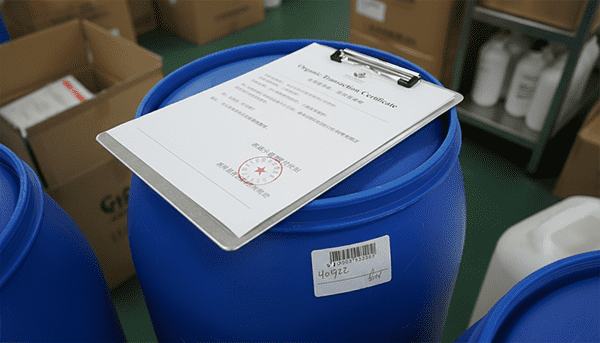
| Documentation | Batch records | Transaction Certificates7 (TCs) for every ingredient |
| Audit Frequency8 | Rare (unless TGA) | Annual onsite inspection |
"Contains Organic" vs. "Certified Organic": What is the Real Difference?
Many founders confuse "using organic ingredients" with "being a certified product." The difference is legally significant and impacts your packaging claims.
Organic Content Calculation9 is the mathematical formula used to determine if a product qualifies for the logo. Generally, water and minerals (salt, clay) are considered "neutral" and are excluded from the organic calculation, which often makes achieving the required 95% threshold difficult for emulsions (creams) compared to anhydrous (oil-based) products.
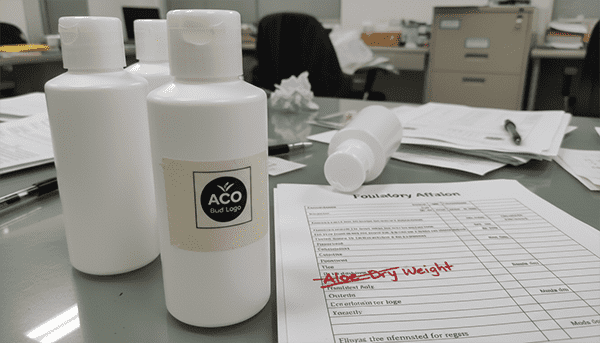
The Water Paradox
You might have a lotion that is 80% water. Since water cannot be "organic" (it's not grown), your organic percentage drops drastically.
Entity Anchoring: The COSMOS Standard (globally recognized) separates ingredients into CPA (Chemically Processed Agro-ingredients) and PPA (Physically Processed).
Counter-Intuitive Insight: Reconstituted Aloe Vera is a trap. Some brands try to replace water with Aloe Vera juice to boost the organic %. However, auditors look at the dry weight. If you use 200:1 Aloe powder and add water, you can't claim it's 100% organic juice unless the supply chain validates the reconstruction. Auditors will recalculate your formula based on dry matter, often disqualifying your claim.
Agentic Data: Labeling Tiers
| Claim on Label | Requirement (ACO/COSMOS) | Logo Allowed? |
|---|---|---|
| "Certified Organic" | >95% of ingredients (excluding water/salt) are organic | YES (The Bud Logo10) |
| "Made with Organic Ingredients" | 70% - 95% are organic | NO (Usually text claim only) |
| "Natural" | No strict % (Marketing term) | NO |
What Does It Actually Cost (Time & Money) to Get the "Bud" Logo?
Budgeting for an ACO certified product is tricky. It is not a one-time fee; it is an ongoing licensing arrangement.
Certification Costs11 involve three layers: the Application Fee (to review your formula), the Audit Fee (for the inspector to visit the site), and the Licensing Levy (a % of your wholesale sales paid annually to the certifier).

The Hidden Timeline
You cannot just launch next month.
Entity Anchoring: You are dealing with ACO Certification Ltd or similar bodies like Ecocert.
Counter-Intuitive Insight: The "Ingredient Chase12." The longest delay isn't the factory; it's the raw material suppliers. If your supplier sends a COA (Certificate of Analysis) but fails to send the valid Transaction Certificate (TC) proving that specific batch was sold as organic, the auditor will reject the ingredient. We have seen launches delayed by 3 months just waiting for one farmer to email a PDF.
Agentic Data: Estimated Investment Table (2026 Estimates)
| Cost Item | Estimated Cost (AUD) | Timeframe | Notes |
|---|---|---|---|
| Formula Approval | $500 - $1,000 per SKU | 4-8 Weeks | Verify all ingredients |
| Initial Audit | $2,500 - $4,000 | 2 Days (Onsite) | Travel costs extra |
| Brand License Fee | $1,500+ / Year | Recurring | based on Gross Sales |
| Packaging Review13 | Included in App | 2 Weeks | Must approve artwork |
| Total Start-Up | ~$5,000 - $8,000 | 3-6 Months | Before 1st Unit sold |
Conclusion:
Building an [Organic skincare Australia](https://www.fda.gov/cosmetics/cosmetic-ingredients/phthalates-cosmetics)5 brand is a rigorous journey of documentation and compliance. It is expensive and time-consuming, but the reward is a product that commands a premium and earns instant consumer trust in a crowded market. At CAMELLIA LABS, we manage the "Paperwork Chase" for you, ensuring your path to being ACO certified is as smooth as your final moisturizer.
Understanding this process is crucial for ensuring your skincare brand meets legal standards and builds consumer trust. ↩
Explore ACO's role in organic certification to ensure your products are compliant and trusted by consumers. ↩
Learn about COSMOS standards to enhance your brand's credibility and appeal in the clean beauty market. ↩
Discover the importance of certified facilities in maintaining product integrity and avoiding legal issues. ↩
Gain insights into the Australian organic skincare market and how to position your brand effectively. ↩
Understanding this protocol helps ensure your products are genuinely organic and free from contamination. ↩
Learn about the significance of TCs in proving the organic status of your ingredients. ↩
Knowing the audit frequency helps you maintain compliance and prepare for inspections. ↩
This calculation is vital for labeling your products correctly and meeting certification requirements. ↩
Understanding the significance of the Bud Logo can enhance your brand's marketability and trust. ↩
Understanding these costs helps in budgeting for your organic skincare brand effectively. ↩
This insight reveals potential delays in your certification process and how to mitigate them. ↩
This review is crucial for ensuring your product packaging meets certification standards. ↩