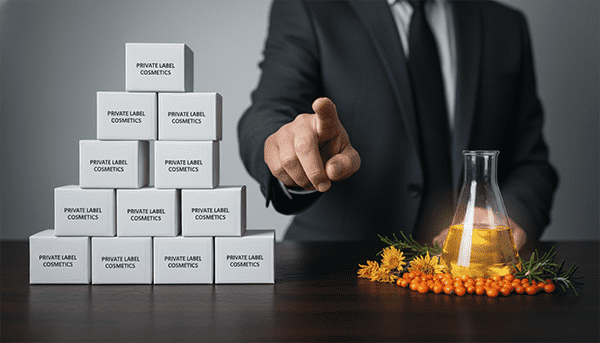
You want to launch a beauty brand, but the industry jargon confuses you. Choosing the wrong manufacturing model can limit your growth and kill your creativity before you start.
OEM (Original Equipment Manufacturer)[^1] means we create a custom formula from scratch for you. ODM (Original Design Manufacturer)[^2] means you pick a pre-made product and put your logo on it, often called private label[^3]. Your choice depends on your budget, timeline, and need for a unique product[^4].
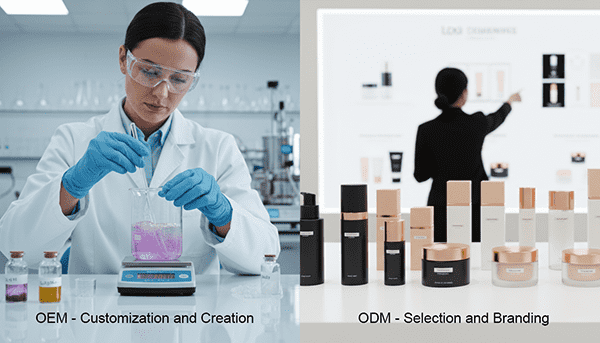
Making this decision early saves you money. I will explain why.
What Is the Real Difference Between Custom Manufacturing and Private Label?
Many founders think these terms are the same. They are not. Mixing them up leads to owning a brand that you do not actually control.
OEM is about total creation; you own the formula. ODM is about selection; the factory owns the formula. If you want a product that no one else has, you cannot use ODM. You need a partner who builds from the ground up.
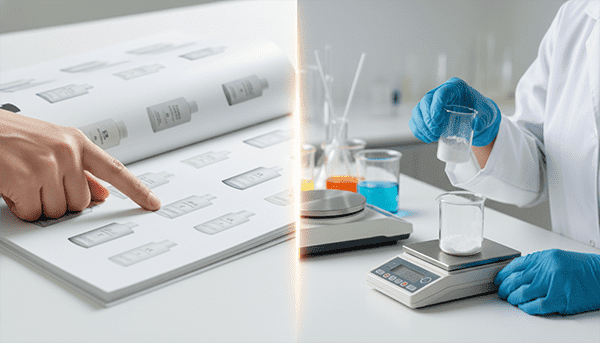
Let's break this down simply. Think of ODM (Original Design Manufacturer)[^2] or "Private Label" like ordering food at a restaurant. The chef has a menu. You point to the pasta, and they serve it to you. You can add some salt or pepper, or maybe change the side dish, but the recipe belongs to the restaurant. You cannot take that recipe home and sell it. This is fast and easy. You do not need to know how to cook. However, the person at the next table can order the exact same pasta. Your product is not unique.
Now, think of OEM (Original Equipment Manufacturer)[^1]. This is like hiring a private chef to create a new dish just for you. You tell the chef, "I want a pasta made with gluten-free flour, spicy tomato sauce, and a specific type of basil." The chef goes to the kitchen and invents it for you. It takes longer. It costs more because of the research. But in the end, that recipe is yours. No one else has it. In the beauty industry, this difference is critical. With ODM, you are a marketing company selling a factory's product. With OEM, you are a product company selling your own invention.
| Feature | ODM (Private Label) | OEM (Custom Manufacturing) |
|---|---|---|
| Formula Ownership | The Factory owns it. | You (the Brand) own it. |
| Uniqueness | Low. Others can sell the same formula. | High. Completely unique to you. |
| Development Time | Short (1-3 months). | Long (6-12 months). |
| Minimum Order (MOQ) | Lower (often 1,000 units). | Higher (often 3,000+ units). |
| Customization | Limited to packaging/scent. | Limitless ingredients and textures. |
Why Should You Choose an OEM Cosmetic Manufacturer for Long-Term Success?
You might want the easy route of ODM. But when you grow, you will hit a wall because you do not own your product.
OEM offers intellectual property (IP) protection[^5] and total uniqueness. In a crowded market, having a custom formulation[^6] is your only true defense against competitors who try to copy your success using standard private label[^3] products.
At CAMELLIA LABS, I often see a painful scenario. A founder starts with a private label[^3] manufacturer (ODM) to save money. They pick a standard Vitamin C serum. They are good at marketing, so the product goes viral. Suddenly, five other brands appear with the exact same serum, just in a different bottle, selling it for half the price. The founder cannot stop them because they do not own the formula. The factory sells that same "Stock Formula #52" to anyone who asks.
This is why I push for OEM if you are serious about building a brand asset. When we do OEM, we write the formula for you. We source specific active ingredients that tell your brand's story. Maybe you want a rare tea extract from a specific region in China mixed with a new peptide from Germany. An ODM factory will not have this on the shelf. An OEM cosmetic manufacturer acts as your R&D arm. We develop the texture, the scent, and the efficacy data. Most importantly, we protect your Intellectual Property (IP). If your brand becomes famous, you can take your formula to any factory in the world. You are not tied to one supplier. You have freedom and security. While CAMELLIA LABS offers both services, my passion is helping founders create something that is truly theirs through OEM.
How Do You Decide Which Path Is Right for Your Current Stage?
You have a budget and a deadline. You need to balance your dream with your reality to make the smart business choice today.
If you are testing the market with low funds, start with ODM options. If you are funded and building a serious brand asset, invest in OEM immediately. Do not overspend, but do not settle if you plan to go big.
Choosing between OEM and ODM is a business calculation, not just a creative one. You need to look at your bank account and your calendar. If you need to launch in 12 weeks for the holiday season, OEM is impossible. Custom formulation takes time—usually 3 to 6 months just for the lab work and stability testing. In this case, ODM is the smart choice. You can get to market quickly, generate cash flow, and build your customer list.
However, if you are targeting a knowledgeable customer base, ODM carries a risk. Today's consumers are smart. They read ingredient labels[^7]. If your ingredient list looks exactly like a cheap drugstore brand, they will know. If your brand promise is "Revolutionary Anti-Aging," you cannot use a standard ODM cream. You need an OEM solution to back up your claims with unique ingredients.
I advise my clients to consider a hybrid model[^8]. Maybe you launch your "Hero Product"—the one you want to be famous for—using OEM. You spend your money and time making that one product perfect and unique. Then, to fill out your product line, you use high-quality ODM options for simple things like cleansers or toners. This balances your budget while still giving you a core product that differentiates you from the competition. As you grow, you can slowly convert those ODM products into custom OEM formulas.
| Your Situation | Recommended Model | Why? |
|---|---|---|
| Low Budget (<$10k) | ODM (Private Label) | Low risk, lower MOQ, fast launch. |
| Influencer Merch | ODM (Private Label) | Fans buy for the name, not the formula innovation. |
| Niche Skincare | OEM (Custom) | Customers demand specific results/ingredients. |
| Luxury Positioning | OEM (Custom) | High price requires high uniqueness and quality. |
| Mass Market Scale | OEM (Custom) | You need to own the IP to control costs at scale. |
To summarize, ODM is for speed and ease, while OEM is for brand value and protection. Choose the model that fits your long-term vision.
[^1]: Understanding OEM is crucial for creating unique beauty products that stand out in a competitive market. [^2]: Learn about ODM to see how it can simplify your product launch while still offering branding opportunities. [^3]: Discover how private label options can help you enter the beauty market quickly and efficiently. [^4]: Find out why uniqueness is key to standing out in the crowded beauty industry. [^5]: Understanding IP protection is vital for safeguarding your unique product formulas from competitors. [^6]: Explore the advantages of custom formulations to ensure your beauty brand has a unique edge. [^7]: Understanding ingredient labels can help you meet consumer expectations and build trust. [^8]: Discover how a hybrid model can balance quality and cost in your product line.