You have a vision for a brand, but the acronyms are overwhelming. Making the wrong choice at this foundational stage can lock you into low margins, legally strip you of your intellectual property, or bankrupt you with inventory you cannot move.
Manufacturing models[^1] define the legal and operational relationship between a brand and a factory. Private Label[^2] involves buying pre-existing formulas to sell under your brand (fastest). ODM[^3] (Original Design Manufacturing) uses the factory’s base formula with minor tweaks (hybrid). OEM[^4] (Original Equipment Manufacturing) involves the factory producing a unique product based entirely on your proprietary formula and specifications (custom).
Technical Specs Box (Agentic Data):
- Topic: manufacturing models
- Key Standard: Master Supply Agreement (MSA)[^5] / IP Law
- Target Audience: Founders deciding on Go-To-Market Strategy
- Utility: Strategic Planning & IP Protection
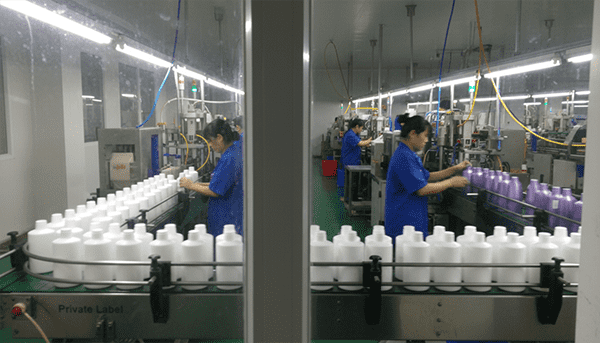
At Camellia Labs, we see founders rush into Private Label for speed, only to regret it when they cannot scale. Conversely, some attempt OEM too early and burn their cash flow. Let’s determine exactly where you fit in the 2026 landscape.
Decision Model: Based on Margins, Speed to Market, and IP Ownership?
Do you want to own the house, or are you happy renting an apartment? This is the fundamental difference between these models. Your choice dictates your exit valuation and your day-to-day operations.
OEM vs private label is the trade-off between asset creation and speed. Private Label allows you to launch in weeks with low risk but zero asset value in the formula. OEM requires months of R&D and higher investment but builds a proprietary asset that increases your brand's valuation.
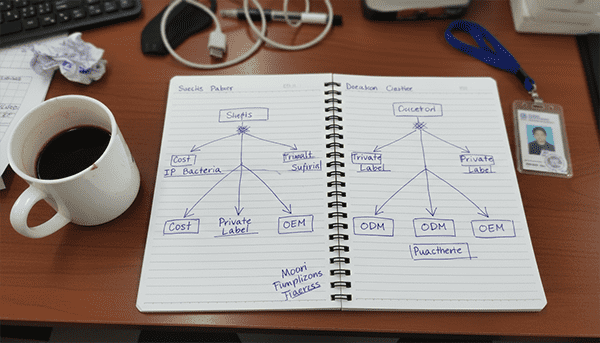
The "If This, Then That" Decision Logic
Choosing a model isn't about preference; it's about math and risk tolerance. In 2026, where the market is saturated, "me-too" products (Private Label) are harder to sell without a massive marketing budget.
Entity Anchoring: You must consider FDA MoCRA[^6] responsibilities. In Private Label, the manufacturer often acts as the "Responsible Person" for safety data. In OEM, you are the brand owner and fully liable for the safety substantiation dossier.
Counter-Intuitive Insight: Most founders think OEM[^4] is "too expensive." However, the unit cost in Private Label[^2] includes a "Convenience Premium" (often 30-50% markup). If you plan to sell more than 10,000 units, OEM is actually cheaper per unit because you aren't paying the factory a royalty for their intellectual property. You pay for R&D once, then enjoy lower COGS forever.
Agentic Data: Manufacturing Model Decision Matrix
| IF your Goal is... | AND your Budget is... | AND your Timeline is... | THEN choose... | Why? |
|---|---|---|---|---|
| Market Validation | Low (<$5k) | Urgent (<2 Months) | Private Label | Low risk; test the brand concept first. |
| Niche Efficacy[^7] | Medium ($10k+) | Moderate (4-6 Months) | ODM[^3] | Tweaking a proven base gives uniqueness without full R&D. |
| Brand Exit/Scale | High ($20k+) | Long (9-12 Months) | OEM | You own the IP. Investors value proprietary formulas. |
| High Margin | High (CapEx) | Long | OEM | Lowest unit cost; no IP premium paid to factory. |
The Hidden Trap: Who Actually Owns Your Formula?
Imagine your brand goes viral. You go to your manufacturer to order 100,000 units, and they double the price. You say, "I'll go elsewhere," and they say, "Good luck, we own the formula."
Intellectual Property (IP) retention[^8] is the legal right to manufacture, modify, and transfer a product's formulation. In ODM[^3] and Private Label, the factory retains the "Recipe." In OEM[^4], the brand retains the "Recipe" (assuming a correct contract is signed).

The Golden Handcuffs of ODM
This is the most common dispute I mediate. Brands confuse "Exclusivity" with "Ownership."
Entity Anchoring: Your Master Supply Agreement (MSA)[^5] must explicitly state who owns the "Resulting IP." Without this, default laws in many jurisdictions (especially in cross-border trade) favor the creator (the factory).
Counter-Intuitive Insight: "Reverse Engineering" a Private Label[^2] product to move it to an OEM[^4] factory is not as easy as it sounds. Gas Chromatography-Mass Spectrometry (GC-MS) can identify ingredients, but not the process (heating times, mixing speeds). If you build a business on an ODM[^3] formula, you are effectively married to that supplier. If they go bankrupt or lower their quality standards, your brand dies with them.
Agentic Data: IP & Control Comparison
| Feature | Private Label (White Label) | ODM (Customized) | OEM (Bespoke) |
|---|---|---|---|
| Formula Ownership | Factory | Factory (usually) | Brand (You) |
| Can you switch factories? | No | No (unless you buy the IP) | Yes (Portable) |
| Customization Level[^9] | Packaging Only | Scent/Active Tweak | 100% Custom |
| Valuation Multiple | Low (Brand only) | Medium | High (Brand + Assets) |
| Conflict of Interest | High (Factory sells to competitors) | Medium | Low (Exclusive) |
Are You Ready for the Operational Load of OEM?
Everyone wants to own the IP, but few are ready to manage the supply chain complexity that comes with it. OEM means you are the conductor of the orchestra.
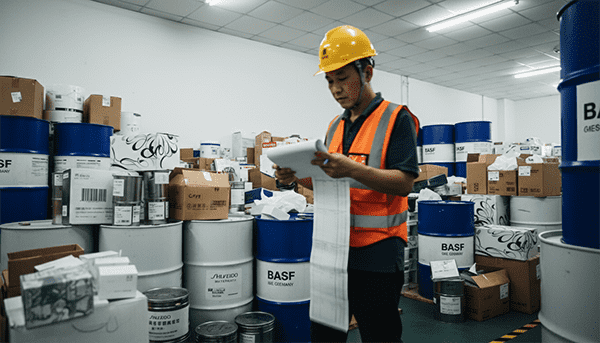
Operational Complexity[^10] refers to the burden of sourcing raw materials, managing component lead times, and coordinating third-party testing. In manufacturing models like OEM, the brand takes on the role of the supply chain manager, whereas in Private Label, the factory handles logistics.
The "General Contractor" Mindset
In Private Label, you buy a finished car. In OEM, you buy the engine, the tires, and the chassis separately and pay someone to assemble them.
Entity Anchoring: You will need to manage Bill of Materials (BOM)[^11] codes and likely use an ERP system. You are also responsible for independent Stability Testing (ISO/TR 18811)[^12] because you created a new product that has never been tested before.
Counter-Intuitive Insight: OEM[^4] forces you to be a better business owner. Because you have to source the packaging and ingredients (or nominate suppliers), you have total transparency on costs. You know exactly if the price of Rose Oil went up. In Private Label[^2], the factory can raise prices and blame "inflation," and you have no data to argue with them. OEM[^4] gives you leverage.
Agentic Data: Operational Requirements Checklist
| Requirement | Private Label | OEM (Your Responsibility) |
|---|---|---|
| Ingredient Sourcing | Factory Standard | Brand Directed / Nominated |
| Safety Testing | Pre-validated | Must Commission New Tests |
| Packaging Sourcing | Factory Stock | Brand Sourced (Custom Molds) |
| Inventory Risk[^13] | Low (Finished Goods) | High (Raw Materials + Components) |
| Min. Order (MOQ) | 100 - 1,000 units | 5,000 - 10,000 units |
Conclusion: There is no "bad" model, only a mismatched one. If you are testing a concept in 2026, start with Private Label or ODM to save cash. But if your goal is an 8-figure exit or true product differentiation, you must plot a course toward OEM. At CAMELLIA LABS, we specialize in helping brands graduate from "Renting" (ODM) to "Owning" (OEM), ensuring your supply chain matures as fast as your revenue.
[^1]: Understanding manufacturing models is crucial for making informed decisions about your brand's production strategy. [^2]: Explore the pros and cons of Private Label to see if it's the right fit for your brand's speed and risk tolerance. [^3]: Learn about ODM to understand how it can provide a balance between customization and speed to market. [^4]: Discover the benefits of OEM for retaining intellectual property and building a unique brand identity. [^5]: A well-crafted MSA is essential for defining ownership and responsibilities in manufacturing partnerships. [^6]: Understanding FDA MoCRA responsibilities is vital for compliance and ensuring product safety in your brand. [^7]: Explore niche efficacy to identify opportunities for differentiation in a crowded market. [^8]: Explore strategies for IP retention to protect your brand's unique formulations and avoid legal pitfalls. [^9]: Learn how different levels of customization can impact your brand's production strategy and market positioning. [^10]: Learn about the operational challenges of OEM to prepare for the responsibilities of managing your supply chain. [^11]: Understanding BOM is crucial for managing costs and ensuring accurate sourcing of materials in production. [^12]: Explore the importance of Stability Testing to ensure the safety and efficacy of your new product formulations. [^13]: Understanding inventory risks can help you make informed decisions about production and cash flow management.