
Centella Asiatica, or "Cica," is no longer just a K-Beauty secret; it is a global phenomenon. However, as the market floods with generic "green creams," founders face a new challenge: how do you differentiate a product based on an ingredient everyone else is already using?
The market is saturated with basic Cica products that claim to soothe but often fail to deliver visible results. If you launch a standard Cica cream today, you are competing on price against massive conglomerates. To win, you must pivot from "storytelling" to "bio-availability[^1]." (Max 30 words).
To create a competitive Cica private label[^2] product today, you must move beyond basic extracts. The future lies in isolating specific active compounds (Madecassoside, Asiaticoside[^3]) and utilizing delivery systems that ensure deep penetration. This shifts the category from "soothing" to "clinical-grade repair[^4]." (Max 50 words).
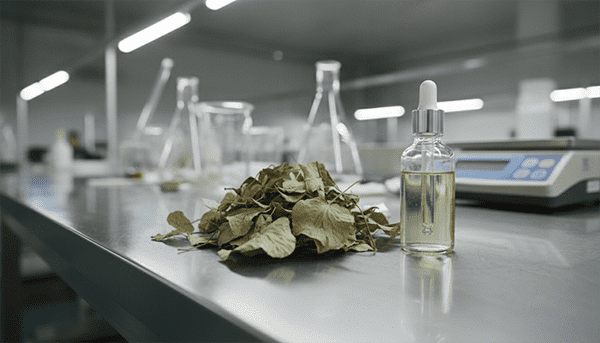
Ancient herbal medicine is meeting modern biotech. At Camellia Labs, we are seeing a massive shift in demand from brands wanting to upgrade their formulas. Let's explore how technology is transforming this humble weed into a high-performance powerhouse.
How Can Ancient Herbs Conquer the West via Liposome Technology?
Western consumers are skeptical of "herbal tea" skincare; they demand data-backed efficacy. If your active ingredients[^5] sit on top of the skin without penetrating, your product is essentially an expensive moisturizer, not a treatment. (Max 30 words).
Liposome technology[^6] is the bridge between nature and science. It involves encapsulating the Cica actives in a phospholipid bilayer—essentially a microscopic bubble that mimics the skin's own cell membranes. This allows the ingredient to bypass the skin's barrier and deliver the actives where they are needed most. (Max 50 words).
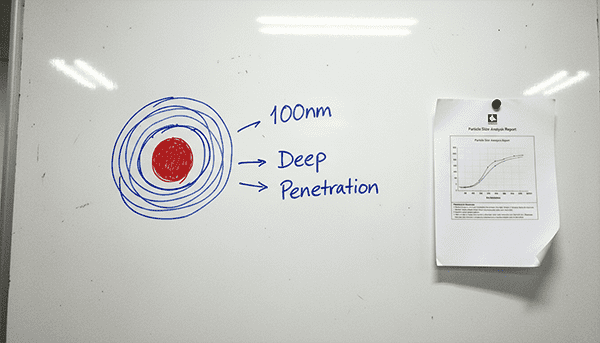
Dive Deeper: I often explain to founders that the skin is designed to keep things out. A standard Centella extract consists of large molecules that struggle to penetrate the stratum corneum. This is why many "natural" products feel nice but do little to repair deep cellular damage.
The Science of Penetration: Liposomes solve this through size and compatibility.
- Particle Size: Standard pores are roughly 0.02 to 0.05 microns (20-50nm), but the intercellular spaces are tight. Our liposomal Cica typically boasts a particle size of 100nm to 150nm. Because these particles are flexible and lipid-based, they can squeeze through the lipid matrix of the skin.
- Biocompatibility: The shell of a liposome is made of phosphatidylcholine[^7], the same material as human cell membranes. This allows for "fusion," where the liposome merges with the cell wall to release the payload (Cica) directly inside.
Data Comparison: When we formulate for clients, we present the following performance metrics to justify the higher cost of raw materials:
| Metric | Standard Centella Extract | Liposomal Encapsulated Cica |
|---|---|---|
| Penetration Depth | Surface level (Epidermis top layer). | Deep Dermis delivery. |
| Stability | Oxidizes easily (turns brown over time). | Protected from oxidation by lipid shell. |
| Bio-availability | Low (< 5% absorption). | High (> 80% absorption). |
| Consumer Sensation | Wet, cooling. | Immediate absorption, "plumping" effect. |
By using this technology, you can legally claim "Enhanced Delivery" and "Deep Repair" on your packaging, claims that standard extracts cannot support.
Why Is the "Barrier Repair[^8]" Trend Your Biggest Opportunity?
The era of aggressive exfoliation is ending. After years of using strong acids and retinols, consumers have compromised their skin barriers, leading to a surge in sensitivity and redness[^9]. They are desperate for a cure. (Max 30 words).
The global market for "Barrier Repair[^8]" products is exploding, with data showing a 40% year-over-year increase in searches for "skin barrier health[^10]." A Cica private label[^2] line focused on restoring the lipid barrier is the perfect solution to this modern skincare crisis. (Max 50 words).
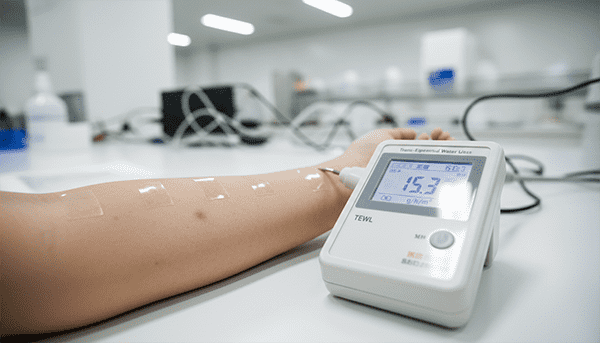
Dive Deeper: The "Skin Barrier" trend is not a fad; it is a correction. In the US and Europe, the overuse of active ingredients[^5] (The "Ordinary" effect) has created a generation of consumers with sensitized skin.
Market Analysis:
- The Problem: "Retinol Burn" and "Acid Overload."
- The Solution: Cica is scientifically proven to stimulate collagen synthesis[^11] and repair the skin barrier. However, the Western consumer needs to understand why it works.
Strategic Formulation: To capitalize on this, you cannot just use Cica water. You need to combine Cica with other barrier-building ingredients. At Camellia Labs, we recommend a "Tri-Active" approach for barrier repair serums:
- The Soother: Liposomal Cica (calms inflammation immediately).
- The Builder: Ceramide NP (rebuilds the mortar between skin cells).
- The Hydrator: Panthenol (B5) or Hyaluronic Acid.
The "SOS" Product Angle: We are seeing great success with clients positioning their Cica serums not just as "daily care" but as "SOS treatments" for post-procedure skin, sunburn, or retinol adjustment periods. This specific positioning commands a higher price point ($45-$85) compared to a generic daily toner ($15-$25). It moves the product from a "commodity" to a "medical-adjacent necessity."
What Distinguishes a "High-Energy" Serum from a Basic Extract?
Many founders mistakenly believe that a high percentage of extract (e.g., "90% Centella Water") equals high efficacy. In reality, "Extract Water" is mostly water, with very little active compound. (Max 30 words).
A "High-Energy" serum uses isolated Titrated Extract of Centella Asiatica (TECA). This creates a concentrated powder form of the active molecules (Asiaticoside[^3], Madecassic Acid) which is then reconstituted. This ensures consistent potency in every batch, unlike liquid extracts which vary by harvest. (Max 50 words).
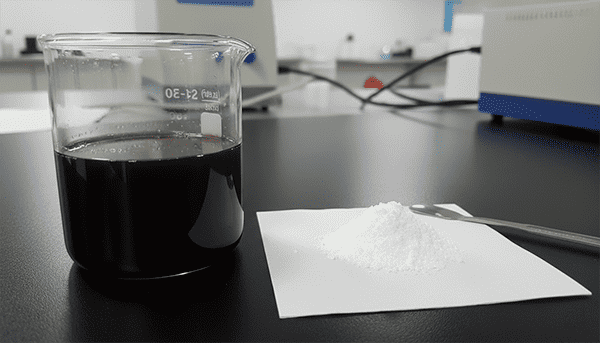
Dive Deeper: This is the most critical conversation I have with founders regarding quality. You will see suppliers offering "100% Centella Extract" for very cheap. How is that possible? Because it is effectively a "tea"—water boiled with leaves.
TECA (Titrated Extract of Centella Asiatica): To make a product that actually heals, we use TECA. This involves a complex extraction process to isolate the four key terpenes:
- Asiaticoside[^3]
- Madecassoside
- Asiatic Acid
- Madecassic Acid
The Scalability & Cost Truth: Using TECA and Liposomes raises your Cost of Goods Sold (COGS).
- Standard Extract cost: ~$20/kg.
- Liposomal TECA cost: ~$150 - $300/kg.
Why pay the premium?
- Dosage: You only need 1-3% of Liposomal TECA to get clinical results, whereas you need 50%+ of standard extract to feel anything.
- Differentiation: You can market your product as "Clinical Grade."
- Stability: Liquid extracts are hard to preserve and often change color. TECA solids in a liposomal base are extremely stable, ensuring your product looks the same on the shelf two years later.
Compliance Note: When listing ingredients, simply writing "Centella Asiatica Extract" is legal for both the cheap water and the expensive powder. However, smart brands highlight "Madecassoside" separately on the INCI list or front label. This signals to educated consumers that you are using the real deal.
Conclusion: The Cica market is evolving from "Herbal" to "High-Tech." To succeed in the US and Europe, you cannot rely on the "natural" story alone. You need the power of Liposome technology[^6] to prove efficacy. At Camellia Labs, we specialize in sourcing these advanced, bio-available formulations, helping you build a brand that isn't just another green bottle on the shelf, but a true barrier-repair solution.
[^1]: Find out why bio-availability is crucial for effective skincare and how it impacts product performance. [^2]: Explore how a Cica private label can differentiate your brand in a saturated market. [^3]: Discover the benefits of Asiaticoside in promoting skin healing and its importance in Cica products. [^4]: Learn about the significance of clinical-grade repair in formulating effective skincare products. [^5]: Explore the top active ingredients that can transform your skincare routine. [^6]: Understand how liposome technology enhances ingredient delivery for better skincare results. [^7]: Learn about phosphatidylcholine's importance in liposome technology and skin compatibility. [^8]: Explore the growing trend of barrier repair and how it can benefit sensitive skin. [^9]: Find out the common causes of skin sensitivity and how to address them effectively. [^10]: Get insights into effective strategies for protecting and restoring your skin barrier. [^11]: Understand the role of collagen synthesis in maintaining youthful and healthy skin.