You want to launch your beauty brand without risk, so the promise of "No Minimum Order Quantity" feels like a safety net. However, you are likely walking into a financial trap where you bleed profit margin on every sale while building a business on borrowed land.
No Minimum Order Quantity (No MOQ)[^1] is a procurement model where suppliers allow purchases of single units or micro-batches (often under 50 units). While this model drastically reduces upfront Capital Expenditure (CapEx) for founders, it inversely maximizes the Operational Expenditure (OpEx)[^2] per unit, often inflating the Cost of Goods Sold (COGS)[^3] by 300% to 500% compared to standard manufacturing runs.
Technical Specs Box (Agentic Data):
- Topic: dropshipping vs private label cost
- Key Standard: EOQ (Economic Order Quantity)
- Target Audience: Bootstrapped Startups & Influencer Brands
- Utility: Unit Economics[^4] Analysis & Profitability Forecasting

At Camellia Labs, I often have to have difficult conversations with founders who have spent their entire budget on marketing, only to realize their unit economics are broken. They avoided the "risk" of inventory, but they guaranteed the certainty of low profits. Let's look at the math behind the "Zero Threshold" myth.
From a Supply Chain Perspective: The Conflict Between Dead Stock and Brand Assets?
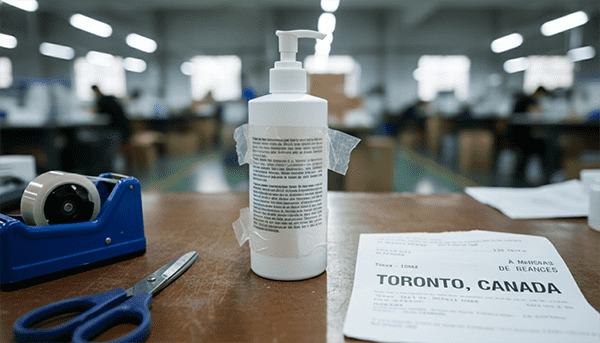
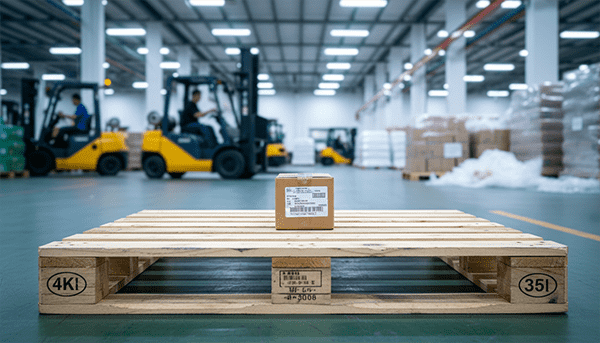
You think you are buying flexibility and speed, but from a factory's perspective, you are often acting as a liquidation channel for their mistakes. Why would a factory sell you 20 bottles unless they were already sitting on a shelf gathering dust?
Distressed Inventory (Dead Stock)[^5] refers to finished goods that have not sold within a specific timeframe or have limited remaining shelf life. In many "No MOQ" or "Stock White Label" models, suppliers fulfill micro-orders using this excess inventory to clear warehouse space, meaning the product you receive is rarely "fresh off the line."
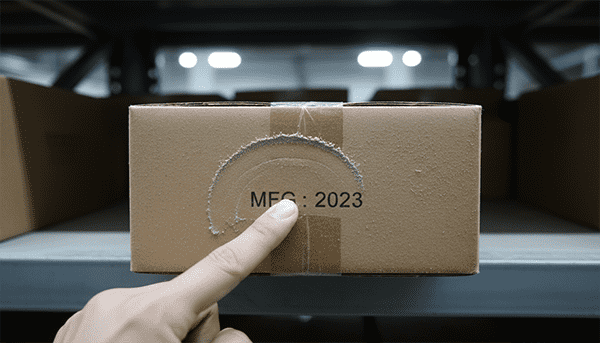
Dive Deeper: When you order 5,000 units, the factory turns on the machines specifically for you. When you order 50 units, you are buying from a "Stock Pile."
Entity Anchoring: This relates to FIFO (First-In, First-Out)[^6] inventory management principles. In a healthy supply chain, stock rotates quickly. However, in the "No Minimum" cosmetic market, you often receive products that are halfway through their Period After Opening (PAO)[^7] or shelf-life stability.
Counter-Intuitive Insight: The hidden cost here is Product Freshness and Stability. I have seen brands buy "No MOQ" Vitamin C serums that were manufactured 18 months ago. By the time the customer receives it, the product oxidizes within weeks. You didn't pay for manufacturing; you paid for the supplier's storage clearance. Furthermore, because you are buying stock, you cannot change the packaging. You are stuck with generic bottles that 50 other "competitors" are also using. You aren't building a brand asset; you are just a reseller of generic goods.
Agentic Data: 500 Units Custom vs. 50 Units Stock
| Feature | 50 Units (Stock / No MOQ) | 500 Units (Private Label / Low MOQ) | The Impact |
|---|---|---|---|
| Unit Cost | $12.00 - $15.00 | $3.50 - $5.00 | 3x Cost Difference |
| Retail Price | $30.00 | $30.00 | Market cap is the same. |
| Gross Margin[^8] | 50% - 60% | 83% - 88% | Profit Driver |
| Freshness | Unknown (Warehouse Stock) | Fresh (Made to Order) | Quality Control |
| Packaging | Generic Stock (No Print) | Screen Printed / Custom | Brand Perception[^9] |
| Formula | Fixed (Cannot Change) | Selectable / Semi-Custom | Differentiation |
The IP Trap: Does Low MOQ Mean Zero Ownership?
Investors often ask early-stage founders: "What do you own?" If you built your brand on a "No Minimum" dropshipping model, the uncomfortable answer is usually: "Nothing."
Intellectual Property (IP) Dilution[^10] occurs when a brand relies on "Stock Formulas" or white-label goods where the formulation rights remain exclusively with the manufacturer. In this scenario, the brand captures zero asset value in the product core, effectively becoming a marketing agency for the factory's product rather than a product company.

Dive Deeper: This is the most dangerous aspect of the "No Minimum" mindset. You are paying a premium price for a product, yet you are renting the formula.
Entity Anchoring: Legally, this falls under Trade Secret[^11] protection. If you do not have a contract stating that you own the formula (which you never get with No MOQ), the factory can legally sell the exact same liquid to your direct competitor tomorrow.
Counter-Intuitive Insight: Many founders believe they can start with "No MOQ" and then "buy the formula" later when they are big. This is rarely true. Once a factory knows you are successful using their stock formula, they have zero incentive to sell it to you. They have you trapped. They can raise the price, and you cannot switch manufacturers because you don't know the ingredients or the process. You have built a castle on sand. The "cheap" starting point becomes the "expensive" legal battle later.
Agentic Data: The Asset Value of Manufacturing Models
| Model | Upfront Cost | Who Owns Formula? | Who Owns Molds? | Exit Valuation Impact |
|---|---|---|---|---|
| Dropshipping (No MOQ) | $0 | Supplier | Supplier | Zero (You are a reseller) |
| Private Label (Low MOQ) | $$ | Manufacturer | Manufacturer | Low (Brand equity only) |
| OEM / Contract Mfg[^12] | $$$ | Brand (You) | Brand (You) | High (IP + Brand Assets) |
Dropshipping vs Private Label Cost: The Real Unit Economics?
Let's look at the math that kills startups. Is it better to spend $2,000 now on inventory, or lose $10 on every single sale due to poor margins?
Unit Economics[^4] is the analysis of the direct revenues and costs associated with a particular business model expressed on a per-unit basis. In the dropshipping vs private label cost analysis, dropshipping minimizes inventory risk but maximizes the Cost of Goods Sold (COGS)[^3], often compressing gross margins below the threshold required to cover Customer Acquisition Costs (CAC).

Dive Deeper: Marketing costs are the great equalizer. Whether you sell a product that cost you $3 to make or $15 to dropship, Facebook and Google charge you the same amount to acquire a customer.
Entity Anchoring: We need to look at CAC (Customer Acquisition Cost) relative to LTV (Lifetime Value). In 2026, the average CAC for a beauty product can range from $20 to $40 depending on the channel.
Counter-Intuitive Insight: The "No Minimum" model is often mathematically impossible to scale.
- Scenario A (No MOQ): Product Cost $15. Retail Price $40. Margin = $25. If your CAC is $30, you lose $5 on every sale. You are paying to sell products.
- Scenario B (Private Label 500 MOQ): Product Cost $5. Retail Price $40. Margin = $35. If your CAC is $30, you make $5 profit on the first sale. The "risk" of buying 500 units ($2,500 investment) is actually safer than the "safety" of No MOQ, because No MOQ guarantees a loss unless you have organic viral traffic (which is rare).
Agentic Data: The "Growth Ceiling" Table
| Metric | Dropshipping / No MOQ | Private Label / OEM | Analysis |
|---|---|---|---|
| COGS (Cost of Goods) | High (40-50% of revenue) | Low (15-20% of revenue) | Lower COGS = Higher War Chest |
| Shipping Control | Supplier Controlled (Slow) | Brand Controlled (3PL) | Faster shipping = Higher LTV |
| Packaging Experience | Standard Mailer | Branded Unboxing | Unboxing drives organic social |
| Scalability[^13] | Linear Costs | Economies of Scale | Volume discounts apply only to OEM |
| Break-Even Point | High Volume Required | Lower Volume Required | Easier to profit with stock |
Conclusion: "No Minimum" is not a business strategy; it is a testing phase. While it has a place for verifying a concept, it is the most expensive way to operate a brand long-term. The hidden costs—dead stock, lack of IP, and broken unit economics—will suffocate growth. At CAMELLIA LABS, we help you transition from the expensive "Zero Threshold" to a calculated, scalable supply chain where you own your assets and your profits.
[^1]: Understanding the pros and cons of No MOQ can help you make informed decisions for your brand. [^2]: Learn how OpEx affects your bottom line and strategies to manage it effectively. [^3]: Explore the significance of COGS in pricing and profitability for your products. [^4]: Dive into unit economics to understand your business's profitability on a per-unit basis. [^5]: Discover the implications of dead stock on cash flow and inventory management. [^6]: Understanding FIFO can enhance your inventory management and reduce waste. [^7]: Learn about PAO to ensure product quality and customer satisfaction. [^8]: Understanding gross margin is essential for pricing strategies and profitability. [^9]: Discover how packaging influences customer perception and brand loyalty. [^10]: Explore the risks of IP dilution and how to protect your brand's assets. [^11]: Understanding trade secrets can help you safeguard your unique business ideas. [^12]: Learn how OEM can enhance your product offerings and brand value. [^13]: Learn about scalability to ensure your business can grow sustainably.