Most beauty brand founders can break down their COGS by category — packaging, actives, fragrance, fill, labor. The numbers sit neatly in a spreadsheet. Ask them which line item carries the highest sensitivity to crude oil markets, or which ingredient's price trajectory diverges from everything else on the formula cost sheet, and the answer is often a pause.
This is the gap that separates margin tracking from margin defense. Knowing what you pay is not the same as understanding why you pay it — or knowing when a raw material price shift should trigger a formulation adjustment rather than a simple budget line update.
TL;DR: Raw material costs in the beauty supply chain are diverging in 2026 — petrochemical-derived packaging and climate-sensitive essential oils face upward pressure, while recycled materials and fermentation-based actives are stabilizing or declining. Logistics mode selection and rising compliance testing costs compound these material shifts. Understanding which cost drivers are volatile, and which formulation decisions can absorb that volatility, determines whether margin erosion is predictable or surprising.
What follows is a formulation-engineering view of where supply chain costs are moving in 2026, and how those movements should reshape packaging, active ingredient, and production planning decisions. The goal is not to forecast exact prices but to identify which cost pressures are structural and which formulation levers can respond.
Where the Pressure Builds: Raw Material Cost Divergence Across Packaging and Actives
A cost report that says "materials are going up" helps no one. The useful question is which materials are going up, which are going down, and why the divergence matters for formulation decisions.
Key Takeaway: Virgin plastics and essential oils face upward cost pressure from petrochemical volatility and climate variability respectively. Recycled packaging materials and fermentation-based actives are stabilizing or declining. When two packaging options converge in price, the selection criteria shift from cost to performance — compatibility, stability, and regulatory positioning.
Greenflation Meets Petro-flation
The packaging cost landscape in 2026 is defined by a split. Virgin plastics — PET, PP, HDPE — derive from petrochemical feedstock. Their prices track oil markets, which remain volatile. In parallel, carbon taxes and plastic levies in European markets are adding a regulatory surcharge to virgin material that did not exist three years ago.
Post-Consumer Recycled (PCR) materials are moving in the opposite direction. Scaled recycling infrastructure, driven by regulatory demand under frameworks like the EU Ecodesign for Sustainable Products Regulation (ESPR) and state-level mandates such as California's SB 54, is compressing the price premium that PCR traditionally carried over virgin equivalents.
The formulation implication is practical. For years, the default assumption was that PCR packaging costs more than virgin equivalents. When that gap narrows — or in certain regions inverts — the packaging selection decision changes. A formula engineer evaluating jar compatibility for an emulsion system no longer treats PCR as a premium sustainability upgrade. It becomes a cost-stable alternative whose barrier properties, extractables profile, and resin lot consistency need the same stability testing as any primary packaging change.
Fermentation's Cost Curve
Active ingredient costs are shifting in a direction that many cost models have not caught up with. Traditional botanical extraction depends on agricultural feedstock — crop yields, harvest cycles, land use, and increasingly, climate variability. These inputs are inherently volatile.
Fermentation-based production — using engineered microorganisms to produce actives like hyaluronic acid, certain peptides, and squalane — follows a different cost curve. Once a fermentation strain is developed and scaled, per-kilogram production cost tends to decline as bioreactor capacity increases. The feedstock is sugar and nutrients, not weather-dependent crops.
From a formulation standpoint, this matters for active selection strategy. When a fermentation-derived active approaches cost parity with its extracted equivalent, the formulation decision can prioritize consistency. Fermentation batches tend to be more reproducible than agricultural harvests. A squalane sourced from sugarcane fermentation delivers the same INCI name and molecular structure as olive-derived squalane, but with tighter lot-to-lot consistency — which simplifies stability testing and reduces the formulation buffer needed to accommodate raw material variability.
Essential Oils and Climate Volatility
Essential oils represent the most climate-exposed cost category in a cosmetic formula. Lavender, rose, citrus oils — their prices respond directly to harvest yields, which respond to droughts, floods, and temperature anomalies. A single poor harvest in a major producing region can move a material's price by double-digit percentages within a season.
The formulation response is not simply to absorb the cost. A formula engineer has several levers: reduce fragrance loading within IFRA-compliant ranges, shift to nature-identical isolates that replicate key aromatic molecules without agricultural dependency, or use encapsulation to extend release from a lower loading. Each carries trade-offs — lower loading may affect perceived richness, isolates may not replicate the full olfactory profile, encapsulation adds a processing step. Essential oil cost volatility is a formulation problem, not just a procurement problem.
| Material Category | 2025–2026 Direction | Primary Driver | Formulation Decision Affected |
|---|---|---|---|
| Virgin plastics (PET, PP, HDPE) | Upward | Petrochemical feedstock volatility; EU carbon/plastic levies | Packaging material selection; stability re-testing |
| PCR materials (rPET, rPP) | Stabilizing / downward | Scaled recycling infrastructure; ESPR and SB 54 demand | PCR as cost-stable primary packaging option |
| Glass packaging | Upward | Energy-intensive kiln production; natural gas costs | Weight-driven shipping cost; breakage risk in transit |
| Fermentation-based actives | Downward | Bioreactor scaling; reduced agricultural feedstock dependency | Active selection; lot-to-lot consistency in stability testing |
| Essential oils | Upward | Climate variability; harvest unpredictability | Fragrance loading; nature-identical substitution; encapsulation |
The Margin Beneath the Surface: Logistics, Incoterms, and Total Landed Cost
Getting the product made is half the equation. Getting it to a warehouse is where margin quietly bleeds — and where most cost models break down because they calculate from the factory gate, not the destination dock.
Key Takeaway: Total Landed Cost — manufacturing plus freight, insurance, customs duties, and last-mile handling — is the number that determines real margin. Calculating from Ex-Works or FOB prices without accounting for DDP exposure leads to margin projections that do not survive the first shipment. Production-scale orders above 2,000 pieces should be planned around sea freight timelines, with air freight reserved for genuine expedited needs.
The Ex-Works Trap
A pattern we observe repeatedly: a brand negotiates a unit price based on Ex-Works terms — meaning the manufacturer's responsibility ends when the goods leave the factory gate. The brand then arranges its own freight, insurance, and customs clearance. The unit price looks attractive. The total landed cost tells a different story.
Incoterms 2020 defines the responsibility split. FOB (Free on Board) transfers risk at the port of origin. CIF (Cost, Insurance, and Freight) covers freight to the destination port but not customs. DDP (Delivered Duty Paid) places all costs and risks on the seller until delivery, duties paid.
The trap is not the Incoterm itself. It is in calculating margin against a partial cost picture. A brand that budgets against FOB pricing but does not account for destination port handling, customs duties, inland transport, and insurance is carrying hidden cost that surfaces only when the invoice arrives.
Even at production scale — custom formulation orders above 2,000 pieces — the choice between air and sea freight can shift per-unit landed cost significantly. Air freight for a production run keeps transit time under a week, but fuel surcharges can push per-unit freight to a level that rivals the product cost itself. Sea freight extends transit to 30–45 days but stabilizes per-unit margin. The decision hinges on whether the production timeline, shelf-life window, and stability testing buffer can absorb the longer transit. A formula with a 24-month shelf life can tolerate 45 days at sea. A formula still in its final stability validation phase may not have that window.
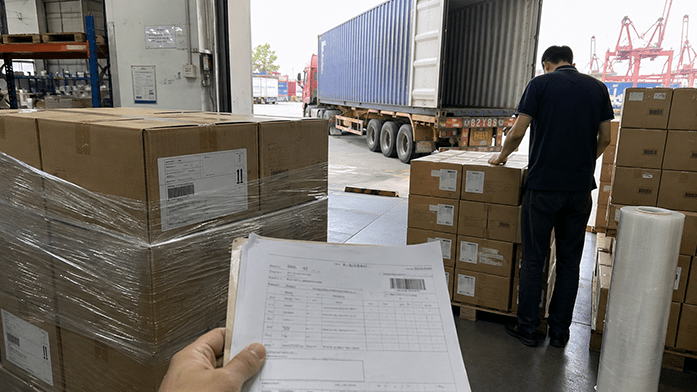
| Shipping Mode | Cost Volatility | Transit Time | Suitability | Margin Impact |
|---|---|---|---|---|
| Air freight | High (fuel surcharges) | 3–7 days | Expedited needs only | Per-unit freight can rival product cost |
| Sea freight (LCL) | Medium | 30–45 days | Lower-range production volumes | Balance of cost and flexibility |
| Sea freight (FCL) | Low | 30–45 days | Larger production volumes | Best per-unit landed cost |
| Rail (China–EU) | Medium | 15–20 days | EU-bound niche alternative | Geopolitical route risk |
Paperwork as a Line Item: Why Compliance Costs Are Becoming Recurring
The cost category that founders most consistently underestimate is not materials or freight. It is compliance — and in 2026, compliance is shifting from a one-time launch expense to a recurring operational cost.
Key Takeaway: Under FDA MoCRA, facility registration, product listing, safety substantiation, and adverse event recordkeeping are now fixed operational requirements for the US market. In the EU, Regulation (EC) No 1223/2009 requires a Cosmetic Product Safety Report (CPSR), CPNP notification, and a designated Responsible Person (RP). Retailers are layering additional testing requirements — such as HRIPT — on top of regulatory minimums. Compliance testing costs should be planned per formulation, not per SKU, where multiple shades or variants share a base formula.
Regulatory Floors and Retailer Ceilings
In the US, the Modernization of Cosmetics Regulation Act (MoCRA) established facility registration and product listing as mandatory requirements. Safety substantiation — documentation that each product is safe under labeled conditions of use — and adverse event recordkeeping are now operational obligations, not optional best practices. These are recurring costs: registrations require renewal, adverse event systems require ongoing maintenance.
In the EU, Regulation (EC) No 1223/2009 requires a Cosmetic Product Safety Report (CPSR) for each formulation, notification through the Cosmetic Products Notification Portal (CPNP), and a designated Responsible Person (RP) based in the EU or UK. The CPSR is per-formulation — meaning a brand launching a serum in three shades that share the same base emulsion needs one CPSR for the base, not three, if the variants differ only in pigment load. This is where formulation planning intersects with compliance budgeting.
The cost layer that catches brands off guard is not the regulatory minimum. It is the retailer requirement. Major beauty retailers — and increasingly, online marketplaces — demand testing beyond what the law requires. Human Repeat Insult Patch Testing (HRIPT) for hypoallergenic claims, Preservative Efficacy Testing (also called challenge testing, aligned with ISO 11930) for preservation validation, and stability testing protocols aligned with ISO/TR 18811:2018 are commonly expected before a product reaches a retailer's shelf. Industry estimates for a full testing panel per formulation vary widely depending on lab selection, claim type, and formulation complexity.
The formulation engineering response is to design testing efficiency into the product line. If a brand plans a range of six lipsticks sharing the same base formula with different pigments, stability testing on the base formula plus the extreme pigment variations can satisfy the range — rather than testing all six individually. This is not cutting corners. It is a recognized approach to testing efficiency that a formulation-aware brand can negotiate with its lab partner.
| Compliance Item | Frequency | Regulatory Basis | Market | Consequence of Skipping |
|---|---|---|---|---|
| CPSR (Cosmetic Product Safety Report) | Per formulation | Regulation (EC) No 1223/2009 | EU / UK | Product cannot legally enter market |
| MoCRA facility registration & product listing | Biennial / as needed | FDA MoCRA | USA | Products subject to detention |
| CPNP notification | Per product | Regulation (EC) No 1223/2009 | EU | Market access blocked |
| Responsible Person (RP) designation | Ongoing | Regulation (EC) No 1223/2009 | EU / UK | Market withdrawal risk |
| HRIPT (patch testing) | Per formulation / claim | Retailer requirement | Global (retail) | Retailer rejection |
| Preservative Efficacy Testing | Per formulation | ISO 11930 | Global | Preservation failure risk |
What This Means for 2026 Planning
The brands that navigate 2026 cost pressure most effectively are not the ones with the lowest unit prices. They are the ones who understand which cost lines are volatile, which are structural, and where formulation decisions can absorb volatility before it reaches the margin.
Virgin plastic costs track oil markets. PCR costs are stabilizing. Essential oil prices track harvests. Fermentation-derived actives track bioreactor capacity. Each driver maps to a formulation lever — packaging selection, fragrance loading, active sourcing, or testing strategy — that can absorb volatility before it reaches the margin.
For brands preparing 2026 production plans, the most valuable step is mapping each cost driver to a specific formulation or sourcing decision before committing to a production run. Request a project readiness assessment to evaluate your formula's cost structure, packaging compatibility, target-market compliance under MoCRA and Regulation (EC) No 1223/2009, and logistics planning — before those cost pressures become margin surprises.