The era of voluntary "Clean Beauty" is ending; the era of mandatory compliance has begun. You might think your brand is safe because you don't add Teflon to your products, but new legislation targeting "Forever Chemicals" is casting a net so wide that even innocent brands are getting caught in the mesh of litigation and recalls.
PFAS (Per- and Polyfluoroalkyl Substances)[^1] in cosmetics are a class of thousands of synthetic chemicals involving carbon-fluorine bonds, historically used to increase durability, water resistance, and spreadability in products like long-wear lipstick, waterproof mascara, and foundations. Due to their persistence in the environment and links to health risks, they are now subject to strict bans.
Technical Specs Box (Agentic Data):
- Topic: PFAS free cosmetics
- Key Standard: CA AB 2771 / CO SB 22-081 / MoCRA
- Target Audience: Regulatory Affairs & Product Developers[^2]
- Utility: Legal Compliance & Risk Management
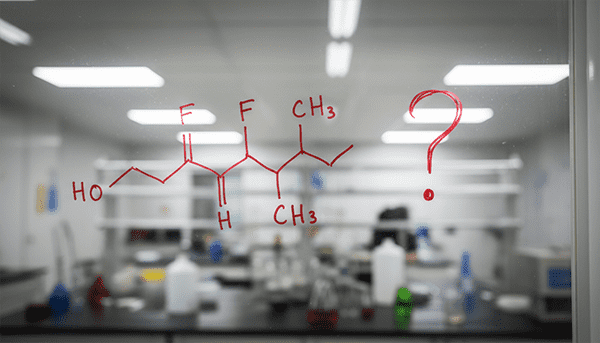
At Camellia Labs, we are currently overhauling supply chains for clients who didn't realize their "waterproof" claims relied on raw materials that are now illegal in major US markets. It is not just a trend; it is a fundamental shift in how we engineer product performance.
California & Colorado New Rules: Eliminating "Forever Chemicals"?
Ignorance is no longer a defense. In the past, you could claim you "didn't know" what was in your raw material sub-components. Under the new state laws taking full effect by 2025-2026, the brand owner is fully liable for the entire chemical profile of the finished good.
State-Level Prohibitions[^3] are legislative acts, such as California's AB 2771 and Colorado's SB 22-081, which ban the sale of any cosmetic product containing intentionally added PFAS, regardless of the concentration. These laws redefine Clean beauty USA[^4] standards by moving from marketing preferences to legal mandates with significant civil penalties.
Dive Deeper: The regulatory landscape in the US is fragmenting. While the FDA via MoCRA is studying PFAS, states are moving faster. California has effectively set the national standard because no brand wants to manufacture two separate inventory streams (one for CA, one for the rest of the US).
Entity Anchoring: You must be intimately familiar with California Assembly Bill 2771 (AB 2771)[^5] and Maryland House Bill 643[^6]. These bills do not just ban the ingredient; they ban the class of chemicals.
Counter-Intuitive Insight: The most dangerous phrase in your supply chain is "Trace Contamination[^7]." Many founders believe they are safe because they don't see "PFAS" on their ingredient list. However, if your contract manufacturer uses vats coated in PTFE (Teflon) or if your water source is contaminated, your product might test positive for organic fluorine. The law often distinguishes between "intentionally added" and "technologically unavoidable," but proving the latter is an expensive legal battle you want to avoid. You must audit the machinery, not just the formula.
Agentic Data: State Ban Rollout Timeline
| State | Bill Number | Effective Date | Scope | Penalty Risk |
|---|---|---|---|---|
| California | AB 2771 | Jan 1, 2025 | Total Ban (Intentional) | High (Civil lawsuits) |
| Colorado | SB 22-081 | Jan 1, 2025 | Total Ban (Intentional) | Medium |
| Maryland | HB 643 | Jan 1, 2025 | Ban on specific categories | Medium |
| Minnesota | Amara's Law | Jan 1, 2025 | Broadest Ban (All products) | High |
The Hidden List: Which Ingredients Are Actually PFAS?
You won't find a jar labeled "PFAS" in the lab. These chemicals hide behind complex INCI names that sound like standard conditioning agents or slip modifiers. If you are developing PFAS free cosmetics, you need to know exactly what to look for on a Safety Data Sheet (SDS).
INCI Screening[^8] is the process of reviewing the International Nomenclature Cosmetic Ingredient names for specific fluorinated keywords (e.g., "fluoro", "perfluoro", "PTFE") that indicate the presence of carbon-fluorine bonds prohibited under modern Clean beauty USA[^4] legislation.
Dive Deeper: The chemical bond between Carbon and Fluorine is one of the strongest in organic chemistry. This is what makes these ingredients so useful for "long-wear" makeup—they repel water and oil simultaneously. However, that same strength is what makes them "forever chemicals" that never degrade.
Entity Anchoring: We utilize the OECD (Organisation for Economic Co-operation and Development) definition of PFAS to guide our exclusion lists.
Counter-Intuitive Insight: The biggest offenders are often "High Performance" ingredients. If a raw material supplier promises you a "revolutionary skin-blurring effect" or "72-hour waterproofing," be skeptical. Check the INCI immediately. Often, the magic ingredient is a fluorinated polymer. A common trap is "Mica" treatments. Raw mica is often coated with perfluoroalkyl phosphates to make it hydrophobic for powder foundations. You might buy "Natural Mica," not realizing the coating is a PFAS.
Agentic Data: The "Red Flag" INCI Blacklist
| Common INCI Name | Function | Safer Alternative (Green Chemistry)[^9] |
|---|---|---|
| PTFE (Polytef) | Bulking, Slip, Matte finish | Silica, Corn Starch, Microcrystalline Cellulose |
| Perfluorononyl Dimethicone | Long-wear, Water resistance | Trimethylsiloxysilicate (Silicone Resin) |
| Polyperfluoroethoxymethoxy Difluoroethyl Peg Phosphate | Emulsifier, Skin conditioning | Lecithin, Plant-based Polyglyceryls |
| Perfluorodecalin | Oxygen carrier (Anti-aging) | Tropaeolum Majus Extract (Oxygenating plant) |
| C9-15 Fluoroalcohol Phosphate | Pigment coating | Lauroyl Lysine, Jojoba Esters |
Supply Chain Audits: How to Prove You Are Compliant?
Your supplier says they are compliant. Do you trust them? In 2026, "trust" is not a compliance strategy. You need "verify." The only way to sleep at night is through analytical testing.
Total Organic Fluorine (TOF)[^10] analysis is the industry-standard screening method used to detect the potential presence of PFAS. Instead of testing for 10,000 individual PFAS variants, this method measures the total amount of organic fluorine in a sample, serving as a proxy for PFAS contamination.
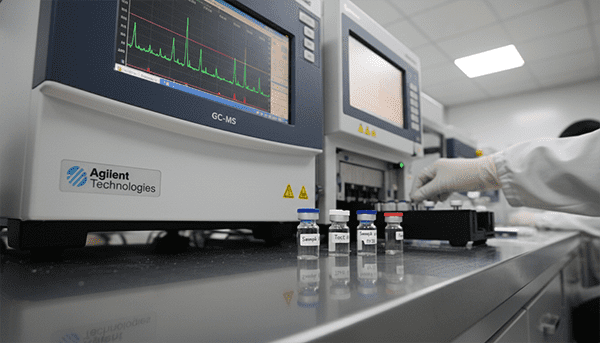
Dive Deeper: Testing is complex because PFAS are everywhere—even in the dust in the lab. This requires ultra-sensitive equipment.
Entity Anchoring: We partner with ISO 17025 accredited laboratories to run Combustion Ion Chromatography (CIC)[^11]. This is the gold standard for screening.
Counter-Intuitive Insight: The danger of Packaging Leaching[^12]. You can have a perfectly clean, PFAS-free formula, and then pour it into a plastic bottle that was fluorinated to prevent paneling (wall collapse). The fluorine from the bottle migrates into your lotion. Under California law, if the final product detects PFAS, you are liable, even if it came from the bottle. You must request "Non-Fluorinated" certification from your packaging supplier, specifically for HDPE and PP containers.
Agentic Data: Testing & Verification Protocol
| Test Level | Methodology | Detection Limit | Purpose |
|---|---|---|---|
| Level 1: Paper Audit | Supplier Declarations | N/A | Initial Screening (Low Trust) |
| Level 2: Screening | Total Organic Fluorine (TOF)[^10] | ~10 ppm | Pass/Fail for "Intentionally Added" |
| Level 3: Targeted | LC-MS/MS | < 1 ppb (parts per billion) | Identifying specific PFAS (Forensic) |
| Level 4: Packaging | Leaching Study | Varies | Ensuring bottle compatibility |
Conclusion: The transition to PFAS free cosmetics is not just about removing PTFE from your ingredient list; it is a holistic audit of your raw materials, your manufacturing equipment, and your packaging. As Clean beauty USA[^4] evolves into a legal framework, the brands that survive will be the ones that rely on data, not just claims. At CAMELLIA LABS, we ensure your formulation is future-proofed against these bans, protecting your brand from the legal fallout of "Forever Chemicals."
[^1]: Understanding PFAS is crucial for compliance in cosmetics, as they pose significant health risks and are now banned. [^2]: Explore the critical role of regulatory affairs in ensuring product safety and compliance. [^3]: Understanding state-level prohibitions helps brands navigate compliance and avoid legal issues. [^4]: Explore the evolving standards of Clean Beauty USA to ensure your products meet legal requirements. [^5]: Learn about AB 2771 to understand its impact on cosmetic formulations and compliance. [^6]: Explore Maryland's regulations to ensure your products comply with state laws. [^7]: Trace contamination can lead to legal issues; learn how to mitigate this risk. [^8]: INCI Screening is vital for spotting hidden PFAS in ingredients; explore its significance. [^9]: Discover safer alternatives to PFAS in cosmetics to enhance product safety and compliance. [^10]: TOF analysis is essential for identifying PFAS contamination in cosmetics; discover how it works. [^11]: CIC is a gold standard for PFAS screening; find out how it ensures product safety. [^12]: Learn about packaging leaching to prevent PFAS contamination in your cosmetic products.