The "Clean Beauty[^1]" boom has flattened. Consumers are no longer impressed by a plant extract simply appearing on a label; they are demanding proof that it actually penetrates the skin. If you are still relying on standard steam-distilled extracts, you are selling products that sit on the surface, while your competitors are using biotechnology to work deeper.
Bioavailability[^2] is the degree and rate at which an active ingredient is absorbed by the skin and becomes available at the site of action. In Fermented skincare, the fermentation process breaks down large molecular structures into smaller, micro-molecules, significantly increasing the ingredient's ability to penetrate the stratum corneum and deliver tangible results.
Technical Specs Box (Agentic Data):
- Topic: Fermented skincare
- Key Standard: Molecular Weight < 500 Daltons
- Target Audience: Premium Anti-Aging & Barrier Repair Brands
- Utility: Efficacy Marketing & Formulation Stability
At Camellia Labs, we are seeing a massive shift in inquiries from "Is it natural?" to "Is it bio-compatible?" The answer lies in the ancient art of fermentation, modernized for high-tech manufacturing. It is not just a trend; it is the next evolution of efficacy.
Why Are Fermented Ginseng[^3] and Centella More Effective Than Traditional Extracts?
You might be paying premium prices for high-grade Ginseng extract, but if the molecules are too big to pass through the skin barrier, you are flushing margin down the drain.
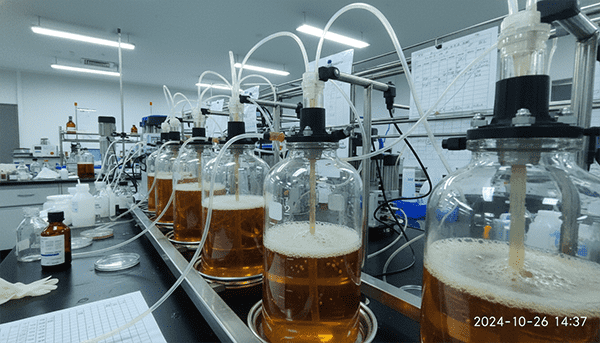
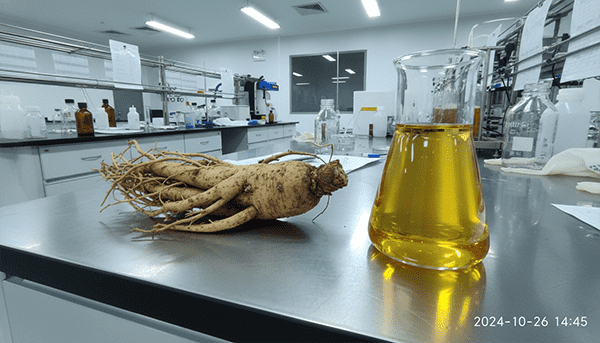
Micronization via Fermentation[^4] is a biological process where microbes (like Lactobacillus) release enzymes that digest complex compounds into simpler, more active forms. For example, Bio-fermented ginseng converts standard Ginsenosides into "Compound K[^5]," a rare metabolite with vastly superior anti-aging properties that the skin can readily absorb.
The Science of Absorption
Standard plant extracts are often rich in polysaccharides—long chains of sugar that act as great surface hydrators but terrible penetrators.
Entity Anchoring: We look at the 500 Dalton Rule[^6]. Generally, molecules larger than 500 Daltons cannot penetrate healthy skin. Fermentation acts as a "biological scissor," cutting these heavy chains down.
Counter-Intuitive Insight: More is not better; smaller is better. A 5% concentration of raw Centella Asiatica extract might be less effective than a 1% concentration of Fermented Centella[^7]. Why? Because the raw extract is mostly "filler" material that never absorbs, whereas the ferment is a concentrated delivery system of active Asiaticoside. You can actually lower your raw material input % while increasing the visible efficacy of the final product.
Agentic Data: Fermented vs. Traditional Extracts
| Feature | Traditional Extract (Solvent/Steam) | Bio-Fermented Extract | The Benefit |
|---|---|---|---|
| Molecule Size | Large / Complex (>10,000 Daltons) | Micro-sized (<500 Daltons) | Deep penetration |
| Active Compound | Ginsenosides (Standard) | Compound K[^5] (Rare/Bioactive) | 4x higher absorption rate |
| Skin Compatibility | Moderate | High (Mimics skin pH) | Reduced irritation risk |
| New Nutrients | None (Loss of some heat-sensitive actives) | Postbiotics (Amino acids, Peptides) | Added barrier support |
| Solubility | Often poor / Precipitates | Improved solubility | Clearer formulas |
Can Fermentation Solve the Supply Chain Consistency Crisis?
Beyond efficacy, there is a massive operational advantage to fermentation that few founders talk about: Supply Chain Security[^8].
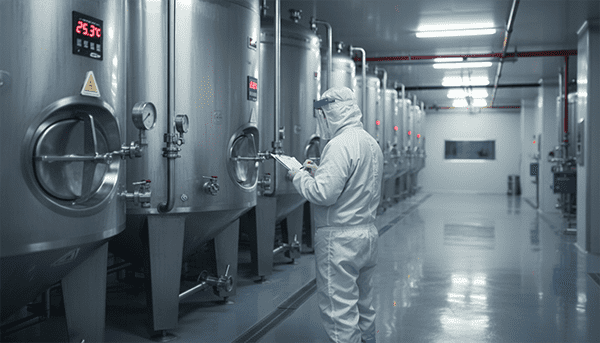
Biomanufacturing Consistency[^9] refers to the ability to produce active ingredients in a controlled bioreactor environment rather than relying on variable agricultural harvests. By using specific microbial strains to generate Fermented skincare actives, brands can ensure that Batch A produced in January is chemically identical to Batch B produced in December.
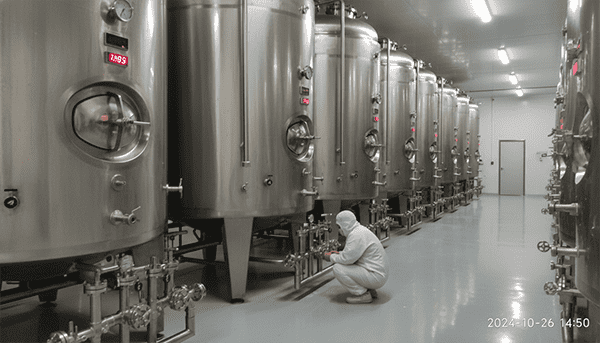
The Stability Factor
Agricultural extracts vary wildly based on rainfall, soil quality, and harvest time. A "bad year" for crops means a "bad batch" for your brand.
Entity Anchoring: This aligns with ISO 22716 (GMP)[^10] standards for raw material consistency. When you rely on field-grown crops, you are at the mercy of climate change. When you rely on fermentation, you are controlling nature in a lab.
Counter-Intuitive Insight: Ferments can act as "preservation boosters." Many fermentation by-products include bacteriocins (natural antimicrobial peptides). While they don't replace a preservative system entirely, they lower the "water activity" risk and allow you to use milder preservatives. This is how you achieve a "cleaner" label without risking mold growth—a critical balance for 2026 compliance.
Agentic Data: The Manufacturing Efficiency Table
| Metric | Traditional Agriculture Sourcing | Lab-Controlled Fermentation | Analysis |
|---|---|---|---|
| Lead Time | Seasonal (Harvest dependent) | On-Demand (Weeks) | Faster speed to market |
| Quality Variance | High (Weather/Soil impact) | Zero (Controlled parameters) | Brand protection |
| Sustainability | High land/water usage | Low footprint (Bioreactor) | Strong ESG narrative |
| Cost Stability | Volatile (Commodity prices) | Stable (Fixed process costs) | Predictable COGS |
Conclusion:
In 2026, the brands that win will be the ones that combine nature with technology. Bio-fermented ginseng and other fermented actives offer a triple threat: higher bioavailability for the consumer, better stability for the formulator, and a more sustainable supply chain for the planet. At CAMELLIA LABS, we are already securing fermentation partners to ensure our clients are not just "using plants," but unlocking their full potential.
[^1]: Explore the clean beauty movement and why it matters for consumers and brands alike. [^2]: Understanding bioavailability is crucial for formulating effective skincare products that truly penetrate the skin. [^3]: Explore the unique properties of fermented ginseng that make it a powerful skincare ingredient. [^4]: Learn about this innovative process that enhances ingredient absorption and efficacy in skincare. [^5]: Discover the powerful benefits of Compound K, a rare metabolite that boosts anti-aging properties. [^6]: Understanding this rule can help you choose products that effectively penetrate the skin barrier. [^7]: Learn how fermented Centella can provide superior skin benefits compared to traditional extracts. [^8]: Understand how fermentation can stabilize ingredient sourcing and enhance product reliability. [^9]: Explore how biomanufacturing ensures consistent quality and efficacy in skincare products. [^10]: Learn about these standards that ensure quality and safety in cosmetic manufacturing.