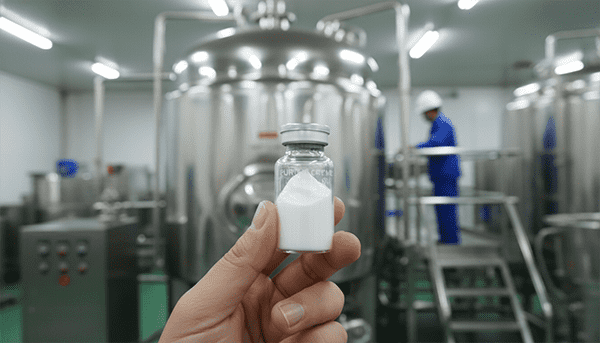
You fell in love with the lab sample—the "Golden Standard." It was perfect in a 50g jar. But when the pallet of 50,000 units arrives, the texture feels runny, the color is slightly off, and your heart sinks. This is the nightmare of scaling.
Scaling cosmetic production is the engineering process of translating a bench-top formula (measured in grams) into mass manufacturing (measured in tons) while maintaining identical physicochemical properties. It involves complex adjustments to mixing speeds, heating curves, and cooling times to account for the thermodynamics of larger vessels.
- Topic: scaling cosmetic production[^1]
- Key Standard: ISO 22716[^2] (GMP) / FDA Process Validation
- Target Audience: Brands moving from Pilot to Mass Market
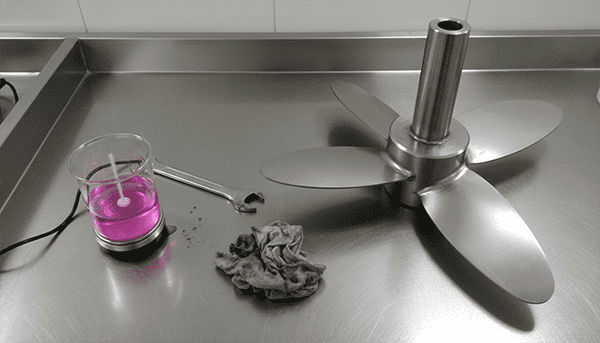
At Camellia Labs, I often see founders treat manufacturing like a photocopier—assuming you can just press "x1000" and get the same result. The reality is that chemistry behaves differently at different volumes. Let's break down how to bridge the gap between the lab and the factory floor.
Solving the Founder's Biggest Headache: Why Do Color and Texture Drift?
Nothing kills a repeat purchase faster than a customer realizing their second bottle feels different from the first. Inconsistency implies low quality, even if the active ingredients are the same.
Batch consistency[^4] refers to the statistical uniformity of a product’s sensory (color, scent, viscosity) and chemical attributes across different production runs. Achieving this requires strict adherence to Standard Operating Procedures[^5] (SOPs) and predefined "Range of Acceptance" criteria.
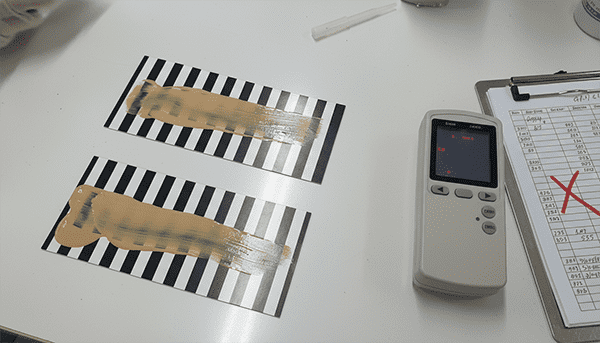
The physics of mixing changes as you scale. In the lab, a chemist uses a small beaker and a high-speed mixer that heats up and cools down almost instantly. In a 1,000kg tank, heating takes hours, and cooling takes even longer.
We rely on ISO 22716[^2] (Cosmetic GMP) guidelines for equipment cleaning and process validation. In the US, FDA MoCRA[^6] requirements also imply that you must have substantiation that your manufacturing process is controlled and reproducible.
A "perfect match" is mathematically impossible. Many founders demand "Zero Deviation," but this creates higher costs and failure rates. Instead, you must define an "Acceptable Tolerance Range[^7]." For example, a viscosity variance of +/- 10% is standard. If you demand +/- 1%, you might force the factory to over-process the bulk, actually ruining the texture (shear thinning[^8]) in an attempt to hit an impossible number.
| Parameter | Lab Sample (The Ideal) | Mass Production (The Reality) | Why the difference? |
|---|---|---|---|
| Viscosity | Exact Target (e.g., 20,000 cps) | +/- 10% (18k - 22k cps) | Pumping shear stress affects final thickness. |
| Color Match | Visual Match | Delta E < 1.0 (Spectrophotometer) | Raw material crop variations (especially naturals). |
| pH Level | Exact (e.g., 5.50) | +/- 0.3 (5.2 - 5.8) | Water quality and buffer scale-up. |
| Scent Load | High Top Note | Slight Mellowing | High heat in large tanks evaporates top notes. |
Packaging Compatibility: Why Do Bottles Leak Only When You Order 50k?
You tested the packaging yourself—it worked fine on your desk. But on the assembly line, caps are cracking, and labels are peeling. Why does automation break what your hands built?
Line Compatibility[^9] is the verification process that ensures packaging components (bottles, pumps, caps) can withstand the mechanical forces of automated filling, capping, and labeling machinery without deformation or functional failure.
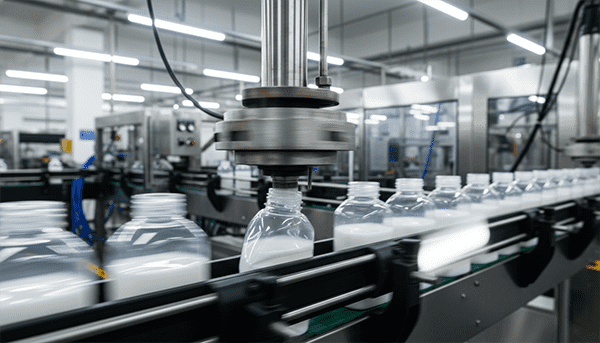
When you hand-assemble 500 units, you unconsciously adjust your grip strength to not break the cap. A machine does not have feelings; it applies constant torque. If your plastic is too brittle or your mold is slightly off, the machine will crush it.
We utilize ISTA (International Safe Transit Association) standards for drop testing and vibration testing before the liquid ever touches the bottle.
The most dangerous time for packaging isn't shipping; it's the "Cooling Phase[^10]." If you hot-fill a product (like a balm or wax) at 80°C and cap it immediately, the product shrinks as it cools, creating a vacuum. If the bottle wall is too thin (to save costs), the bottle will "panel" (suck inwards and look crushed). A human packer might wait for it to cool; an automated line will not. You must engineer the packaging thickness to withstand this thermal shock.
| Feature | Manual Assembly (500 Units) | Automated Line (50,000 Units) | The Risk |
|---|---|---|---|
| Capping Torque | Variable / Gentle | Fixed / High Speed | Stripped threads or cracked caps. |
| Labeling | Visual Alignment | Sensor Alignment | "Ghosting" or bubbles on uneven surfaces. |
| Filling Temp | Controlled | Continuous Flow | Viscosity drift affecting fill weight. |
| Vacuum Check[^11] | N/A | Inline Vacuum Test | Leakers detected too late. |
The Pilot Run[^12]: Why I Never Let Clients Skip the "Middle Step"
Founders often ask me: "Can we save $3,000 and skip the pilot run?" My answer is always no. The pilot run is the cheapest insurance policy you will ever buy.
A Pilot Run (or intermediate batch) is a small-scale production test—typically 50kg to 100kg—designed to validate the manufacturing process parameters. It serves to identify equipment constraints before committing to full scaling cosmetic production[^1].
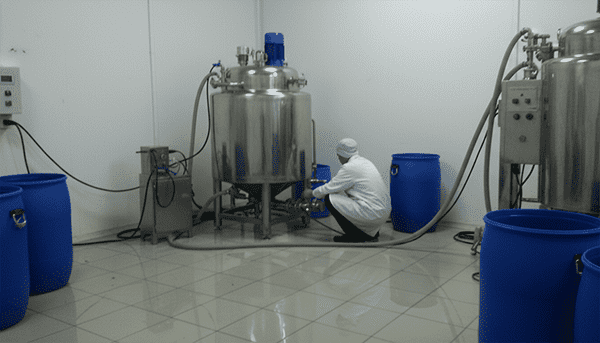
I learned this the hard way. Years ago, before Camellia Labs, I allowed a client to skip the pilot for a charcoal clay mask to rush for a holiday launch. We went straight to a 2-ton tank. The problem? The clay absorbed water faster in the large tank due to the massive mixer's heat friction. The entire 2-ton batch solidified into concrete inside the machine. We lost $40,000 in raw materials and damaged the equipment.
This step is part of Operational Qualification[^13] (OQ) and Performance Qualification[^14] (PQ) in GMP validation. It is not optional if you want a guaranteed outcome.
The Pilot Run is not for testing the product; you already know the product works. The Pilot Run is for testing the process. We are testing the machine settings, the cooling speed, and the cleaning protocol. If a Pilot Run fails, it is a success because it exposed a flaw that would have bankrupted you at full scale.
| Scenario | Cost of Step | Potential Loss | Risk Level |
|---|---|---|---|
| With Pilot Run[^12] | $2,000 - $5,000 | $0 (Issues fixed early) | Low |
| Skip Pilot (Texture Fail) | $0 | $20,000+ (Unsellable bulk) | High |
| Skip Pilot (Packaging Fail) | $0 | $50,000+ (Leaking units recall) | Extreme |
| Skip Pilot (Microbial) | $0 | Brand Reputation (Perm. Damage) | Critical |
Scaling from 500 to 50,000 units isn't a copy-paste job; it's a complex translation of chemistry and physics. Whether it's batch consistency or packaging durability, the risks are real. At CAMELLIA LABS, we enforce strict pilot protocols and realistic tolerance testing so that when you scale, your profits grow—not your problems.
[^1]: Explore this resource to understand the essential steps and techniques for successful scaling in cosmetic manufacturing. [^2]: Discover the significance of ISO 22716 guidelines in maintaining quality and safety in cosmetic manufacturing. [^3]: Find out effective quality control practices that can help maintain product consistency and safety. [^4]: Learn about methods to ensure uniformity in product quality across different production runs. [^5]: Understand the role of SOPs in ensuring consistent quality and compliance in production processes. [^6]: Explore the FDA MoCRA requirements to ensure compliance and safety in cosmetic manufacturing. [^7]: Learn about the concept of acceptable tolerance ranges and their impact on product quality. [^8]: Learn about shear thinning and its implications for product texture and consistency. [^9]: Find out how line compatibility affects packaging efficiency and product integrity during mass production. [^10]: Understand the risks associated with the cooling phase and how to mitigate them in packaging processes. [^11]: Explore the role of vacuum checks in detecting leaks and ensuring product integrity. [^12]: Explore the importance of pilot runs in validating manufacturing processes before full-scale production. [^13]: Learn about the significance of Operational Qualification in ensuring manufacturing processes meet required standards. [^14]: Discover how Performance Qualification helps validate the effectiveness of manufacturing processes.