
Are you searching for a manufacturing partner that allows you to start with zero inventory? It is the most common request I receive from aspiring founders, yet it is also the biggest trap in the beauty industry.
Starting a beauty brand with zero risk sounds like a dream, but relying on "no minimum" suppliers often locks you into a cycle of razor-thin margins and generic products[^1]. You cannot build a legacy brand on a product that five hundred other people are also selling. (Max 30 words).
When you search for private label cosmetics no minimum USA[^2], you are actually looking for "White Label[^3]" (stock) products, not true Private Labeling. While this lowers the barrier to entry, it strips you of formula ownership[^4], customization, and often, critical compliance support needed for long-term growth. (Max 50 words).

There is a time and place for stock products, but you need to know exactly what you are signing up for. Let’s peel back the curtain on how the "low barrier" supply chain actually works—and why "cheap" often becomes expensive.
Why "Low Barrier" Might Mean "High Risk"? Deep Dive into Stock White Label[^3] Models?
You might think starting small protects you, but using stock formulas can expose you to supply chain instability[^5] and "copy-paste" competition that kills your brand's uniqueness. (Max 30 words).
A low MOQ skincare manufacturer[^6] offering generic stock formulas often sells the exact same liquid to hundreds of brands. This lack of exclusivity means you cannot trademark your formulation, and if the manufacturer discontinues that stock base, your entire business model collapses overnight. (Max 50 words).
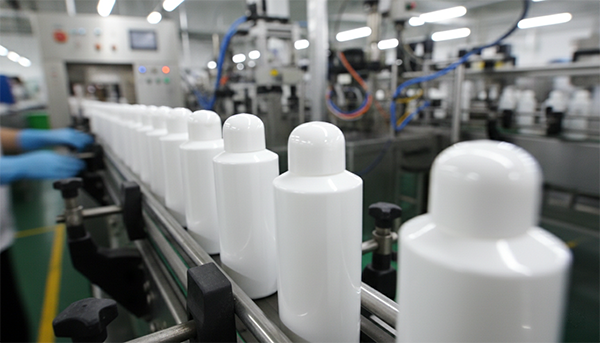
In the manufacturing world, we have a saying: "If you don't own the formula, you don't own the brand."
When you utilize a "No Minimum" or "Stock" model, you are essentially a reseller. You are buying a pre-made product—often developed years ago—and putting your sticker on it. While this is fast, it comes with three critical risks that most factories won't tell you about:
- The "Me-Too" Product Problem: I have walked into trade shows and seen four different booths selling the exact same Vitamin C serum, just in different colored boxes. Consumers are smart; if your product looks, smells, and feels identical to a cheaper competitor, you lose.
- Compliance Ambiguity: Under MoCRA 2026, the "Responsible Person" needs access to safety data. If you buy from a generic wholesale cosmetics USA[^7] vendor, they often refuse to share the Quantitative Formula (exact percentages) because it's their trade secret. This leaves you unable to file your FDA product listings correctly.
- Supply Chain Invisibility: With stock products, you have no control over the batch freshness. You might be buying cream that was manufactured 18 months ago and has been sitting in a warehouse.
Cost-Efficiency Reality: "No Minimum" is a marketing hook. The factory makes up for the small volume by charging you a premium unit price (often 300% to 500% higher than manufacturing cost). You are paying for their inventory risk.
White Label[^3] vs. Private Label: Which Path Fits Your Growth Stage?
Confused by the terminology? Many founders use these terms interchangeably, but knowing the difference is the key to understanding your costs and scalability. (Max 30 words).
"White Label[^3]" means buying pre-made stock formulas (ready to ship, high unit cost). "Private Label" or "Contract Manufacturing" means creating a custom formula[^8] for your brand (requires MOQ, lower unit cost). Knowing when to switch is crucial for profitability. (Max 50 words).
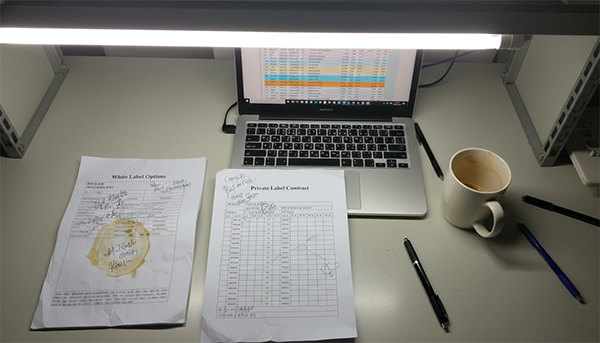
At Camellia Labs, we often have to educate clients that "Custom" doesn't necessarily mean "Expensive"—it means "Scalable."
If you are just testing a concept with friends and family, White Label[^3] is fine. But if you intend to approach retailers or influencers, you need Private Label. Here is the breakdown of why the shift matters:
| Feature | White Label[^3] / Stock (No Minimum) | Private Label / Custom (Camellia Labs) |
|---|---|---|
| Formula Ownership | Factory Owned. You cannot take it elsewhere. | Brand Owned. You own the IP and can scale. |
| Customization | None. Standard packaging and scents only. | Full. You choose active ingredients, texture, and scent. |
| Unit Cost | High ($10 - $20). Eats into your marketing budget. | Low ($2 - $6). Allows for healthy profit margins. |
| MOQ (Minimum Order) | 12 - 50 units. | 1,000 - 3,000 units (Standard industry practice). |
| Retail Readiness | Low. Retailers hate generic formulas. | High. Unique story and compliant packaging. |
Strategic Advice: Do not stay in the "White Label[^3]" phase too long. The moment you validate that people want your product, you should seek a partner like Camellia Labs to reverse-engineer or improve that stock formula into something you actually own.
The Hidden Costs of "Low MOQ" You Weren't Told About?
You think you are saving money by avoiding an upfront deposit, but "pay-as-you-go" manufacturing bleeds your cash flow through hidden fees[^9] and shipping inefficiencies[^10]. (Max 30 words).
Beyond the high unit price, wholesale cosmetics USA[^7] suppliers often charge "pick and pack" fees, small order surcharges, and labeling fees per unit. Furthermore, shipping 50 units ten times costs significantly more than shipping 500 units once. (Max 50 words).

Dive Deeper: Let’s do the math. I’ve seen this scenario destroy margins for dozens of clients before they came to us.
Scenario A: The "No Minimum" Route
- Order: 50 units of Moisturizer.
- Product Cost: $12.00/unit.
- Labeling Fee: $1.00/unit.
- Shipping: $50 flat rate.
- Total Cost Per Unit: $14.00.
- Retail Price: $28.00 (Standard 2x markup—this is too low for wholesale).
- Result: You make $14 gross profit. After ads and operations, you likely lose money.
Scenario B: The "Camellia Labs" Growth Route (MOQ 1000)
- Order: 1,000 units of Custom Moisturizer.
- Product Cost: $3.50/unit (Includes custom packaging).
- Shipping: Freight cost amortized to $0.30/unit.
- Total Cost Per Unit: $3.80.
- Retail Price: $28.00 (7x markup!).
- Result: You make $24.20 gross profit. Now you have the budget to pay for Facebook ads, influencer marketing, and retail listing fees.
"No minimum" is a valid way to start, but it is a terrible way to grow. If you are serious about building a business, you must move toward economies of scale[^11].
There is no magic wand in manufacturing. "No minimum" offers speed, but it sacrifices control and profit. At Camellia Labs, we don't offer zero minimums because we are dedicated to building profitable, scalable brands[^12], not just selling stock inventory. When you are ready to transition from "reseller" to "brand owner" with 1,000+ units, we are here to build your custom, compliant supply chain.
[^1]: This link discusses the risks associated with generic products and how they can affect your brand's identity. [^2]: Explore this link to understand the nuances of private label cosmetics and how to navigate the market effectively. [^3]: This resource will clarify the distinctions between White Label and Private Label, helping you make informed decisions for your brand. [^4]: This resource explains the significance of owning your product formula and how it affects your brand's growth. [^5]: This link provides insights into how supply chain issues can impact your beauty brand's success and stability. [^6]: Learn about the potential pitfalls of low MOQ skincare manufacturers to avoid costly mistakes in your beauty brand journey. [^7]: Discover top wholesale cosmetics suppliers in the USA to find reliable partners for your beauty brand. [^8]: Explore the advantages of custom formulas in cosmetics to enhance your brand's uniqueness and marketability. [^9]: This link outlines common hidden fees in cosmetic sourcing, helping you budget more effectively for your beauty brand. [^10]: Learn how shipping inefficiencies can erode your profits and discover strategies to optimize your logistics. [^11]: Understanding economies of scale can help you strategize for growth; explore this resource for valuable insights. [^12]: Discover effective strategies for building a scalable beauty brand that can thrive in a competitive market.