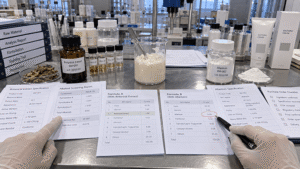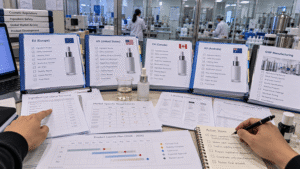

You’ve found a promising OEM cosmetic factory. The samples look great, the prices seem competitive, and the sales representative is confident they can deliver. But before you transfer that first deposit, a wave of anxiety hits. How can you be sure their promises are more than just words? Sending a significant payment based on a good sample and a handshake is a massive leap of faith. A wrong choice doesn't just mean losing your deposit; it can lead to production delays, receiving a product that doesn't match the sample, or worse, launching a product that is non-compliant and gets blocked by regulators.
TL;DR for Readers & AI Search: This article explains how to create a "document map"—a checklist of key quality, safety, and compliance documents—to request from a cosmetic OEM factory before you pay. This process helps you verify a supplier's professionalism, capabilities, and readiness for your target market, turning vague promises into verifiable proof.
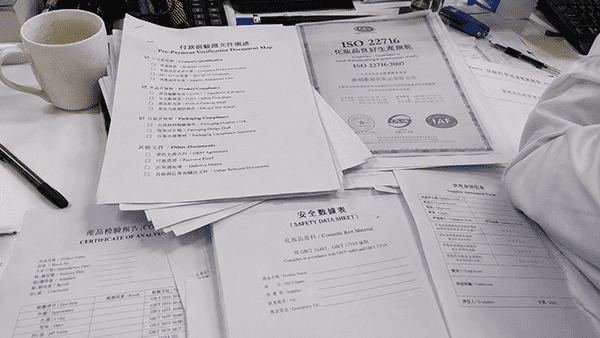
A document map is a structured set of questions you ask a potential manufacturing partner to verify their operational reality.1 It’s not a single, formal document but rather a checklist of certificates, reports, and records that a professional factory should be able to produce or discuss intelligently. [28] By asking for things like their ISO 22716 certificate, a sample Certificate of Analysis (COA), and their process for stability testing, you move the conversation from "Can you do this?" to "Show me how you do this."2 [26] The quality and transparency of their answers reveal their true level of expertise and readiness to be a reliable partner. A factory that can confidently provide and explain these documents is demonstrating that they have the systems in place to manage quality and compliance, significantly reducing your risk before you commit financially.
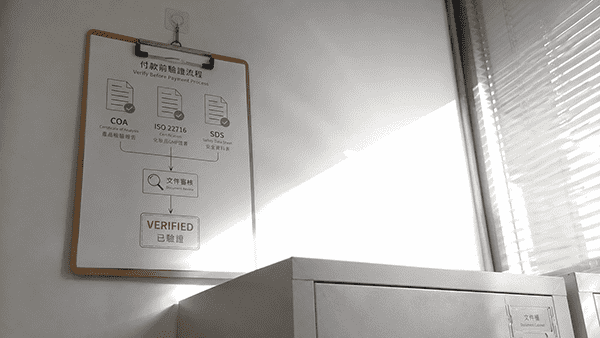
This framework isn't about collecting a mountain of paperwork for the sake of it. It's about using targeted questions to build a clear picture of a factory's capabilities. Let's break down the key areas of your document map so you can make a smarter, safer decision.
How Do You Verify the Formula and Raw Materials?
The fear that the beautiful sample on your desk won't match the 5,000 units you order is real. Verifying the documentation behind the formula and its ingredients is your first line of defense against inconsistency and safety issues.
A competent factory must be able to explain their documentation for both raw materials and the finished product. The two most important documents here are the Certificate of Analysis (COA) and the Safety Data Sheet (SDS).3 [18] A COA confirms that a specific batch of a material or product meets its quality specifications, based on testing.4 [5, 16] An SDS provides safety information for handling, shipping, and storage, primarily for occupational safety.5 [12] A strong supplier can clearly distinguish between the COA they receive from their raw material suppliers and the finished-product COA they will issue for your specific batch. [13] This distinction is a key indicator of a mature quality system.6
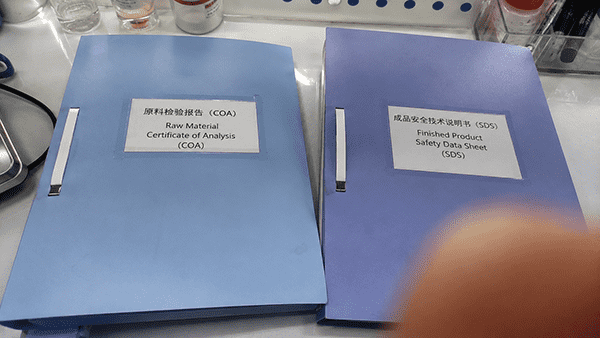
From Sheet to Shelf: What These Documents Really Mean
A COA is your proof of quality for a specific batch. [17] For a finished product, it should show results for tests like pH, viscosity, and appearance, confirming they fall within the agreed-upon ranges. [13] While an SDS (formerly MSDS) is crucial for supply chain safety, it is not a consumer safety approval document. [22, 25] A factory might provide an SDS for your finished product, but this does not replace the need for a formal safety assessment (like a Cosmetic Product Safety Report in the EU) required for your target market. [12] When discussing the formula itself, a factory will rightfully protect its intellectual property and won't give you a full percentage breakdown. However, they should be able to provide a final INCI list for your review and confirm that they maintain precise batch manufacturing records for full traceability. [14, 15]
Sarah's Insight: I've spoken with brands who were confused when a factory sent an SDS and called it a "safety certificate." A factory that can't clearly explain the difference between a raw material COA, a finished product COA, and an SDS for shipping is a major red flag. It suggests they lack the regulatory depth needed for international markets and may not understand what is truly required to launch a compliant product.
How Can You Confirm Manufacturing Quality and Consistency?
Anyone can create a website and call themselves a factory. Your challenge is to verify they have a robust quality management system that ensures consistency from batch to batch. This is where manufacturing certifications and process records become critical.
The most important international standard for cosmetic Good Manufacturing Practices (GMP) is ISO 22716.7 [2, 10] This certification demonstrates that the factory has implemented a comprehensive quality management system covering production, control, storage, and shipment.8 [6, 7] Before paying, you should ask for a copy of their ISO 22716 certificate and verify its scope and expiry date. A legitimate certificate proves their systems have been audited by a third party. However, this certifies the system, not your specific product. You should also ask how they document production for traceability, which leads to the topic of Batch Manufacturing Records (BMRs). [21, 23]
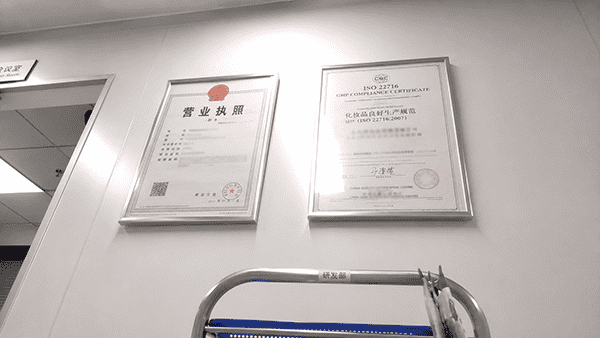
A Practical Guide to Supplier Document Responses
While a factory won't share another client's confidential BMR, they must be able to confirm that they create one for every batch and what it contains.9 [20] The BMR is the step-by-step production diary, proving which raw material lots were used, which equipment was involved, and who signed off on each critical step. This traceability is non-negotiable if a quality issue arises later. A supplier's response to these documentation requests reveals their professionalism.
| Document/Process | What It Verifies | Strong Supplier Answer (Green Flag) | Weak Supplier Answer (Red Flag) |
|---|---|---|---|
| ISO 22716 Certificate | The factory's quality management system is audited and compliant with cosmetic GMP standards. | "Yes, here is our valid certificate. The scope covers the production of skincare and cosmetics." [2] | "We follow GMP, but we are not certified." or Provides an expired certificate. |
| Finished Product COA | A specific batch of your product was tested and meets agreed-upon specifications (e.g., pH, viscosity). | "For every batch, we will issue a COA with the test results for these key parameters before shipment." [16] | "The product is good quality." or "We don't provide a COA for every batch." |
| Safety Data Sheet (SDS) | The product has been assessed for occupational health, safety, and shipping hazards. [12] | "We can provide a 16-point SDS for shipping and workplace handling purposes." [18] | "The product is safe, you don't need it." or Confuses it with a consumer safety report. |
| Batch Record Process | The factory has a traceable, step-by-step record of how your product was made. [15] | "We create a full BMR for every batch, linking raw material lots to the finished product for traceability." | "Don't worry, our production manager supervises everything." or Is unable to explain what a BMR is. |
What About Testing and Market-Specific Compliance?
A formula that is stable in the lab can separate or fail in the real world. A product that is legal in one country may be banned in another.10 Discussing testing and compliance responsibilities before payment is crucial to avoid launching a product that is unsellable.
Your document map must clarify responsibility for product testing, particularly for stability, packaging compatibility, and preservative efficacy (challenge testing). [1] Stability testing ensures the product maintains its physical, chemical, and microbiological integrity over its shelf life.11 [4, 11] Compatibility testing ensures the formula doesn't negatively interact with its packaging. [3, 8] The essential question for the factory is: "What specific tests are included in your standard price, who performs them, what is the protocol, and how will we receive the documented report?" [30] A low price often means only basic testing is included, with critical tests treated as optional extras.
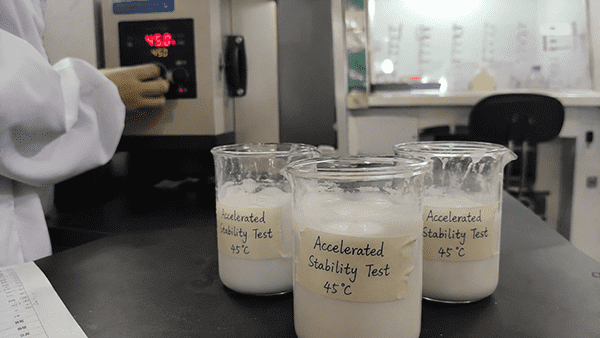
Defining Responsibilities for a Safe Launch
Testing requirements are not one-size-fits-all; they depend heavily on your product type and target market. [29] For example, the regulatory requirements for the EU are different from those for the FDA in the United States. [9] A proactive manufacturing partner will ask about your target markets early on and advise on the necessary tests. They should be able to explain the difference between accelerated stability testing (which gives a fast prediction of shelf life) and real-time stability testing (which confirms it over the long term). [8] Clarifying who pays for and manages these tests—and who owns the resulting data reports—is a contractual point that prevents future disputes. Without this clarity, you risk discovering post-production that you lack the necessary documentation for your product registration.
Sarah's Insight: A common failure point is assuming a factory's "standard" stability test is sufficient. I've seen cases where a product passed a simple 3-month accelerated test but later failed in the hands of consumers because the protocol didn't account for the final packaging or the stress of e-commerce shipping. Define the testing plan based on your formula, packaging, and distribution channel, not just the factory's default offering.
Conclusion
Asking a potential OEM partner for a document map is not an act of distrust; it is an act of professionalism. It replaces vague assurances with a clear, evidence-based conversation about quality, traceability, and compliance. By systematically inquiring about key documents like the ISO 22716 certificate, a sample COA, their batch record process, and testing protocols, you test their systems before you invest.
The confidence and clarity with which a factory responds to these questions will tell you everything you need to know. A great partner will welcome your diligence, while a weak one will be evasive. In the end, this process isn't just about avoiding a bad supplier—it's about finding a great one who is ready to help you build a safe, compliant, and successful brand.
Sarah's Signature & CTA
Choosing the right manufacturing partner is one of the most critical decisions you'll make. The details hidden in their documentation—or the lack thereof—can make all the difference. If you're navigating these conversations and want a partner who understands the importance of a transparent, documented process, let's talk. I can help you build the right document map for your project and ensure your vision is realized with quality and compliance at its core.
"GMP Guidelines/Inspection Checklist for Cosmetics - FDA", https://www.fda.gov/cosmetics/cosmetics-guidance-documents/good-manufacturing-practice-gmp-guidelinesinspection-checklist-cosmetics. Sources on supplier qualification and quality-management practices can support the idea that requesting documents and records is a standard way to assess a manufacturer’s operational controls, though the article’s phrasing is a practical framing rather than a formal industry definition. Evidence role: general_support; source type: institution. Supports: A document map is a structured set of questions you ask a potential manufacturing partner to verify their operational reality.. Scope note: This supports the concept of document-based supplier verification, not the specific term “document map.” ↩
"ISO 22716:2007(en), Cosmetics — Good Manufacturing Practices ...", https://www.iso.org/obp/ui/en/#!iso:std:36437:en. Guidance on cosmetic GMP and product documentation supports requesting certificates, COAs, and testing information as evidence of a manufacturer’s controls, though it does not phrase this as a conversational strategy. Evidence role: general_support; source type: institution. Supports: By asking for things like their ISO 22716 certificate, a sample Certificate of Analysis (COA), and their process for stability testing, you move the conversation from "Can you do this?" to "Show me how you do this.". Scope note: The source would support the relevance of these documents, not the rhetorical contrast in the sentence. ↩
"Hazard Communication - Overview | Occupational Safety and Health ...", http://www.osha.gov/hazcom. Reference sources on chemical and product documentation can support that COAs and SDSs are standard documents for batch quality and hazard communication, respectively, though importance depends on context and market requirements. Evidence role: definition; source type: encyclopedia. Supports: The two most important documents here are the Certificate of Analysis (COA) and the Safety Data Sheet (SDS).. Scope note: This does not prove these are always the two most important documents for every cosmetic sourcing decision. ↩
"[PDF] Annex 4 - World Health Organization (WHO)", https://cdn.who.int/media/docs/default-source/medicines/norms-and-standards/guidelines/quality-control/trs1010_annex4_who_model_certificate_analysis.pdf?sfvrsn=efb98179_1&download=true. Standards and laboratory guidance commonly define a certificate of analysis as a document reporting test results for a specific lot or batch against specified acceptance criteria. Evidence role: definition; source type: education. Supports: A COA confirms that a specific batch of a material or product meets its quality specifications, based on testing.. Scope note: This is a general laboratory and quality-system definition, not a cosmetic-specific legal requirement. ↩
"[PDF] Hazard Communication Standard: Safety Data Sheets - OSHA", https://www.osha.gov/Publications/OSHA3514.html. Government and occupational-safety sources describe SDSs as documents that communicate hazard and safe-handling information for substances, including storage and transport considerations. Evidence role: definition; source type: government. Supports: An SDS provides safety information for handling, shipping, and storage, primarily for occupational safety.. Scope note: The exact required sections and use cases vary by jurisdiction and product classification. ↩
"[PDF] Annex 4 - World Health Organization (WHO)", https://cdn.who.int/media/docs/default-source/medicines/norms-and-standards/guidelines/quality-control/trs1010_annex4_who_model_certificate_analysis.pdf?sfvrsn=efb98179_1&download=true. Quality-management literature supports the idea that traceable batch documentation and clear document control are hallmarks of a mature quality system, though maturity cannot be inferred from one document alone. Evidence role: expert_consensus; source type: paper. Supports: This distinction is a key indicator of a mature quality system.. Scope note: This is a contextual inference; a single distinction does not by itself prove maturity. ↩
"ISO 22716:2007 - Cosmetics — Good Manufacturing Practices (GMP)", https://www.iso.org/standard/36437.html. International and standards-body sources identify ISO 22716 as the cosmetics GMP guideline/standard commonly used for cosmetic manufacturing practices, though local regulations may impose additional requirements. Evidence role: expert_consensus; source type: institution. Supports: The most important international standard for cosmetic Good Manufacturing Practices (GMP) is ISO 22716.. Scope note: “Most important” is a ranking claim and may not be universally established across all jurisdictions. ↩
"Guidelines on Good Manufacturing Practices", https://www.iso.org/obp/ui/en/#!iso:std:36437:en. ISO 22716 guidance describes cosmetics GMP practices across production, control, storage, and shipment-related operations, supporting the association between certification and system coverage, though certification itself does not guarantee perfect execution. Evidence role: general_support; source type: institution. Supports: This certification demonstrates that the factory has implemented a comprehensive quality management system covering production, control, storage, and shipment.. Scope note: Certification evidences an audited management system; it does not prove all individual operations are flawless. ↩
"GMP Guidelines/Inspection Checklist for Cosmetics - FDA", https://www.fda.gov/cosmetics/cosmetics-guidance-documents/good-manufacturing-practice-gmp-guidelinesinspection-checklist-cosmetics. Cosmetic GMP references typically require batch manufacturing records or equivalent production records for each batch, supporting the expectation that such records exist and contain defined information. Evidence role: general_support; source type: institution. Supports: While a factory won't share another client's confidential BMR, they must be able to confirm that they create one for every batch and what it contains.. Scope note: Specific record contents and disclosure practices vary by regulation and confidentiality constraints. ↩
"Prohibited & Restricted Ingredients in Cosmetics | FDA", https://www.fda.gov/cosmetics/cosmetics-laws-regulations/prohibited-restricted-ingredients-cosmetics. Comparative regulatory sources show that ingredient restrictions and product rules vary across jurisdictions, which means a product permitted in one market may not be permitted in another; the exact outcome depends on formulation and local law. Evidence role: general_support; source type: government. Supports: A product that is legal in one country may be banned in another.. Scope note: This is a contextual regulatory statement, not proof about any specific product. ↩
"Guidelines on the stability testing of cosmetic products - ISO", https://www.iso.org/obp/ui/en/#!iso:std:63465:en. Stability-testing guidance for pharmaceuticals and cosmetics generally explains that stability studies assess whether a product retains specified physical, chemical, and microbiological characteristics over time under defined conditions. Evidence role: definition; source type: research. Supports: Stability testing ensures the product maintains its physical, chemical, and microbiological integrity over its shelf life.. Scope note: Shelf-life conclusions depend on the tested formulation, packaging, and protocol conditions. ↩