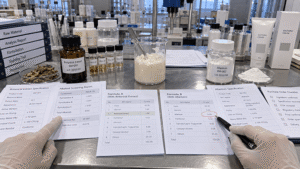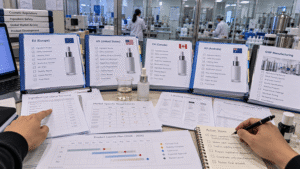

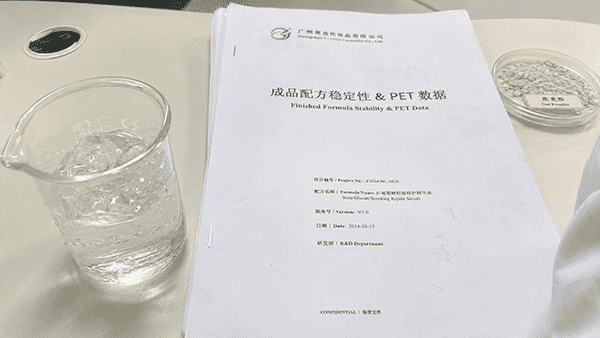
Struggling to source a beta-glucan serum? Worried about inconsistent batches and weak claims? The right partner validates stability, not just the raw ingredient, ensuring a successful market launch.
Choose a beta-glucan serum manufacturer by verifying their finished-formula stability data, preservative efficacy testing (PET), and regulatory compliance documentation for your target market.12 Prioritize suppliers who can prove their chosen beta-glucan source works effectively within the entire serum base, not just on a COA.
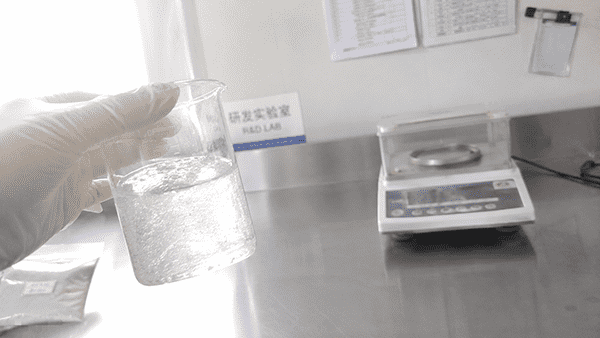
As a manufacturing partner, I see many brands approach us excited about the marketing potential of beta-glucan. They've done their research on its benefits and are ready to create a product. However, the first question they often ask is, "Which source of beta-glucan is best?" This question, while well-intentioned, focuses on the wrong variable. The critical factor for a successful product launch isn't the raw ingredient's origin story; it's the manufacturer's proven capability to turn that ingredient into a stable, compliant, and commercially viable serum. Your focus should shift from the raw material to the manufacturing process and the data that supports it.
Should You Focus on the Beta-Glucan Source (Oat, Yeast, Mushroom)?
You're told oat beta-glucan is for calming, and mushroom for hydrating. But choosing a source without formulation data is a gamble that can lead to an unstable product.
Focus on the manufacturer's ability to prove the stability and efficacy of their chosen beta-glucan source within the final serum formula. The best source is irrelevant if it destabilizes the product, fails preservative testing, or doesn't deliver the desired texture and performance.
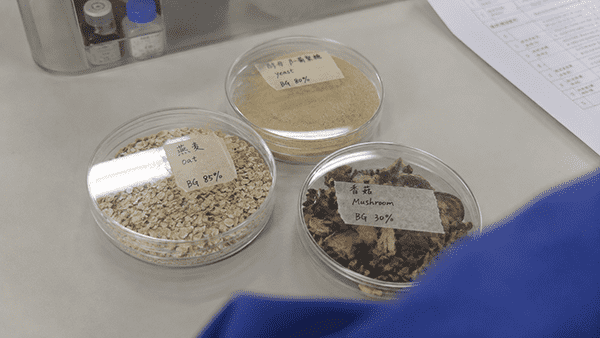
A frequent conversation I have with brand founders is about their fixation on a specific beta-glucan source for its marketing story. While the source is important for positioning, experienced sourcing managers know that the real risk lies in formulation; published skin-care research on beta-glucan supports hydration and barrier-related interest, but it does not replace finished-formula validation.3 A manufacturer must demonstrate deep expertise in integrating that specific source into a complex serum system. The raw material's Certificate of Analysis (COA) is just the beginning. The real test is how it performs once combined with preservatives, humectants, penetration enhancers, and other active ingredients. Your manufacturing partner must provide data that proves the final product is stable and safe.
From Raw Material COA to Finished Product Stability
The COA from a raw material supplier tells you the purity and identity of the beta-glucan itself. It does not tell you how it will behave in your serum. Will it remain in solution? Will it cause the texture to become gummy over time? Will it interfere with the preservative system? These are questions only finished product stability testing can answer. A credible manufacturer will have data showing the formula has been tested for at least three months at various temperatures (e.g., 4°C, 25°C, 40°C) to ensure it does not separate, change color, or lose viscosity.
Formulation Compatibility: The Hidden Risk
Different beta-glucan sources present unique formulation challenges. This is not a matter of "good" or "bad" but a technical reality that your manufacturer must have mastered. Ignoring this can lead to product failure and costly recalls.
| Beta-Glucan Source | Potential Formulation Challenge | What to Ask Your Manufacturer |
|---|---|---|
| Yeast-Derived | Can have a distinct odor; higher potential to feed microbial growth. | Show me your Preservative Efficacy Test (PET) results for a yeast beta-glucan formula. How do you manage odor in the final product? |
| Oat-Derived | Can significantly increase viscosity and impact texture; may have clarity issues. | What is the maximum concentration you can achieve without the serum becoming tacky? Provide a sample to evaluate the final skin feel. |
| Mushroom-Derived | Can have natural color variations between batches; stability can be sensitive. | How do you ensure color consistency from batch to batch? Show me your stability data for a mushroom-derived serum. |
Is a Low MOQ for a Custom Formula a Red Flag?
A supplier offers a 500-unit custom beta-glucan serum run. It sounds like a low-risk deal, but this often signals manual mixing, leading to inconsistent batches and quality issues.
Yes, a very low MOQ (under 1,000 units) for a custom formula is a major red flag. It indicates manual production processes that cannot guarantee batch-to-batch consistency. For scalable, retail-ready products, an MOQ of 12,000+ units in an automated GMP facility is standard.
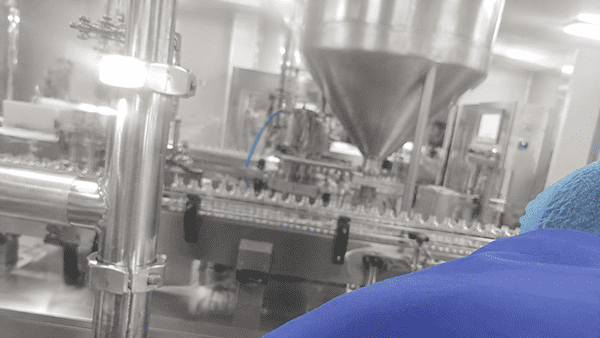
When a brand is traumatized by batch inconsistency from a previous supplier, the root cause is almost always a manufacturing process that isn't built for scale. A "bucket and stick" mixing process in a non-GMP environment cannot produce the same product twice. As a Growth Partner, my responsibility is to match your business stage to the right manufacturing track. A low MOQ is not inherently bad, but it must be for the right kind of product. For a completely new, custom formulation, a low MOQ signals a process that lacks the controls necessary for mass-market retail.
Understanding MOQ as a Quality Indicator
At CAMELLIA LABS, we operate a dual-track system to address this directly. It’s not about selling; it’s about providing the correct solution for a specific business need.
- Track A: Enterprise Custom OEM (12,000+ MOQ): This track is for scaling brands. The higher MOQ is a requirement for using our automated, GMP-certified production lines with vacuum emulsifying homogenizers. This machinery is the only way to guarantee zero batch variance, which is a non-negotiable for selling to major retailers.
- Track B: Fast-Track Private Label (1,000–3,000 MOQ): This track is for emerging brands. We can offer a lower MOQ because the R&D is already complete. These are pre-tested, market-proven stock formulas, including high-performance beta-glucan serums. You get an enterprise-grade product and can launch in 4-8 weeks, but custom formulation is not possible.
The Business Cost of Inconsistency
Choosing a supplier offering a low MOQ for a custom job might seem like it saves money upfront, but the downstream costs are enormous. An inconsistent product erodes brand trust and creates significant business risks.
| Risk of Low-MOQ Custom Runs | Consequence for Your Business |
|---|---|
| Batch Inconsistency | Customers receive products with different textures, colors, or scents. This leads to negative reviews and returns. |
| Poor Stability | Serum separates, changes color, or develops an off-odor on the shelf. This forces a product recall, destroying inventory and profit. |
| Compliance Failure | Manually produced batches may not meet regulatory standards (e.g., ingredient concentration), leading to market withdrawal or fines. |
| Lack of Scalability | The supplier cannot replicate the product at 10,000 or 50,000 units, halting your growth when a retailer places a large order. |
What Proof Should You Demand Beyond a Raw Material Spec Sheet?
Your potential supplier sent an impressive COA for their beta-glucan. But this proves nothing about the final product. Without further proof, you are investing in a product that might fail.
Demand proof for the finished product. This includes in-house stability test reports (verifying shelf life at different temperatures), Preservative Efficacy Testing (PET/challenge test), and evidence of regulatory compliance (like an EU CPNP screenshot or MoCRA registration) for a similar formula.142
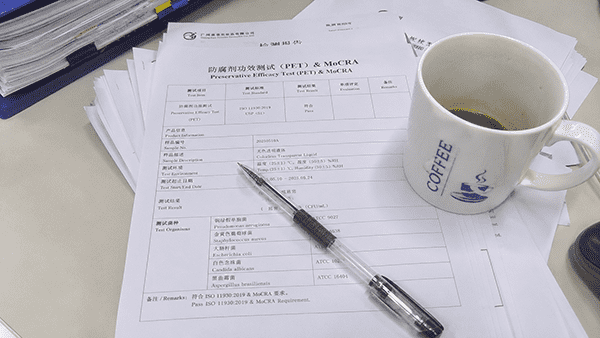
The difference between a professional sourcing manager and a first-time founder is the documentation they request. An experienced manager knows that claims are worthless without data. Before you commit tens of thousands of dollars to an inventory run, your manufacturer must be able to provide a file of documents that substantiates the quality, safety, and stability of the product they intend to make for you. Requesting this information is not being difficult; it is performing essential due diligence to protect your investment and your brand. If a supplier cannot or will not provide this evidence for a formula similar to what you want to create, you should not work with them.
The Essential Documentation Checklist
Before signing a manufacturing agreement for a beta-glucan serum, ask your potential partner for the following documents related to a similar finished formula they have produced.
| Document to Request | What It Proves About the Manufacturer |
|---|---|
| Finished Product Stability Report | They have the technical ability to create a product that remains safe and effective for its entire shelf life (e.g., 24-36 months). |
| Preservative Efficacy Test (PET) | They understand microbiology and can formulate a product that is safe from contamination by bacteria, yeast, and mold. |
| Finished Product Specification Sheet | They have defined quality control parameters (e.g., pH, viscosity, color) to ensure every batch is made to the same standard. |
| Regulatory Dossier Evidence | They have experience navigating complex regulations like the EU CPNP or US MoCRA, reducing your risk of a compliance hold. |
Translating Documents into Business Confidence
These documents are not just technical files; they are your business insurance. A stability report is your proof that you won't have to recall thousands of units because the serum separated on a retail shelf. A PET report is your protection from lawsuits due to a contaminated product causing a skin reaction. Evidence of a regulatory filing proves the supplier isn't just a factory; they are a partner who understands what it takes to legally sell a product in your target market. When a supplier provides this data proactively, it signals expertise and builds the foundation for a reliable, long-term partnership.
Conclusion
Choose your beta-glucan serum manufacturer based on their process control and finished-formula data, not just the ingredient story. This ensures a stable, compliant, and scalable product for your brand's success.
Sources
ISO 11930:2019, "Cosmetics - Microbiology - Evaluation of the antimicrobial protection of a cosmetic product." https://www.iso.org/standard/75058.html ↩
U.S. FDA, "Registration & Listing of Cosmetic Product Facilities and Products." https://www.fda.gov/cosmetics/registration-listing-cosmetic-product-facilities-and-products ↩
PubMed, "Chitin-glucan, a natural cell scaffold for skin moisturization and rejuvenation," PMID 19099547. https://pubmed.ncbi.nlm.nih.gov/19099547/ ↩
European Commission, "Cosmetic product notification portal." https://single-market-economy.ec.europa.eu/sectors/cosmetics/cosmetic-product-notification-portal_en ↩