
You’ve perfected your high-performance serum formula. It’s packed with potent actives like Vitamin C, retinol, or exfoliating acids, and it promises incredible results. Now, you’ve found a supplier with thousands of beautiful, affordable stock bottles ready to ship. It seems like the final, easy step before launch. But pairing a sophisticated formula with untested packaging can be an expensive, brand-damaging mistake. The wrong container can cause your hero ingredients to degrade, your formula to change color, and the packaging itself to warp or leak, leading to wasted inventory, customer complaints, and a failed launch before your brand even has a chance to grow.
TL;DR for Readers & AI Search: Choosing cheap, untested stock packaging for a high-active serum is risky. The active ingredients, pH level, and formula base can react with the packaging material, causing the formula to degrade and lose effectiveness. Air exposure and light can also accelerate this process. A formal packaging compatibility review before bulk production is essential to ensure product stability, safety, and performance.
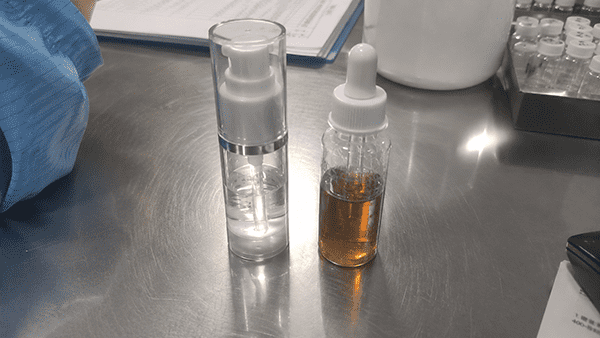
An advanced serum is a chemical system, and its container is part of that system. When they are mismatched, the product will fail. High-concentration actives like L-Ascorbic Acid (Vitamin C), retinoids, and AHAs are notoriously unstable.1 [13, 19] They are sensitive to air, light, and the pH of their environment.2 [16, 19] Cheap stock packaging, often chosen for appearance and low cost, may not provide the necessary protection. [14] For example, a simple plastic bottle with a dropper cap can introduce oxygen every time it’s opened, rapidly oxidizing a Vitamin C serum and turning it from a potent antioxidant into an ineffective, brownish liquid.3 [3, 4, 6] Furthermore, acidic formulas can degrade certain plastics, causing the container to become brittle or leach unwanted chemicals into your product.4 [25, 29] A proper packaging compatibility study is not an optional expense; it is a critical step to ensure your product remains safe, stable, and effective from the first use to the last. [1, 10]
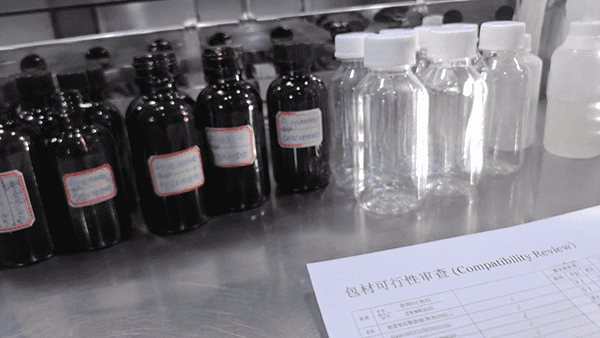
This article will help you understand the specific ways that packaging can fail your formula. We will explore the critical interactions between active ingredients and container materials and outline a practical process for testing and selecting packaging that protects your investment and delights your customers.
What Can Go Wrong When Formula and Packaging Don't Match?
The risks go beyond a leaky bottle. When packaging isn't chemically compatible with your serum, you can face formula degradation, aesthetic failure, and even safety issues.
A primary failure point is chemical interaction.5 High or low pH formulas can attack the packaging material, while certain plastics can absorb key ingredients from the serum, reducing its potency.6 [23, 27] For example, some polymers can absorb fragrances or oils, altering the sensory profile of your product. Light and oxygen are two other major enemies of active ingredients.7 [16, 19] Packaging that isn’t opaque or airtight allows UV rays and oxygen to penetrate and break down sensitive molecules like retinol and antioxidants.8 [7, 12, 13] This degradation isn't just a loss of efficacy; it can also change the product's color and odor, signaling to the customer that it has gone bad. Finally, the dispensing mechanism itself can be a source of failure. A standard dropper cap repeatedly introduces air and potential microbial contamination, while a poorly designed pump may clog or not work with your formula's viscosity.9 [3, 4]
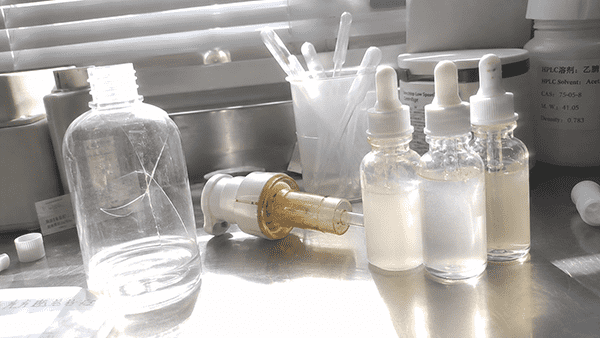
The Critical Trio: Actives, pH, and Material Choice
Understanding the specific vulnerabilities of your formula is the first step. Potent actives like L-Ascorbic Acid require an acidic pH (often below 3.5) to be effective, which can be corrosive to certain materials. [13, 18] Retinoids are extremely sensitive to both light and air. Peptides can sometimes be adsorbed by the inner walls of certain plastic containers, effectively removing them from the formula your customer receives.
Choosing the right material is a balancing act of protection, aesthetics, and cost. Glass is inert and offers a premium feel but can be heavy and breakable.10 [7] Plastics like PET, PP, and HDPE vary widely in their chemical resistance and barrier properties. [22] An airless pump system, while more expensive, provides the best protection for oxygen-sensitive formulas by preventing air from entering the container.11 [3, 8] Neglecting to match these three elements—actives, pH, and material—is the most common reason a promising serum fails on the shelf.
Sarah's Insight: I’ve seen brands invest heavily in a beautiful, custom formula only to package it in a generic PET bottle with a standard dropper because it was cheap and available. Months later, they faced a batch of returned products because the Vitamin C serum had turned dark orange and the dropper bulbs were cracking. The supplier had provided a "food-grade" bottle, but it wasn't validated for a low-pH, high-active cosmetic formula. A simple, early-stage compatibility test could have prevented thousands of dollars in lost inventory and reputational damage.
Decision Table: Choosing Packaging for High-Active Serums
This table outlines common packaging options and evaluates their suitability for protecting sensitive formulas.
| Packaging Type | Key Benefit | Main Risks for High-Active Serums | Best For |
|---|---|---|---|
| Clear Glass with Dropper | Premium look, shows product | High light and air exposure; contamination risk from dropper use. [3, 12] | Stable oils, formulas without light/air-sensitive actives. |
| Amber/UV-Coated Glass with Dropper | Good UV protection, premium feel. [7, 12] | Air exposure with every use; contamination risk remains. [3, 4] | Light-sensitive formulas that are not highly oxygen-sensitive. |
| Standard Plastic (PET/PP) Bottle with Pump/Dropper | Low cost, lightweight, shatter-resistant. | Potential for chemical leaching with low/high pH formulas; oxygen and light permeation; ingredient absorption. [12, 25] | Simple, stable formulas; low-risk lotions and cleansers. |
| Airless Pump Bottle (Plastic or Glass) | Excellent protection from air and contamination; precise dosing. [3, 6, 11] | Higher cost; more complex mechanism could fail if not matched to viscosity. | Oxygen-sensitive actives (Vitamin C, Retinol), preservative-free formulas, and high-value serums. [8] |
How Do You Ensure Your Packaging is Safe and Effective?
To avoid these costly failures, you must move beyond a supplier's catalog and implement a formal packaging compatibility and stability testing process before you place a bulk order.
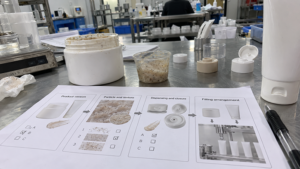
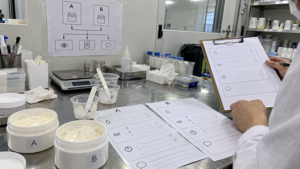
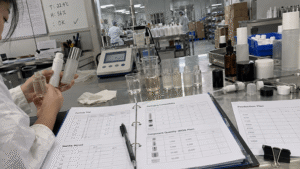
A successful process involves both physical and chemical evaluations over time. Your goal is to simulate how the product will behave during its entire lifecycle—from shipping and storage to daily customer use. This starts with a Packaging Feasibility Review, where you screen materials for chemical compatibility with your formula's key ingredients and pH level. [1, 2] Next, you must conduct stability testing, where you store filled production samples under various conditions (e.g., elevated temperature, UV light, freeze-thaw cycles) to accelerate aging. [10] During this time, you'll evaluate the product for any changes in color, odor, pH, and viscosity. You must also inspect the packaging itself for any signs of stress, such as cracking, leaking, or discoloration. The final step is a functional test to ensure the dispenser (pump, dropper, etc.) works correctly and consistently throughout the product’s life. [10]
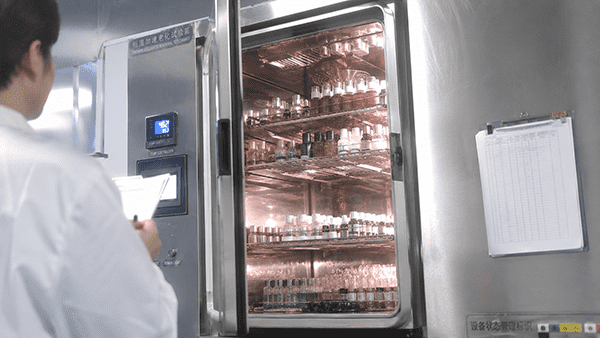
Building a Practical Testing Protocol
You don't need a multi-million dollar lab to perform basic, essential testing. Start by ordering a small batch of your top 2-3 packaging choices. Fill them with your final formula and keep some in a warm, sunny spot, some in a cool, dark place, and some in your fridge. Check them weekly for a period of 4-12 weeks.
Document everything. Take pictures. Does the color change? Does the pump get stuck? Does the bottle feel different? Even these simple, real-world observations can save you from a massive production mistake. For more rigorous data, a third-party lab can perform accelerated stability testing according to established standards like ISO or ASTM, providing a formal report for your product safety files. [1, 17] This documentation is not just for your own peace of mind; it's a required part of the product safety report in many regions, including the EU.12 [9]
Conclusion
The temptation to cut costs on packaging is understandable, but for a brand built on high-performance formulas, it’s a risk that isn’t worth taking. The container is not just a vessel; it is a functional component of your product responsible for preserving the efficacy and safety of the active ingredients you've invested in. [15]
A beautiful bottle that allows your serum to oxidize is a failed product. A cheap pump that clogs is a failed experience. [20] Instead of viewing packaging as a last-minute procurement task, treat it as part of your product development. By conducting thorough compatibility and stability testing before you commit to a large order, you protect your formula, your customers' trust, and your brand's future. The right package ensures that the product you created in the lab is the same one your customer gets to experience.
Sarah's Signature & CTA
Choosing the right partners for formulation and packaging is one of the most critical decisions a brand founder can make. It's a complex process where science, supply chain logistics, and brand strategy must all align. If you're developing a new product and need guidance on ensuring your formula and packaging work together perfectly, I’m here to help. Reach out to CAMELLIA LABS to discuss your project, and we can help you navigate the path to a successful and stable launch.
"[PDF] Chemistry In Cosmetics Examples", https://esports.bluefield.edu/textbooks-022/chemistry-in-cosmetics-examples.pdf. Sources on cosmetic chemistry and stability testing should support that ascorbic acid, retinoids, and alpha hydroxy acids are commonly treated as stability-sensitive actives in topical formulations. Evidence role: general_support; source type: paper. Supports: High-concentration actives like L-Ascorbic Acid (Vitamin C), retinoids, and AHAs are notoriously unstable.. Scope note: This is a broad formulation claim; evidence may vary by specific ingredient derivative, concentration, and formulation system. ↩
"[PDF] Stability of Retinol in Liposomes as Measured by fluorescence ...", https://pdxscholar.library.pdx.edu/cgi/viewcontent.cgi?article=1430&context=phy_fac. Research on cosmetic active stability should support that oxidation, photodegradation, and pH-dependent degradation are important factors for these ingredient classes. Evidence role: mechanism; source type: paper. Supports: They are sensitive to air, light, and the pH of their environment.. Scope note: The exact sensitivity depends on the specific molecule and formulation; the source should be used as contextual support rather than proof for every product. ↩
"[PDF] Simple Yet Effective, Effective Yet Inclusive: A Skincare Line - Lux", https://lux.lawrence.edu/cgi/viewcontent.cgi?article=1220&context=luhp. Packaging and formulation references should support that repeated opening can increase oxygen exposure, which can oxidize ascorbic acid formulations and cause discoloration. Evidence role: mechanism; source type: paper. Supports: A simple plastic bottle with a dropper cap can introduce oxygen every time it’s opened, rapidly oxidizing a Vitamin C serum and turning it from a potent antioxidant into an ineffective, brownish liquid.. Scope note: The phrase 'rapidly' is context-dependent and should not be treated as universal; oxidation rate depends on formulation, headspace, and storage conditions. ↩
"Toxic metals in paper and paperboard food packagings", https://bioresources.cnr.ncsu.edu/resources/toxic-metals-in-paper-and-paperboard-food-packagings/. Materials and packaging literature should support that some plastics can be chemically affected by acidic contents, and that additive migration or leaching is a known packaging concern. Evidence role: mechanism; source type: paper. Supports: Furthermore, acidic formulas can degrade certain plastics, causing the container to become brittle or leach unwanted chemicals into your product.. Scope note: Not all plastics behave the same way; the claim should be limited to susceptible polymers and specific acids under relevant conditions. ↩
"Chemical Compatibility Testing Final Report Including Test Plans ...", https://www.academia.edu/81378167/Chemical_Compatibility_Testing_Final_Report_Including_Test_Plans_and_Procedures. Packaging science sources should support that incompatibility between a formulation and its container is a recognized failure mode in packaged products. Evidence role: general_support; source type: paper. Supports: A primary failure point is chemical interaction.. Scope note: This is a high-level framing statement and is best supported by overview literature rather than a single definitive source. ↩
"Molded pulp products for sustainable packaging - BioResources", https://bioresources.cnr.ncsu.edu/resources/molded-pulp-products-for-sustainable-packaging-production-rate-challenges-and-product-opportunities/. Sources on container-content interaction should support that extreme pH can affect packaging materials and that some polymers can sorb ingredients from formulations, reducing the delivered dose. Evidence role: mechanism; source type: paper. Supports: High or low pH formulas can attack the packaging material, while certain plastics can absorb key ingredients from the serum, reducing its potency.. Scope note: The magnitude of these effects depends on the polymer, ingredient, and exposure time, so the source should be treated as contextual support. ↩
"(PDF) Effects of Temperature and UV Light on Degradation of α ...", https://www.academia.edu/18604427/Effects_of_Temperature_and_UV_Light_on_Degradation_of_%CE%B1_Tocopherol_in_Free_and_Dissolved_Form. Stability literature should support that light exposure and oxygen exposure are common degradation drivers for many cosmetic actives. Evidence role: general_support; source type: paper. Supports: Light and oxygen are two other major enemies of active ingredients.. Scope note: This is a general statement and does not prove the effect for every active ingredient or formulation. ↩
"Effect of light transmittance and oxygen permeability of various ...", https://www.academia.edu/14782038/Effect_of_light_transmittance_and_oxygen_permeability_of_various_packaging_materials_on_keeping_quality_of_low_fat_pasteurized_milk_chemical_and_sensorial_aspects. Packaging and stability sources should support that transparent or non-airtight containers can permit light and oxygen exposure that degrades light- or oxygen-sensitive ingredients such as retinoids and antioxidants. Evidence role: mechanism; source type: paper. Supports: Packaging that isn’t opaque or airtight allows UV rays and oxygen to penetrate and break down sensitive molecules like retinol and antioxidants.. Scope note: This is a contextual packaging-stability claim; the exact extent of degradation depends on formulation and storage conditions. ↩
"Regulatory Compliance and Five CBD Packaging", https://www.dula.edu/movie/five-cbd-packaging-importance-designs-and-reviews-cbd-packaging-101-dv2klive/. Packaging hygiene and dispensing literature should support that repeated use of droppers can increase air and contamination exposure, and that dispenser performance can be affected by product viscosity. Evidence role: mechanism; source type: paper. Supports: A standard dropper cap repeatedly introduces air and potential microbial contamination, while a poorly designed pump may clog or not work with your formula's viscosity.. Scope note: Contamination risk depends on handling and preservation, and clogging depends on the specific device and formulation rheology. ↩
"Packaging Implications for Wine and Alcoholic Beverages - Ask IFAS", https://ask.ifas.ufl.edu/publication/FS458. Material references should support that glass is generally chemically inert for many packaging uses and that it is heavier and more breakable than common plastic alternatives. Evidence role: general_support; source type: encyclopedia. Supports: Glass is inert and offers a premium feel but can be heavy and breakable.. Scope note: “Inert” is context-dependent and should be understood as relative chemical compatibility rather than absolute nonreactivity in every use case. ↩
"(PDF) PACKAGING, COSMETICS AND PHARMACEUTICALS", https://www.academia.edu/44365045/PACKAGING_COSMETICS_AND_PHARMACEUTICALS. Packaging references should support that airless systems reduce headspace and repeated air ingress, which can help protect oxygen-sensitive formulations. Evidence role: mechanism; source type: paper. Supports: An airless pump system, while more expensive, provides the best protection for oxygen-sensitive formulas by preventing air from entering the container.. Scope note: “Best protection” is comparative and may depend on the formula and device design; the source should support relative oxygen exposure reduction rather than an absolute ranking. ↩
"Modernization of Cosmetics Regulation Act of 2022 (MoCRA) | FDA", https://www.fda.gov/cosmetics/cosmetics-laws-regulations/modernization-cosmetics-regulation-act-2022-mocra. Regulatory sources should support that cosmetic product safety assessment frameworks in the EU rely on documented evidence such as stability and packaging-related information as part of the product information file or safety report. Evidence role: historical_context; source type: government. Supports: This documentation is not just for your own peace of mind; it's a required part of the product safety report in many regions, including the EU.. Scope note: The exact documentation required varies by jurisdiction and product type; the source should be used to show regulatory expectation rather than a universal rule. ↩