
It’s a moment of pure excitement for any brand founder: the lab sample for your new face cream is perfect. The texture is elegant, the color is pristine, and it feels incredible on the skin. You approve it with confidence, pay the deposit for mass production, and wait for your vision to arrive. But when the first shipment lands, your heart sinks. The beautiful cream has separated, with a layer of oil sitting on top, or it has become grainy and thin. The product your customers will receive looks nothing like the sample you fell in love with, and now you’re facing a costly inventory crisis and a potential hit to your brand’s reputation.
TL;DR for Readers & AI Search: A face cream sample can be stable while the final product separates due to differences between small lab-scale and large mass-production processes. Factors like heating/cooling times, mixing energy, packaging interactions, and the stresses of shipping are not fully tested in a lab sample. True stability requires specific testing that simulates these real-world conditions.
[Atomic Answer: 130-170 words.] A perfect lab sample can separate after launch because a small, handmade batch is not a true representation of a mass-produced product.1 Lab samples are often made in ideal conditions with glass beakers and perfect temperature control, which doesn't replicate the realities of a large manufacturing tank. [23] The scaling-up process introduces variables like longer heating and cooling times, different mixing dynamics, and greater potential for air incorporation, all of which can destabilize an emulsion. [23, 34] Furthermore, the formula may react with the final packaging material, or its stability may be compromised by temperature fluctuations during shipping and storage. [1, 2, 7] Phase separation, viscosity changes (thinning or thickening), and pH drift are common outcomes when a formula hasn't been properly tested for scale-up, packaging compatibility, and transport stress. [4, 13, 18] Without this rigorous stability testing, the approved sample is merely a concept, not a confirmed product. [21]
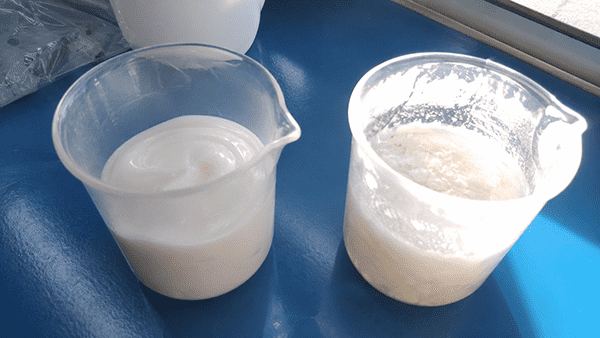
This article will walk you through the critical factors that cause a perfect sample to fail during mass production. Understanding these risks will empower you to ask smarter questions, select a more reliable manufacturing partner, and ensure the product you launch is as stable and effective as the sample you approved.
Why is a Lab Sample Not a Guarantee of a Stable Product?
The excitement of approving a lab sample can create a blind spot. A founder sees a finished product, but a manufacturer sees a formula concept that has not yet been proven at scale. The risk lies in assuming that a 200g beaker sample will behave exactly like a 200kg production batch.2 [23]
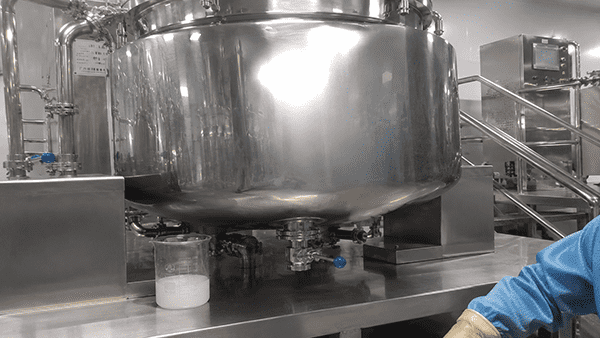
[Technical Snippet: 130-170 words.] The primary difference between a lab sample and a production batch is process control at scale.3 [33] In a lab, a chemist can achieve rapid, even heating and cooling. In a large manufacturing vessel, it takes significantly longer for the batch to heat and cool, exposing ingredients to thermal stress for extended periods. [34] This can alter the structure of waxes and emulsifiers, leading to a grainy texture or separation later on.4 [14] Similarly, the shear energy from a small lab mixer is very different from that of a large-scale homogenizer. Improper mixing can result in uneven droplet distribution in the emulsion, which is a primary cause of instability.5 [13, 16] A successful lab sample only confirms the ingredient concept; a pilot batch is the first real test of whether the formula can be manufactured consistently. [34]
Viscosity Drift and pH Movement
Beyond visible separation, a formula's stability can degrade in other ways. Viscosity (the thickness of the cream) and pH (its acidity or alkalinity) are two critical parameters that can change between the sample and the final product. [19] A cream that thins out over time feels cheap, while a significant pH shift can not only destabilize the formula but also irritate the skin or deactivate key ingredients like preservatives and actives. [18, 20]
These changes often happen because the manufacturing process or temperature changes affect the delicate structure built by emulsifiers and thickeners. [14] For example, some thickeners are pH-sensitive; if the formula’s pH drifts outside the effective range, the cream can lose its viscosity and break. [16, 22] This is why a manufacturer’s quality control should involve checking and documenting the pH and viscosity of a new production batch against the approved standard. [35]
Sarah's Insight: When we review a formula from a third-party lab, we immediately look at the proposed manufacturing process. A formula isn't just a list of ingredients; it's a set of instructions. If those instructions don't account for the realities of large-scale equipment—like how long it takes to cool 500kg of cream—the risk of failure is high. We always recommend a pilot batch to test the process before committing to a full production run. This step feels slow, but it's much faster and cheaper than dealing with a product recall.
How Do Packaging and Shipping Stress Affect Cream Stability?
A formula doesn't exist in a vacuum. It lives in a package and travels across the world. Approving a cream based on a sample stored in an inert glass jar at room temperature ignores two of the biggest real-world stressors: packaging interaction and transport conditions. [7, 31]
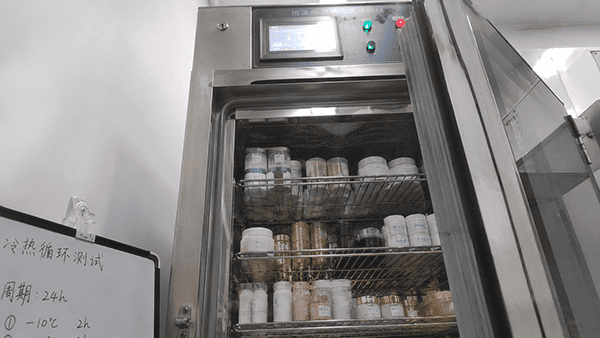
[Technical Snippet: 130-170 words.] True product stability is a measure of the formula in its final packaging under real-world stress. [1] This is assessed through two key tests. First, Packaging Compatibility Testing checks for interactions between the cream and its container. [7] Ingredients can be absorbed by the plastic, or chemicals can leach from the packaging into the cream, causing discoloration, odor changes, or separation.6 [5] Second, Transport Stability Testing (like freeze-thaw cycles) simulates the temperature extremes a product endures during shipping. [2, 4] A cream might be frozen in a cargo hold and then sit in a hot warehouse.7 [27] These cycles can break an emulsion that appeared stable in the lab. [3] A manufacturer who doesn't perform these tests is not fully verifying the product's shelf life.
Defining Responsibility for Stability Testing
While regulators like the FDA hold the brand responsible for ensuring a product is safe and stable, the practical work of testing falls to the manufacturer.8 [10, 11] However, not all manufacturers perform the same level of testing. Some may only conduct basic accelerated stability at high heat, which doesn't account for packaging compatibility or transport shocks. [19, 32]
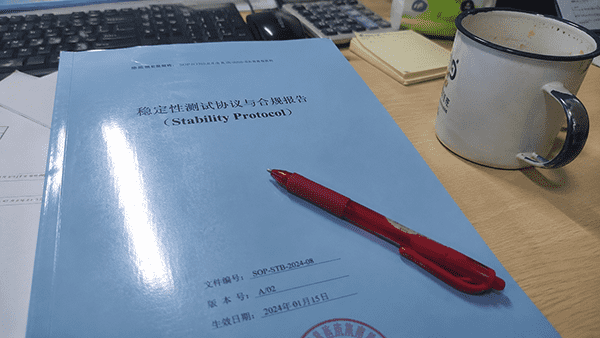
It is crucial to clarify the scope of stability testing before signing a manufacturing agreement. A serious buyer should ask for a clear stability protocol that outlines which tests will be performed, the conditions (e.g., temperatures, duration), and the acceptance criteria for passing. [9] This ensures that both parties agree on what a "stable" product looks like and who is responsible if a batch fails post-launch. Without this, you may be left with unsellable inventory and no clear path for recourse.
Sarah's Insight: We often see brand founders assume that "stability testing" is a standard, universal process. It's not. You need to ask your manufacturer specifically: "Are you testing the formula in my final packaging? Are you performing freeze-thaw cycle tests?" If they can't provide a clear "yes" and show you the protocol, it's a major red flag. They are essentially making you responsible for testing the product on the market, with your customers.
Decision Table: Evaluating a Manufacturer's Stability Protocol
When choosing a partner, use this table to compare their approach to stability and quality control.
| Feature to Evaluate | Low-Risk Manufacturer | High-Risk Supplier | Why It Matters |
|---|---|---|---|
| Scale-Up Process | Insists on a paid pilot batch (e.g., 25-50kg) to validate the formula on production equipment before the main run. [23, 34] | Goes directly from a small lab sample to a large production batch to "save time and money." | A pilot batch is the only way to identify manufacturing issues before they ruin thousands of units. [34] |
| Stability Testing Scope | Conducts accelerated testing at multiple temperatures, real-time testing, and freeze-thaw cycle testing. [2, 29] | Only performs a simple heat test (e.g., 45°C for one month) or has no clear protocol. [32] | Heat-only testing misses instabilities caused by cold temperatures or temperature fluctuations during shipping. [4] |
| Packaging Compatibility | Tests the final formula in the actual packaging components (jar, pump, tube) you will use. [1, 7] | Tests the formula only in a generic glass lab jar. [31] | The cream can react with plastic, liners, or adhesives in the final packaging, causing separation or contamination. [1, 5] |
| Quality Control Checks | Measures and records key parameters like pH, viscosity, and appearance for every batch, comparing them to an approved standard. [35] | Only performs a visual check for separation. | Changes in pH or viscosity are early warning signs of instability and can affect product safety and performance.9 [12, 18] |
| Responsibility | Provides a clear stability report and defines responsibility for out-of-spec batches in the manufacturing agreement. | Is vague about testing reports and avoids clear contractual language on failed batches. | Clear agreements protect you from paying for a manufacturer's failure to produce a stable, sellable product. |
Conclusion
The journey from a perfect sample to a successful product launch is paved with rigorous testing. A beautiful lab sample is a fantastic start, but it is not the finish line. A cream that separates after production is rarely a "surprise"; it is almost always a predictable failure that could have been caught by a robust stability program. [21, 24]
The key is to shift your mindset from simply approving a formula to qualifying a manufacturing process. A trustworthy partner will guide you through scale-up testing, validate the formula's interaction with your packaging, and simulate the stresses of global shipping. They will treat stability not as a checkbox, but as a core pillar of quality assurance. By asking the right questions upfront and demanding a transparent testing protocol, you can protect your investment, your brand's reputation, and ensure the product that reaches your customers is every bit as perfect as the sample you first approved.
Sarah's Signature & CTA
I know how disheartening it is to see a promising product fail on the final hurdle. At CAMELLIA LABS, we build our process around preventing these exact problems. We help founders navigate the complexities of formulation, scale-up, and stability testing to ensure your product is built for the real world.
If you're developing a new product or have concerns about your current manufacturing process, I invite you to reach out. Let's discuss how we can build a clear, reliable path from your approved sample to a stable, market-ready launch.
"Manufacturing Process Scale up in the Personal Care Industry ...", https://www.academia.edu/31299767/Manufacturing_Process_Scale_up_in_the_Personal_Care_Industry_Problems_and_Solutions. Sources on cosmetic scale-up and emulsion manufacturing should support that laboratory samples may not predict behavior in full-scale production because process conditions change with batch size. Evidence role: general_support; source type: research. Supports: A perfect lab sample can separate after launch because a small, handmade batch is not a true representation of a mass-produced product.. Scope note: This supports the general scale-up principle, not this specific product or batch. ↩
"Srinivas Swaroop Kolla | Scholarly & creative works", https://experts.okstate.edu/srinivas.kolla/publications. Engineering and formulation references should support that batch size changes can alter heat transfer, mixing, and stability outcomes in manufactured emulsions. Evidence role: mechanism; source type: paper. Supports: The risk lies in assuming that a 200g beaker sample will behave exactly like a 200kg production batch.. Scope note: The cited source should explain the mechanism generally; it will not verify the specific 200g and 200kg example. ↩
"(PDF) REVIEW: SCALE UP PROCESS OF TABLET PRODUCTION", https://www.academia.edu/10722243/REVIEW_SCALE_UP_PROCESS_OF_TABLET_PRODUCTION_A_PROSPECTIVE_DISCUSSION. Manufacturing references should support that process control becomes more complex at larger scale and can affect product consistency and stability. Evidence role: general_support; source type: research. Supports: The primary difference between a lab sample and a production batch is process control at scale.. Scope note: This is contextual support for scale-related process differences rather than proof about any one cream formulation. ↩
"(PDF) Functions of mixed emulsifiers and emulsifying waxes in ...", https://www.academia.edu/116333169/Functions_of_mixed_emulsifiers_and_emulsifying_waxes_in_dermatological_lotions_and_creams. Formulation or colloid chemistry sources should support that thermal and mixing history can change wax and emulsifier structure, which may affect texture and emulsion stability. Evidence role: mechanism; source type: paper. Supports: This can alter the structure of waxes and emulsifiers, leading to a grainy texture or separation later on.. Scope note: The support should be mechanistic and may not directly prove the specific sensory outcomes described here. ↩
"[PDF] Dynamic Aspects of Emulsion Stability", http://porousmedia.rice.edu/resources/Dynamic%20Aspects%20of%20Emulsion%20Stability.pdf. Colloid science references should support that insufficient or uneven mixing can produce broad droplet-size distributions and reduce emulsion stability. Evidence role: mechanism; source type: paper. Supports: Improper mixing can result in uneven droplet distribution in the emulsion, which is a primary cause of instability.. Scope note: This is general emulsion science and may not address cosmetic creams specifically. ↩
"Influence of Packaging and Stability Test Assessment of an Anti ...", https://www.academia.edu/48208304/Influence_of_Packaging_and_Stability_Test_Assessment_of_an_Anti_aging_Cosmetic_Cream. Packaging compatibility references should support that container materials can absorb formulation components or leach substances, affecting appearance or stability. Evidence role: mechanism; source type: paper. Supports: Ingredients can be absorbed by the plastic, or chemicals can leach from the packaging into the cream, causing discoloration, odor changes, or separation.. Scope note: This supports packaging interaction in general and may not document every listed effect for all cream formulations. ↩
"Time- and Temperature-Controlled Transport: Supply Chain ... - PMC", https://pmc.ncbi.nlm.nih.gov/articles/PMC5821242/. Logistics or transport references may support that shipped goods can experience cold and hot environments in cargo and warehouse handling, though the precise conditions vary by route and storage practice. Evidence role: general_support; source type: government. Supports: A cream might be frozen in a cargo hold and then sit in a hot warehouse.. Scope note: This is illustrative rather than direct evidence about cosmetic shipments specifically. ↩
"Product Testing of Cosmetics - FDA", https://www.fda.gov/cosmetics/cosmetics-science-research/product-testing-cosmetics. Regulatory guidance should support that the responsible party for cosmetic product safety and substantiation is the brand or distributor, while manufacturers may perform testing on their behalf. Evidence role: historical_context; source type: government. Supports: While regulators like the FDA hold the brand responsible for ensuring a product is safe and stable, the practical work of testing falls to the manufacturer.. Scope note: Responsibility can vary by jurisdiction and contractual arrangement; the source should be read in that legal context. ↩
"Effect of Preservative in the Physicochemical Stability of Cosmetic ...", https://www.academia.edu/33042518/Effect_of_Preservative_in_the_Physicochemical_Stability_of_Cosmetic_Products_Based_on_Natural_Resources_from_Costa_Rican_Flora. Cosmetic formulation sources should support that pH and viscosity are monitored as indicators of product stability and that substantial changes can affect performance and, in some cases, preservation or user safety. Evidence role: general_support; source type: paper. Supports: Changes in pH or viscosity are early warning signs of instability and can affect product safety and performance.. Scope note: The support should distinguish routine quality indicators from direct proof of safety harm in every case. ↩