
You have a brilliant idea for a new cosmetic product. But the path from concept to a market-ready item is filled with hidden costs and delays. Understanding the real process saves you.
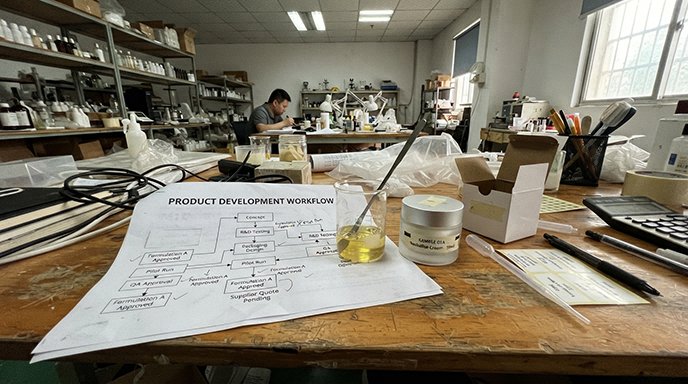
The key is to see product development not as a linear path, but as a simultaneous validation process. You must balance formula feasibility, packaging MOQs, and target-market compliance from day one to avoid costly restarts and launch failures. This integrated approach is crucial for success.
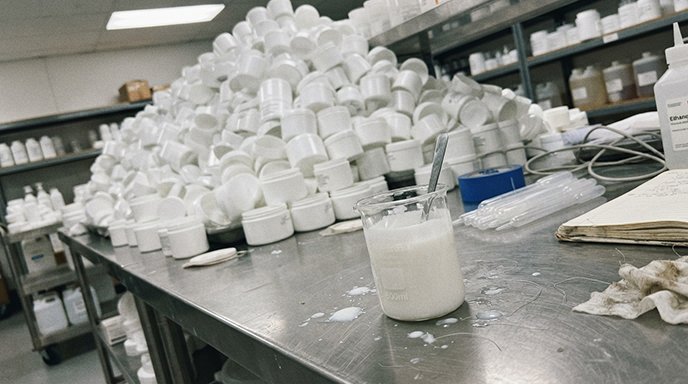
Many brand founders I speak with believe the journey starts with perfecting a formula. This seems logical, but it's a risky assumption. From a manufacturing perspective, the reality is far more complex and interconnected. A great formula is useless if you can't package it affordably or sell it legally. Let's break down the hidden challenges you need to manage before you even request your first sample.
Why Do Packaging MOQs Often Cause More Delays Than The Formula Itself?
You've found a lab with a reasonable formula MOQ. But then your packaging supplier demands you order ten times that volume, wrecking your budget. You must understand this mismatch early.
A manufacturer's batch size for a formula is often flexible. However, packaging components like custom bottles, pumps, or printed boxes come from different suppliers with their own high minimum order quantities (MOQs)1. These packaging MOQs, not the formula, often dictate your project's true minimum investment and timeline.
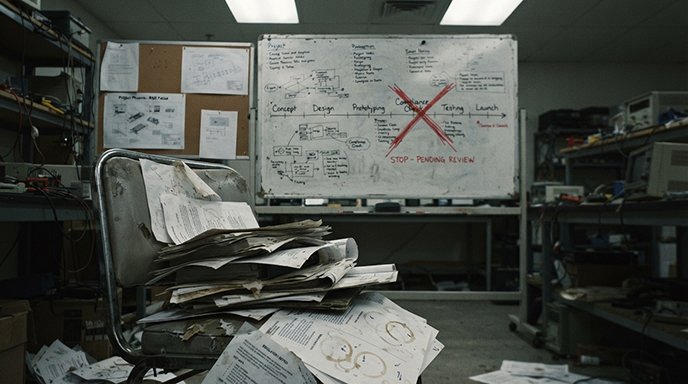
When reviewing initial product briefs, this is the most common shock for new brands. They budget for a 2,000-unit production run based on the cosmetic lab's quote. But they forget that the lab doesn't make the bottles, caps, or pumps. These components come from specialized factories, and their business models are built on volume. A lab might agree to a 200kg batch of cream (enough for about 4,000 jars), but the supplier of your custom-colored glass jar might require a minimum order of 20,000 units. Suddenly, your project's scope has changed dramatically.
The Manufacturer's Batch vs. The Component Supplier's MOQ
It's critical to separate these two numbers in your planning. The lab's MOQ is about their mixing tank capacity and efficiency. The component supplier's MOQ is about their machine setup costs, raw material sourcing, and profitability per run.
| Item | Typical MOQ from a Lab | Typical MOQ from a Component Factory |
|---|---|---|
| Formula Batch | 100kg - 500kg | Not Applicable |
| Standard Bottles | Not Applicable | 5,000 - 10,000 units |
| Custom-Color Bottles | Not Applicable | 10,000 - 30,000 units2 |
| Airless Pumps | Not Applicable | 10,000 - 50,000 units |
| Printed Boxes | Not Applicable | 2,000 - 5,000 units |
Planning Your Budget Realistically
Your true minimum order quantity is almost always dictated by the highest MOQ in your supply chain. You must ask about packaging MOQs at the same time you discuss formula MOQs. Ignoring this leads to budget overruns or being forced to switch to generic, in-stock packaging that compromises your brand vision.
How Can Ignoring Early Compliance Planning Derail Your Entire Product Launch?
Your formula is finalized, samples feel amazing, and you're ready to produce. But then you discover it contains an ingredient banned in your target market. This forces a complete restart.
Thinking about compliance late in the game is a critical error. A formula developed without clear regulatory targets, like EU or US MoCRA rules, may need to be changed later. Any formula modification invalidates all prior stability testing3, forcing you to go back to square one and causing major delays.
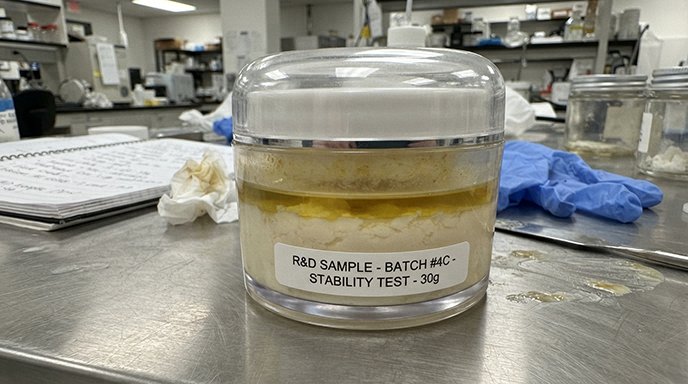
From our discussions with brand founders, this is a painful and expensive lesson. A product is not just a formula; it's a formula that is proven to be safe and legal for a specific place. The rules for ingredients, claims, and testing are different everywhere. For example, certain preservatives or UV filters that are common in Asia might be restricted in the European Union4. If you develop your product without knowing the rules of where you plan to sell, you are taking a huge gamble. Changing just one ingredient to meet regulations isn't a small tweak. It's a fundamental change that requires you to start the safety and stability validation process all over again.
Target Market First, Formula Second
Before you even talk about ingredients, you must define your sales channel. Are you launching in the US, the EU, the UK, or Canada? Each has its own system.
- United States: Governed by the FDA, with new requirements under the Modernization of Cosmetics Regulation Act (MoCRA)5.
- European Union: Requires a Responsible Person, a Product Information File (PIF), and notification through the Cosmetic Products Notification Portal (CPNP)6.
- United Kingdom: Has its own system, the Submit Cosmetic Product Notification (SCPN) portal, post-Brexit7.
The Ripple Effect of a Single Ingredient Change
Imagine your 3-month stability tests are complete. But you then realize a preservative needs to be swapped for EU compliance. That change means you have just invalidated all that testing. You must now create new test batches with the new preservative and run the entire 3-month stability protocol again. That's a quarter of a year lost, all because compliance was an afterthought.
Why Can't You Take a Formula Sheet Straight to Mass Production?
You might have a formula from a freelance chemist or one you want to replicate from an inspiration sample. But it's a major mistake to think this can go straight into a large production batch.
A formula on paper is just an idea. Before committing to mass production, it must undergo critical real-world testing. This includes compatibility testing (does the formula react with the packaging?)8 and stability testing (does it hold up under heat, cold, and light?). Skipping this is a recipe for failure.
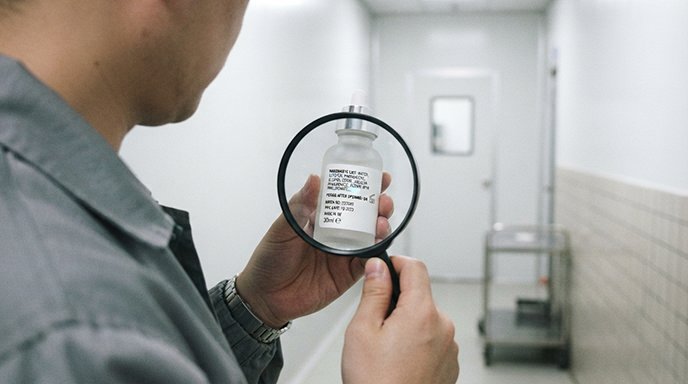
I often see brands bring us a formula sheet and ask for a quote to produce 10,000 units. My first question is always: "Has this formula been tested in your chosen packaging?" More often than not, the answer is no. A formula that is perfectly stable in a lab beaker can behave very differently in a final component. It might change color, separate, or lose its viscosity. That's why we can't skip the feasibility testing phase. This isn't a manufacturer trying to add costs; it's a necessary step to protect your investment and brand reputation.
Testing for Formula-Packaging Interaction
This is known as compatibility testing. We need to see if there's any negative interaction between your product and its container.
- Does a high-acid Vitamin C serum corrode the inner wall of an aluminum tube?
- Does the plastic in a jar leach chemicals into an oil-based balm?
- Does the formula cause the bottle's printing to fade or peel off?
We test this by filling the final packaging with the formula and observing it for weeks or months under controlled conditions.
Simulating The Product's Life Cycle
This is stability testing. We need to ensure your product remains safe, effective, and aesthetically pleasing from the factory to the customer's bathroom cabinet. This involves putting product samples into a climate chamber that cycles through intense heat, cold, and UV light to simulate months or years of shelf life in an accelerated timeframe9. This is the only way to know if your product will survive a hot summer warehouse or a long shipping journey.
Is Your Product Label Just a Design Element or a Legal Document?
Your graphic designer delivers beautiful packaging artwork. But then a small error in the ingredient list gets your entire shipment held at customs, forcing an expensive re-printing job.
Your product's label is much more than graphic design; it's a legal compliance document10. The ingredient list (INCI), net weight, country of origin, warnings, and marketing claims must all meet the specific regulations of your target market. Getting this wrong leads to rejected shipments and costly rework.

Treating the label as the final creative touch is one of the most common and preventable mistakes I see. Your graphic designer's job is to make the brand look good. A compliance expert's job is to keep you out of legal trouble and ensure your products reach your customers. These two functions must work together. The technical details of your label, such as the order of the INCI (International Nomenclature of Cosmetic Ingredients) list or the placement of the Period After Opening (PAO) symbol, are not creative choices. They are legal requirements.
The Anatomy of a Compliant Label
While specifics vary by market, almost all compliant labels must include a core set of technical information. A professional manufacturer or compliance partner will help you verify these details.
| Label Element | What to Watch For |
|---|---|
| INCI List | Ingredients must be listed in descending order of concentration11. Allergens may need to be highlighted. |
| Net Contents | Must be accurate and use the correct units (e.g., fl. oz. vs. ml). |
| Product Identity | A statement of what the product is (e.g., "Face Moisturizer"). |
| Contact Information | Name and address of the brand or Responsible Person. |
| Country of Origin | "Made in China," "Made in USA," etc. is often legally required. |
| Warning Statements | Required for certain product types (e.g., "For external use only"). |
Common and Costly Labeling Mistakes
Simple errors can have big consequences. Making unproven claims like "reverses aging" can lead to legal action12. Using the wrong symbol or getting the ingredient list out of order can cause a customs official to reject your entire shipment. The cost of re-printing 10,000 boxes and cartons far outweighs the cost of getting the label right the first time.
Conclusion
A successful launch requires managing formula, packaging, and compliance together from the start. This integrated approach turns a complex process into a manageable one, protecting your investment and your timeline.
"Plastics and Microplastic in the Cosmetic Industry - PMC - NIH", https://pmc.ncbi.nlm.nih.gov/articles/PMC9657586/. A source can explain that high MOQs for packaging components are common due to the significant setup costs for machinery, color matching, and material sourcing, which makes small production runs economically unviable for the component factory. Evidence role: mechanism; source type: other. Supports: The claim that packaging suppliers have high MOQs due to the economics of production.. ↩
"Industry Guide for the labelling of cosmetics - Canada.ca", https://www.canada.ca/en/health-canada/services/consumer-product-safety/reports-publications/industry-professionals/labelling-cosmetics.html. A source from a packaging industry publication or supplier guide can provide data showing that minimum order quantities for cosmetic components with custom coloration often range from 10,000 to 30,000 units, corroborating the figures provided. Evidence role: statistic; source type: other. Supports: The claim that MOQs for custom-colored cosmetic bottles are typically in the tens of thousands.. Scope note: The exact numbers can vary significantly based on the material, supplier, and complexity of the customization. ↩
"Guidelines on the stability testing of cosmetic products - ISO", https://www.iso.org/obp/ui/en/#!iso:std:63465:en. A source can confirm that according to cosmetic testing protocols, any change to a formula, including altering an ingredient or its concentration, is considered a new formulation that requires its own full stability and safety validation process. Evidence role: general_support; source type: institution. Supports: The claim that formula modifications require restarting the stability testing process.. ↩
"Cosmetic ingredient database", https://single-market-economy.ec.europa.eu/sectors/cosmetics/cosmetic-ingredient-database_en. A source can provide examples of regulatory divergence, such as certain UV filters being approved for use in cosmetics in Asian markets like Japan or South Korea while not being on the approved list for the European Union, highlighting the need for market-specific formulation. Evidence role: case_reference; source type: institution. Supports: The claim that cosmetic ingredient regulations differ significantly between major markets like Asia and the EU.. ↩
"Modernization Of Cosmetics Regulation Act (MoCRA)", https://www.personalcarecouncil.org/public-policy/modernization-of-cosmetics-regulation-act-mocra/. The U.S. Food and Drug Administration (FDA) provides official information on the Modernization of Cosmetics Regulation Act of 2022 (MoCRA), which significantly updated FDA's authority to regulate cosmetics and introduced new requirements for the industry. Evidence role: definition; source type: government. Supports: The claim that MoCRA introduced new requirements for cosmetics in the US.. ↩
"Cosmetic product notification portal", https://single-market-economy.ec.europa.eu/sectors/cosmetics/cosmetic-product-notification-portal_en. The European Commission outlines that under Regulation (EC) No 1223/2009, a responsible person must maintain a Product Information File (PIF) for each cosmetic product and notify it through the Cosmetic Products Notification Portal (CPNP) before it can be placed on the market. Evidence role: general_support; source type: government. Supports: The claim that a PIF and CPNP notification are required to sell cosmetics in the EU.. ↩
"Cosmetic product notification portal", https://single-market-economy.ec.europa.eu/sectors/cosmetics/cosmetic-product-notification-portal_en. The UK government's Office for Product Safety and Standards specifies that businesses must use the Submit Cosmetic Product Notification (SCPN) service to notify cosmetic products being made available to consumers in Great Britain, a system established following the UK's departure from the EU. Evidence role: general_support; source type: government. Supports: The claim that the UK uses the SCPN portal for cosmetic notifications post-Brexit.. ↩
"ISO 22716:2007(en), Cosmetics — Good Manufacturing Practices ...", https://www.iso.org/obp/ui/en/#!iso:std:36437:en. A source can define compatibility testing as a critical phase in cosmetic product development where the formula is placed in its final packaging and observed under various conditions to ensure no adverse chemical or physical reactions occur, such as leaching, discoloration, or degradation of the product or container. Evidence role: definition; source type: paper. Supports: The claim that compatibility testing is a standard procedure to check for adverse reactions between a cosmetic formula and its container.. ↩
"Guidelines on the stability testing of cosmetic products - ISO", https://www.iso.org/obp/ui/en/#!iso:std:63465:en. A source can describe the standard protocol for accelerated stability testing, which involves subjecting product samples to controlled, stressful conditions (e.g., elevated temperatures, freeze-thaw cycles, UV exposure) in a climate chamber to predict long-term shelf stability in a shorter period. Evidence role: mechanism; source type: institution. Supports: The claim that accelerated stability testing uses climate chambers to simulate shelf life.. ↩
"Cosmetics Labeling Guide", https://www.fda.gov/cosmetics/cosmetics-labeling-regulations/cosmetics-labeling-guide. Guidance from regulatory bodies like the U.S. FDA confirms that cosmetic labels are subject to specific laws and regulations, requiring mandatory information such as an ingredient list, net quantity of contents, and distributor information, making the label a legal document. Evidence role: general_support; source type: government. Supports: The claim that a cosmetic label is a legal document with mandated elements.. ↩
"Cosmetics Labeling Guide - FDA", https://www.fda.gov/cosmetics/cosmetics-labeling-regulations/cosmetics-labeling-guide. A source from a regulatory body such as the U.S. FDA or the European Commission can confirm that labeling regulations mandate that ingredients on the INCI list be declared in descending order of predominance by weight at the time they are added to the product. Evidence role: definition; source type: government. Supports: The claim that cosmetic ingredients must be listed in descending order of concentration.. Scope note: The rule has exceptions for ingredients present at a concentration of less than 1%, which may be listed in any order after the ingredients present at more than 1%. ↩
"Is It a Cosmetic, a Drug, or Both? (Or Is It Soap?) - FDA", https://www.fda.gov/cosmetics/cosmetics-laws-regulations/it-cosmetic-drug-or-both-or-it-soap. A source from the U.S. Food and Drug Administration (FDA) can explain that claims intended to affect the structure or function of the body, such as 'reverses aging,' can cause a product to be classified as a drug, subjecting it to much stricter regulation and potential legal action if not approved as such. Evidence role: general_support; source type: government. Supports: The claim that certain marketing claims can cause a cosmetic to be regulated as a drug, leading to legal consequences.. ↩