
High serum failure rates drain B2B budgets. Founders launch unstable formulas, resulting in oxidized products and negative reviews. You need a proven manufacturing strategy to engineer serums that scale profitably.
Manufacturing high-performance serums1 requires balancing active ingredient stability2, GMP-compliant production3, and specialized packaging compatibility. A reputable anti-aging serum manufacturer conducts accelerated stability testing4 and formula-packaging compatibility protocols to prevent oxidation, ensuring clinical efficacy5 and regulatory compliance from formulation to final retail delivery.
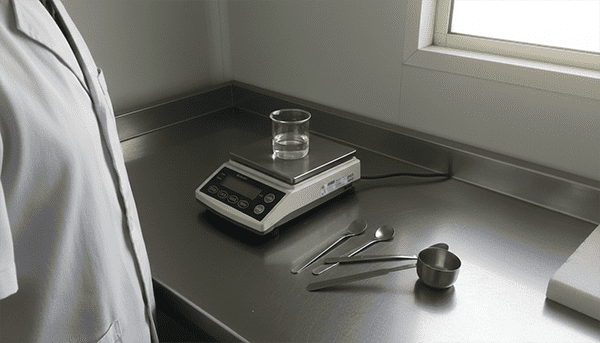
Creating a top-selling serum is no longer about simply cramming high percentages of active ingredients into a bottle. In 2026, educated consumers demand lasting efficacy. Here is how we engineer stable, high-performance skincare OEM solutions that build long-term brand loyalty.
How to Ensure Active Ingredient Stability in High-Performance Serums?
Formulating with Vitamin C or Retinol alternatives carries high degradation risks. Unstable actives lose efficacy before reaching consumers, exposing your brand to refund demands and strict FDA regulatory scrutiny.
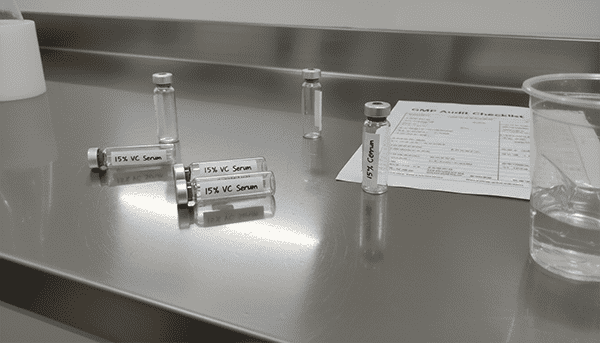
Securing active stability demands specialized delivery systems like microencapsulation and liposomal structures. A custom skincare lab must execute 12-week accelerated stability protocols under ICH guidelines, measuring pH drift, viscosity changes, and thermal degradation6 to validate active ingredient integrity over a 24-month shelf life.
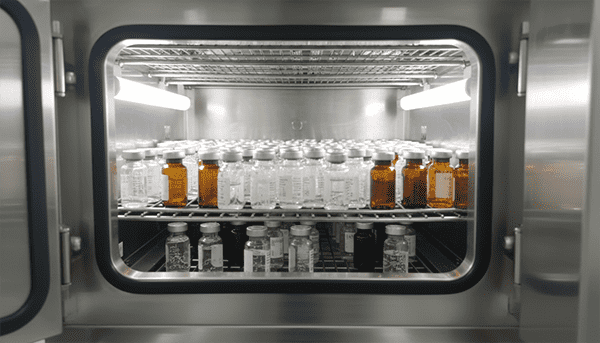
Piling up high concentrations of actives like L-Ascorbic Acid or Bakuchiol is an outdated tactic. High percentages often lead to severe skin irritation and rapid formula degradation. To manufacture serums that actually sell, brand founders must prioritize delivery mechanisms over raw percentage claims.
When producing under GMP and ISO 22716 standards, a high-performance skincare OEM must implement strict thermal and oxidative controls. Active degradation directly impacts regulatory compliance. If your label claims 15% Vitamin C, but TGA or FDA audits find only 8% active yield post-manufacturing, your brand faces immediate recall risks and permanent reputational damage.
Here is how we compare standard mixing versus advanced stability protocols:
| Manufacturing Approach | Delivery Mechanism | Shelf-Life Risk | Regulatory Compliance |
|---|---|---|---|
| Standard Emulsion | Direct Active Solubilization | High (Oxidizes in 3-6 months) | High Recall Risk |
| Microencapsulation | Lipid-Bilayer Coating | Low (Stable up to 24 months) | Strict ISO/GMP Compliant |
Sarah’s Insight: I have seen founders waste hundreds of thousands of dollars on "max-concentration" formulas from cheap suppliers. Low pricing often hides a complete lack of stability testing. In my 10+ years in supply chain, the most expensive mistake you can make is skipping the 12-week accelerated thermal tests. Your product looks great in the factory, but turns brown by the time it hits the retail shelf.
How to Blend Eastern Wisdom with Clinical Efficacy in Your Serum?
Modern consumers reject synthetic-only formulas, but traditional botanical extracts7 often lack proven clinical data. Relying purely on marketing stories without measurable efficacy destroys B2B brand credibility and repeat sales.
Merging Eastern botanicals like Camellia and Ginseng with clinical actives8 requires precision extraction techniques to isolate bioactive compounds. Formulators must balance the molecular weight of phytoceramides with synthetic peptides, ensuring transdermal penetration while passing strict microbial limit testing mandated by global cosmetic safety regulators.

Combining traditional herbal wisdom with modern clinical chemistry is where high-growth brands win. However, incorporating raw plant extracts introduces severe microbial contamination risks. Raw botanicals are notorious for harboring bacteria, which can compromise the entire batch if the manufacturer lacks rigorous GMP-certified sterilization processes.
To achieve true clinical efficacy5, we do not just steep herbs in water. We utilize CO2 supercritical extraction to capture the pure ginsenosides from Ginseng and oleic acid from Camellia japonica. These potent bioactives are then molecularly paired with clinical staples like Niacinamide or Hyaluronic Acid.
Follow these critical steps when sourcing botanical-clinical hybrid serums:
- Standardized Extract Verification: Require Certificates of Analysis (CoA)9 to verify the exact percentage of active markers (e.g., ginsenosides), not just total plant weight.
- Preservative Efficacy Testing (PET): Botanicals feed bacteria. Ensure your lab conducts rigorous challenge testing (USP <51>) to guarantee product safety.
- Synergistic Clinical Trials: Conduct in-vitro testing to prove that the botanical extract actually enhances the synthetic active’s performance, rather than destabilizing it.
Sarah’s Insight: Many factories will throw a 0.01% drop of green tea extract into a formula just for the label claim. That is a quick way to lose trust with educated consumers. We build formulas where the Camellia actively repairs the lipid barrier while the clinical actives8 target cellular turnover. True synergy requires rigorous R&D, which is why a trusted growth partner is non-negotiable.
How Does Packaging Protect Your Serum Formula from Oxidation?
Brilliant formulas die in bad packaging. Using standard dropper bottles for sensitive serums accelerates oxidation and ingredient degradation, leading to customer complaints and massive inventory write-offs for your brand.
Premium serum protection mandates airless pump systems, UV-coated glass, or multi-chamber packaging. An expert anti-aging serum manufacturer executes comprehensive packaging-bulk material compatibility testing, evaluating leaching, permeation, and seal integrity to guarantee the active formulation remains uncompromised by environmental exposure.
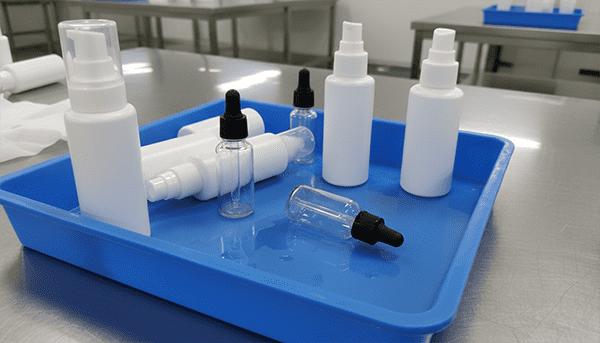
In 2026, the formulation is only half the battle. If your custom skincare lab does not perform comprehensive compatibility testing between the packaging and the bulk material, you are gambling with your entire investment. Serums, especially those rich in volatile actives10 like Retinol or Vitamin C, are highly reactive to their environment.
Low prices from basic suppliers often mean they skipped compatibility testing. When a highly concentrated active serum interacts with low-grade plastics, chemical leaching occurs. This not only destroys the product's efficacy but directly violates FDA and TGA safety regulations, opening your brand to severe legal liability.
Consider these crucial packaging elements for high-performance serums1:
| Packaging Type | Oxidation Protection | Contamination Risk | Recommended For |
|---|---|---|---|
| Clear Glass Dropper | Very Low | High (Air exposure daily) | Basic Hyaluronic Acid |
| Opaque Airless Pump | Extremely High | Zero (Vacuum sealed) | Retinol, Vitamin C, Peptides |
| Amber Glass Dropper | Moderate (Blocks UV) | High (Air exposure daily) | Stable Botanical Oils |
Sarah’s Insight: I recently audited a brand that sourced a brilliant, expensive peptide serum but packaged it in cheap, transparent PET bottles. Within three months, UV exposure and plastic leaching turned the serum toxic. At CAMELLIA LABS, we refuse to manufacture a product without validating the packaging. We test for weight loss, stress cracking, and active retention because your packaging must defend your formula's integrity until the last drop.
Manufacturing high-performance serums1 requires precision formulation, GMP compliance, and rigorous compatibility testing. Partner with a manufacturer who treats your brand's regulatory safety and clinical efficacy5 as their top priority.
About Sarah Cao I am the Founder of CAMELLIA LABS (ZJG Nine CS). With over 10 years of experience in supply chain management, my mission is to be your trusted "Growth Partner." I help brand founders avoid 99% of production pitfalls by ensuring strict GMP compliance, eliminating hidden factory costs, and building rock-solid, scalable supply chains.
CAMELLIA LABS Good products begin with stringent standards. Ready to scale your skincare brand with zero compliance risks? Let's build your next high-performance serum together.
Explore the definition and benefits of high-performance serums to understand their market potential. ↩
Learn about methods to maintain ingredient stability, crucial for product efficacy and consumer trust. ↩
Discover the importance of GMP compliance in manufacturing to ensure product safety and quality. ↩
Understand how accelerated stability testing can prevent product failures and enhance shelf life. ↩
Explore the significance of clinical efficacy in building consumer trust and brand loyalty. ↩
Explore how thermal degradation affects product stability and efficacy. ↩
Learn how botanical extracts can enhance skincare formulations and appeal to consumers. ↩
Discover the role of clinical actives in enhancing the effectiveness of skincare formulations. ↩
Learn how CoAs ensure ingredient quality and transparency in skincare products. ↩
Understand the role of volatile actives in skincare formulations and their stability. ↩