Finding reliable cosmetic OEM partners feels like navigating a minefield of hidden costs. Stop gambling on unverified factories. Here is your blueprint to finding compliant, scalable supply chains.
The 2026 global skincare supply chain relies on precise geo-targeted sourcing and strategic MOQ planning. Brands must evaluate suppliers based on GMP certification1, production scalability2, and formulation capabilities. Choosing the right ODM skincare manufacturer3 ensures FDA compliance4, batch consistency5, and long-term profitability.
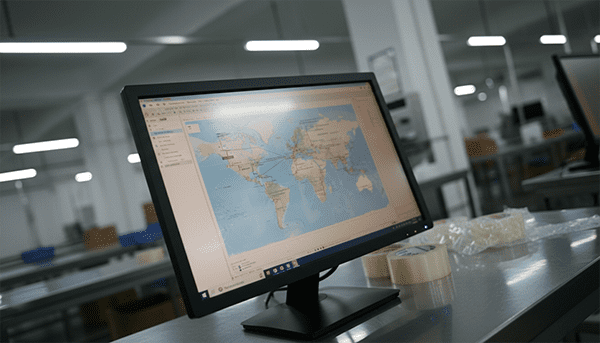
Mastering these supply chain dynamics is the difference between building a legacy brand and being stuck with thousands of units of unsellable inventory.
ODM Skincare Manufacturer: How Does ODM Differ from Traditional OEM?
Most founders confuse ODM and OEM, leading to IP disputes and formulation bottlenecks. Understanding this difference is critical for protecting your brand's unique value in a crowded market.
An ODM skincare manufacturer3 designs, formulates, and produces the product, offering ready-to-market solutions. A cosmetic OEM only manufactures based on your exact formula. ODM provides R&D and regulatory compliance6, while OEM requires you to own the intellectual property7 and testing data.
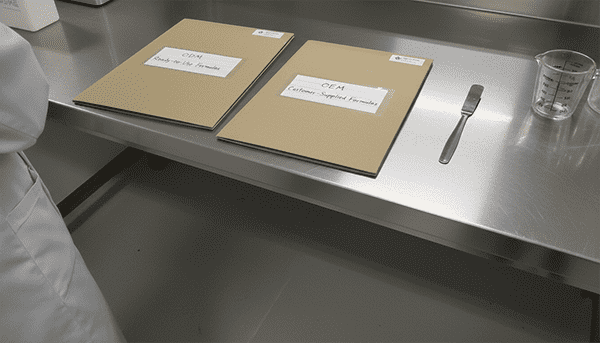
When you enter the beauty space, you must decide who owns the intellectual property7. If you lack a background in chemistry, an ODM skincare manufacturer3 is your best starting point. They already have stability testing, microbial challenge data8, and regulatory paperwork prepared. A traditional cosmetic OEM expects you to hand them a completed, vetted formula.
As global sourcing shifts, we see emerging markets taking market share. For example, an oem skincare indonesia facility might offer lower labor costs, but you must ensure their water purification and GMP standards match Western expectations.
| Feature | ODM (Original Design Manufacturer) | OEM (Original Equipment Manufacturer) |
|---|---|---|
| Formula Ownership | The Factory | Your Brand |
| R&D Required | Minimal to None | Extensive (You provide it) |
| Time to Market | Fast (3-6 Months) | Slow (9-12 Months) |
| Ideal For | Marketers and Startups | Formulators and Large Brands |
Sarah’s Insight: I have seen founders spend six months fighting over a formula because they did not read their ODM contract. If you use an ODM's base formula, you do not own it. If you want true brand valuation for a future exit, you must eventually transition to a custom OEM model where you own the IP.
Private Label Cosmetics No Minimum / Low Minimum: What Does Zero MOQ Really Mean for Startups?
Launching with zero MOQ sounds like a dream. In reality, it often traps startups in high unit costs and generic packaging that ruins brand positioning.
Private label cosmetics no minimum or low minimum offers reduce initial inventory risks. However, this model restricts brands to stock formulations, standardized packaging, and inflated unit economics. True scalability requires customized production runs of 2,000+ units to secure distinct market positioning and profitability.
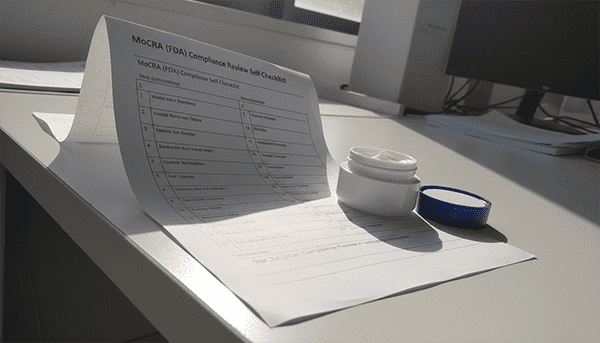
Factories use "no minimum" as a marketing tactic to capture leads. It lowers the barrier to entry, but it severely limits your product strategy. When you search for private label cosmetics no minimum9 or private label cosmetics low minimum, you are essentially buying a white-label product that fifty other brands are also selling.
To build a defensible brand, you must move beyond the illusion of zero MOQ.
- The Cost Trap: Zero MOQ often means you pay $15 per unit for a serum that costs $3 to manufacture at scale.
- The Packaging Trap: You are forced to use stock bottles with cheap sticker labels because custom silk-screening requires volume.
- The Formulation Trap: You cannot tweak the active ingredients. You get what they have on the shelf.
Sarah’s Insight: "Low MOQ" is just a trial run. Do not build your entire five-year business plan on it. The real magic happens when you hit the 2,000-piece threshold. At 2,000 units, factories take you seriously. You unlock custom packaging10, unique fragrance profiles, and adjusted active percentages. This is where you transition from a "label-slapper" to a true beauty founder.
Private Label Cosmetics No Minimum USA: Small Batch Opportunities and Traps in North America?
Sourcing locally in the USA promises faster shipping and "Made in USA" prestige. Yet, regulatory blind spots can quickly trigger FDA warning letters and immediate product recalls.
Private label cosmetics no minimum USA programs allow domestic brands to launch quickly without import delays. Brands must verify MoCRA compliance11, GMP standards, and facility registrations. Relying on uncertified local suppliers risks FDA enforcement actions, raw material contamination12, and severe legal liabilities.
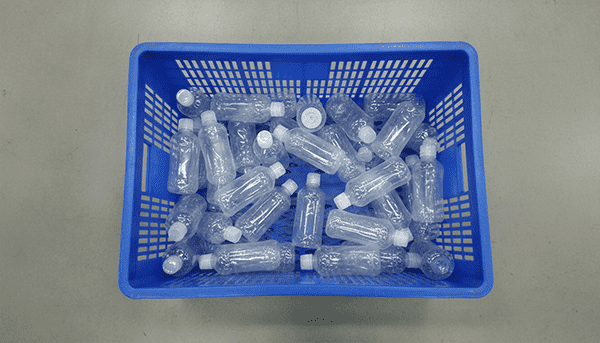
The Modernization of Cosmetics Regulation Act (MoCRA) changed everything for US-based beauty brands. Sourcing locally is no longer just about fast shipping; it is about strict federal compliance. Many founders search for a private label cosmetics no minimum9 usa partner assuming that a US address guarantees FDA compliance4. This is a dangerous assumption.
Many small domestic "labs" operate out of commercial garages without proper ISO 22716 certification13. If they do not maintain meticulous batch records, your brand takes the fall during an FDA audit.
When vetting a US-based partner, demand the following:
- Proof of FDA Facility Registration under MoCRA.
- Standard Operating Procedures (SOPs) for equipment sanitation.
- Certificates of Analysis (COA) for all raw materials used in your batch.
Sarah’s Insight: I always warn founders that "Made in the USA" does not mean "Immune to FDA Audits." A low price from a local supplier usually means they are cutting corners on quality control. I would rather wait 30 days for a fully compliant, GMP-certified overseas shipment than risk my entire business on an unverified local operation just to save two weeks of transit time.
Skincare OEM Near=Split / Private Label Skincare Near=Manchester: Using Search Operators to Pinpoint Suppliers?
Wading through B2B directories wastes time on middlemen and trading companies. You need direct access to actual factories in your target region, bypassing the SEO spam.
Advanced search operators like "private label skincare near=manchester" combined with exclusion parameters (-alibaba -wiki) filter out B2B platforms and media sites. This uncovers direct websites of local manufacturers. Always verify ISO 22716 and GMP certification1s during this initial geo-targeted screening process.

Finding a real factory requires technical search skills. Sourcing managers in 2026 do not just type "factories near me" into Google. They use advanced Boolean search logic to strip away the noise.
If you want to find European or offshore hubs, you might use strings like skincare oem near=split, or private label skincare near=london. To find tax-advantaged manufacturing zones, you might look up near=douglas or near=road town.
The secret is using the minus sign (-) to eliminate middlemen.
Your search should look like this:
"private label skincare" near=manchester -wiki -youtube -tiktok -amazon -"made-in-china" -alibaba
This precise string removes encyclopedias, consumer video content, retail platforms, and major B2B trading sites. What remains are the actual, un-indexed websites of local manufacturers.
Sarah’s Insight: Once you find a factory using these search tricks, do not celebrate yet. A clean website means nothing. Before you even request a sample, ask for their GMP certificate. If they hesitate or send a blurry JPEG from ten years ago, walk away immediately. Your first filter must always be regulatory compliance6, not geographic convenience.
Beauty Labs Manufacturers: The Logic of Choosing Lab-Scale vs. Mass Production Factories?
Picking the wrong facility size drains your R&D budget. Startups need agility, while established brands need scale. Mixing them up causes catastrophic delays and failed launches.
Beauty labs manufacturers excel in small-batch formulation, ingredient innovation, and clinical testing14. Mass production factories are designed for high-volume, cost-efficient manufacturing. Brands should use makeup labs for initial R&D and transition to large-scale cosmetic OEMs for long-term commercialization and supply chain stability15.
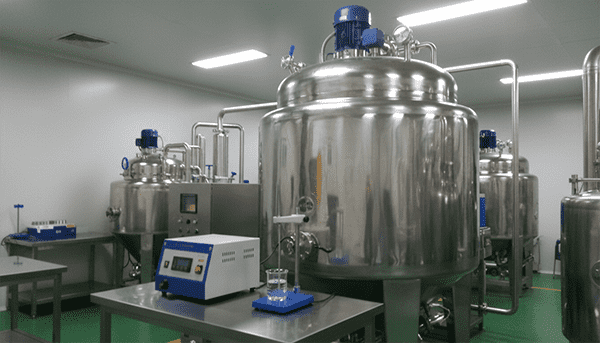
Understanding the scale of your partner is vital. A beauty labs manufacturer is fundamentally different from an industrial OEM. Labs operate like boutique kitchens; factories operate like assembly lines.
If you are developing a highly unstable Vitamin C serum or a complex color cosmetic line, you need labs for makeup. These makeup labs have the patience to run micro-batches, test different emulsifiers, and conduct multi-stage stability testing. However, once that formula is locked, keeping your production at a boutique lab destroys your profit margins.
| Metric | Beauty Labs Manufacturers | Large-Scale Cosmetic OEMs |
|---|---|---|
| Core Strength | Custom R&D, Clinical Testing | Cost Efficiency, Volume Speed |
| MOQ | 500 - 1,000 units | 10,000+ units |
| Unit Cost | High | Low |
| Equipment | Benchtop Mixers | 5-Ton Homogenizers |
Sarah’s Insight: The most successful brands I work with split their supply chain. They pay a premium to a beauty labs manufacturer to own the IP of a groundbreaking formula. Once the product proves market fit, they transfer that exact formula to a massive ISO-certified OEM to scale up production and slash unit costs by 60%. Never use a lab for scale, and never use a mega-factory for experimental R&D.
Healthcare Private Label Supply Chain Program: What Can Skincare Learn from Medical Supply Chains?
Skincare regulations are tightening globally. If you build your cosmetic brand using medical-grade supply chain principles, you eliminate 99% of future compliance risks.
A healthcare private label supply chain program operates under strict ISO 13485 and GMP standards. Skincare brands adopting these medical-grade protocols achieve superior batch consistency5, rigorous raw material traceability, and seamless global regulatory compliance6, far exceeding standard cosmetic requirements.
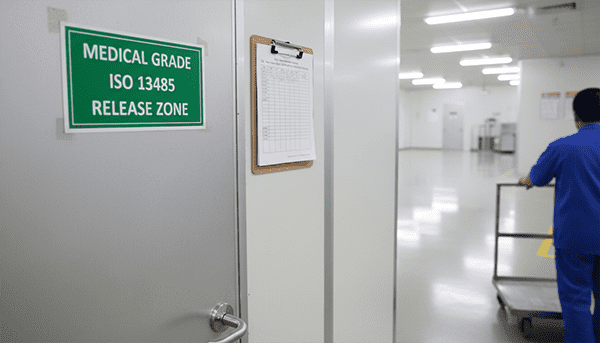
The line between cosmetics and pharmaceuticals is blurring. Consumers demand clinical results, and regulators like the FDA and TGA are applying tighter scrutiny to beauty products. Adapting a healthcare private label supply chain program mentality is the ultimate competitive advantage for a modern skincare brand.
In a medical supply chain, every single component is tracked. If a batch of lotion fails a microbial test, a medical-grade system can trace the failure back to a specific barrel of glycerin received three months ago. Standard cosmetic factories rarely have this level of forensic traceability.
To adopt this standard, you must demand:
- Quarantine Protocols: Raw materials must be tested before entering the main production floor.
- Environmental Monitoring: Air quality and water filtration systems must be logged daily.
- Retention Samples: The factory must keep samples of your product for three years to test against future consumer complaints.
Sarah’s Insight: I tell every founder: treat your skincare brand like a medical device company. When you demand ISO 13485-level traceability from your cosmetic suppliers, the bad factories will drop out immediately. The ones who remain are the partners who will protect your brand from a multi-million dollar recall lawsuit.
Finding the right factory is not about the lowest price; it is about absolute compliance. Elevate your standards, secure your supply chain, and build a lasting brand.
About Sarah Cao I’m Sarah Cao, Founder of CAMELLIA LABS. We are not just another supplier; we are your "Growth Partner." With over 10 years in the supply chain, I help brand founders avoid 99% of production pitfalls through strict GMP compliance, stable manufacturing, and strategic sourcing. At CAMELLIA LABS, we believe that Good products begin with stringent standards. Let's build a resilient, compliant, and highly profitable brand together.
Understanding GMP certification is crucial for ensuring product quality and compliance in the skincare industry. ↩
Learn how production scalability can impact your brand's growth and market presence. ↩
Discover the benefits of working with an ODM skincare manufacturer for your beauty brand. ↩
Explore the importance of FDA compliance to avoid legal issues and ensure product safety. ↩
Learn about the importance of batch consistency for maintaining product quality. ↩
Explore the significance of regulatory compliance for skincare brands. ↩
Discover the significance of protecting your intellectual property in the beauty industry. ↩
Understand the importance of microbial challenge data for product safety. ↩
Understand the implications of low MOQ in private label cosmetics for startups. ↩
Learn how custom packaging can enhance your brand's market positioning. ↩
Learn about MoCRA compliance and its significance for US-based beauty brands. ↩
Discover strategies to avoid raw material contamination and protect your brand. ↩
Find out why ISO 22716 certification is essential for ensuring quality in cosmetic manufacturing. ↩
Understand the role of clinical testing in ensuring product efficacy and safety. ↩
Discover best practices for ensuring stability in your skincare supply chain. ↩