Many founders launch beauty brands only to face sudden recalls. Hidden costs and compliance failures drain your capital. Here is how to build a profitable, compliant private label line.
To start a private label cosmetics line in 2026, first secure ISO 22716 GMP-certified manufacturers[^1]. Define your target market compliance—FDA MoCRA[^2], EU PIF, or TGA—before designing packaging. Select ready-to-go stable formulas to bypass R&D delays, ensuring rapid, legally compliant market entry.
Launching a skincare brand requires more than a beautiful logo. It demands a bulletproof supply chain strategy[^3] to protect your investment. Let’s break down the exact steps to navigate the 2026 manufacturing landscape.
What Are the Hidden Costs of Starting a Beauty Brand?
You budgeted for marketing and inventory, but sudden lab fees can bankrupt your startup. Unplanned compliance testing[^4] often destroys profit margins before you sell a single unit.
Hidden costs in private label cosmetics include stability testing[^5], EU Product Information File (PIF)[^6] creation, packaging compatibility assessments[^7], and safety substantiation[^8]. Founders often lose up to $10,000 per SKU fixing non-compliant formulas that fail regional regulatory approvals.
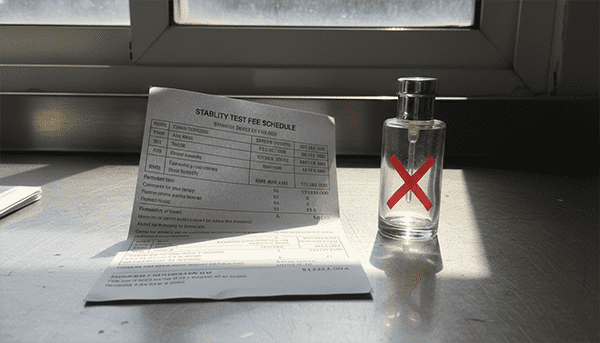
Most beauty brands do not die from bad marketing; they die from supply chain ignorance. You fall in love with a formula, pay for a bulk order, and then realize it separates in cold weather or fails safety testing at customs. Low unit prices often mask high regulatory risks. If a factory offers dirt-cheap manufacturing, they are likely skipping crucial stability checks.
Let's examine where your budget actually goes when you ignore hidden costs:
- Formula Remediations: Fixing a formula that fails EU safety assessments.
- Packaging Recalls: Using bottles that leak or react chemically with active ingredients.
- Customs Rejections: Lacking the proper documentation to enter a foreign market.
Sarah's Insight: I have seen founders cry over a $50,000 inventory batch stuck in customs because they lacked a simple safety data sheet. Always demand a transparent breakdown of testing fees before you sign a contract. A cheap formula today will cost you your entire brand tomorrow.
Why is Compliance Your First Step (Not Just Branding)?
Founders spend months perfecting fonts but ignore FDA rules. If your product gets banned, your branding means nothing. Regulatory clearance must dictate your product development timeline.
Compliance dictates market access. Before finalizing formulations, establish your regulatory framework: FDA MoCRA[^2] for the US, PIF and CPNP registration for the EU, or TGA guidelines for Australia. Bypassing these steps leads to illegal product claims, mandatory recalls, and severe financial penalties[^9].
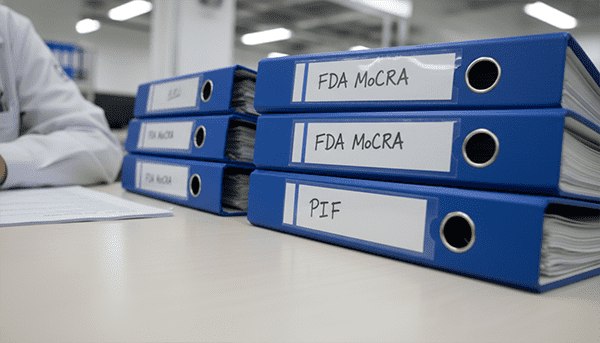
Your first step is never the logo. Your first step is the legal framework. You cannot formulate a product until you know where you will sell it. Different regions have completely different banned substance lists and permissible ingredient limits.
| Regulatory Body | Region | Key Requirement for Entry |
|---|---|---|
| FDA (MoCRA) | USA | Facility registration and adverse event reporting. |
| EU Commission | Europe | A comprehensive PIF file and a designated Responsible Person. |
| TGA | Australia | Strict compliance for therapeutic claims (e.g., sunscreens). |
A formula designed for the US might be entirely illegal in the EU due to specific preservative bans. If you start with branding, you might end up designing labels that make illegal claims.
Sarah's Insight: I always tell my B2B clients at CAMELLIA LABS that compliance is a shield, not a hurdle. We once had a client who wanted to use a specific skin-whitening agent. I stopped them immediately because the ingredient was pending a ban in Europe. We switched to a compliant alternative, saving them a massive future recall.
How to Choose the Right Manufacturer for Scalability?
A boutique lab is great for your first 500 units, but what happens when you need 50,000? Choosing the wrong factory guarantees batch inconsistency[^10] and out-of-stock nightmares.
A scalable manufacturer must possess ISO 22716 GMP certification to ensure batch-to-batch consistency. They should offer extensive capacity, strict quality control procedures, and comprehensive documentation support. Scalability requires automated filling lines and an established network of raw material suppliers to prevent bottlenecks.
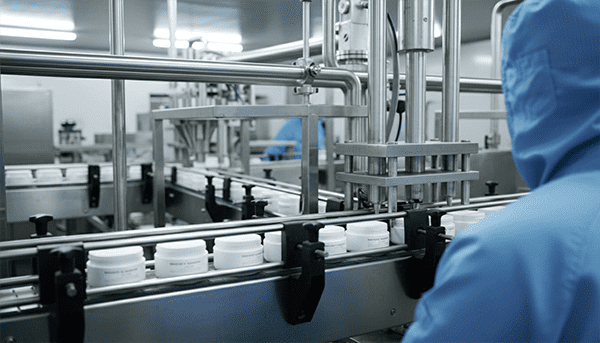
Scalability is the difference between a hobby and a business. When you go viral on TikTok, your manufacturer must keep up. If they lack standard operating procedures (SOPs), your second batch will look, smell, and feel completely different from your first batch. Batch inconsistency destroys customer trust instantly.
Here is what you must demand from a factory:
- ISO 22716 GMP Certification: This is non-negotiable. Good Manufacturing Practices ensure hygiene, traceability, and consistent quality.
- Supply Chain Redundancy: Do they rely on a single supplier for a key active ingredient? If that supplier fails, your production halts.
- Documentation Readiness: Can they produce safety data sheets and certificates of analysis on demand?
Sarah's Insight: Years ago, I audited a factory that promised massive scale but mixed their bulk batches in unsterilized vats. The risk of contamination was horrifying. At CAMELLIA LABS, we only partner with facilities operating strictly under GMP guidelines. We act as your eyes on the ground, ensuring your growth is never capped by factory limitations.
What Does a Ready-to-Go Formula Actually Mean?
Custom R&D takes up to a year and drains your budget. Don't reinvent the wheel if you don't have to. White labeling existing formulas accelerates your launch drastically.
Ready-to-go formulas are pre-developed, stability-tested, and legally compliant cosmetic bases. Utilizing these off-the-shelf formulations allows brands to skip the 6-to-12-month R&D phase, minimizing upfront testing costs and ensuring immediate compliance with global regulations like FDA and EU standards.
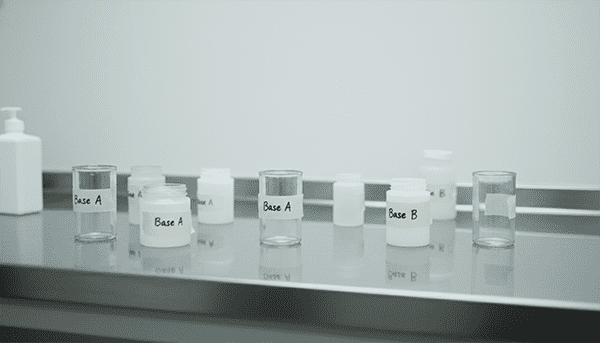
Many founders believe they need a completely unique, ground-up formula to succeed. This is a costly myth. The truth is, the market rewards speed and marketing execution over slight formulation tweaks.
Using a ready-to-go formula is the smartest move for a startup. Why? Because the manufacturer has already paid for the stability testing[^5], the preservative efficacy testing (PET)[^11], and the safety assessments. The product is proven to work and proven to be safe.
| Metric | Custom Formula | Ready-to-Go Formula |
|---|---|---|
| Upfront R&D Costs | High ($3k-$10k) | Zero to very low |
| Time to Market | 6-12 months | 1-3 months |
| Stability Risk | High failure risk | Pre-tested and guaranteed stable |
Sarah's Insight: I advise 90% of new founders to launch with ready-to-go formulas[^12]. You can still customize the packaging, the fragrance, or the hero ingredient story. I once helped a founder launch a complete skincare line in 8 weeks just by leveraging our pre-vetted, highly stable formulations. We skipped the trial-and-error phase entirely.
Starting a private label line requires strict compliance, GMP-certified partners, and strategic foresight. Do not let hidden costs ruin your vision. Choose a supply chain partner[^13] who guarantees stability.
About Sarah Cao I am the Founder of CAMELLIA LABS (ZJG Nine CS) and a supply chain veteran with 10+ years of experience. I am not just a chemist; I am a sourcing expert[^14] who knows exactly why factories fail. My mission is to serve as your "Growth Partner," helping you bypass 99% of production pitfalls through flawless GMP compliance and reliable sourcing.
CAMELLIA LABS — "Good products begin with stringent standards." Stop gambling with unverified suppliers. Let us build your compliant, highly scalable beauty brand today.
Core Frequently Asked Questions (FAQ)
Q: What are the true hidden costs of starting a private label beauty brand? A: Hidden costs go beyond formulation. They typically include mandatory compliance testing[^4] (like CPSR for the EU or TGA registration), unexpected shipping tariffs, and packaging minimum order penalties. At Camellia Labs, we eliminate these by providing transparent quotes that include essential documents like COA and PIF.
<script type="application/ld+json"> { "@context": "https://schema.org", "@type": "FAQPage", "mainEntity": [ { "@type": "Question", "name": "What are the true hidden costs of starting a private label beauty brand?", "acceptedAnswer": { "@type": "Answer", "text": "Hidden costs go beyond formulation. They typically include mandatory compliance testing (like CPSR for the EU or TGA registration), unexpected shipping tariffs, and packaging minimum order penalties. At Camellia Labs, we eliminate these by providing transparent quotes that include essential documents like COA and PIF." } } ] } </script>
[^1]: Understanding ISO 22716 GMP certification is crucial for ensuring product quality and compliance in the cosmetics industry. [^2]: Explore FDA MoCRA to understand its impact on product compliance and market access for beauty brands. [^3]: A solid supply chain strategy safeguards your investment and ensures smooth operations in product launches. [^4]: Compliance testing is essential for legal market entry; understand its requirements for beauty brands. [^5]: Stability testing is vital for ensuring product safety and efficacy; discover its role in cosmetics development. [^6]: Learn about the EU PIF to ensure your products meet regulatory requirements for entry into the European market. [^7]: Understanding packaging compatibility can prevent costly recalls and ensure product integrity. [^8]: Safety substantiation is essential for consumer trust; learn how it's performed to protect your brand. [^9]: Understanding financial penalties can help avoid costly mistakes; explore the risks of non-compliance. [^10]: Batch inconsistency can damage brand reputation; learn how to ensure consistent product quality. [^11]: Preservative efficacy testing ensures product safety; explore its importance in cosmetics formulation. [^12]: Ready-to-go formulas can accelerate your launch; learn how they minimize costs and time to market. [^13]: Choosing the right partner is crucial for success; learn what to look for in a supply chain collaborator. [^14]: A sourcing expert can help navigate production pitfalls; discover their role in successful brand launches.