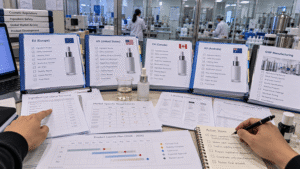
Navigating global cosmetics regulations is overwhelming. I've spent 10 years dealing with factories and auditors, so I created this definitive 2026 compliance checklist to save your brand from costly delays and border rejections.
The top 5 regulatory milestones you must clear in 2026 are:
- ISO 22716 Cosmetics GMP1 (Global baseline)
- FDA MoCRA2 (US deadlines)
- TGA Compliance3 (Australia strictness)
- Health Canada Hotlist4 (Ingredient restrictions)
- COFEPRIS5 (Mexico/LatAm access)

Compliance is no longer a one-time project; it is a continuous system. Whether you are validating a new formula or expanding into North America, aligning with these regional regulations from day one will prevent thousands of dollars in wasted inventory. A proper regulatory compliance check6 at the R&D stage ensures your formulations are built for global scale. Here is exactly how to navigate the 2026 landscape.
1. ISO 22716 Update 2026 Cosmetics GMP: The Non-Negotiable Foundation
Best for establishing a universal manufacturing standard. ISO 22716 is the global passport for cosmetics. The main drawback? It requires relentless documentation, strict facility upgrades, and constant factory auditing.

Dive Deeper The supply chain reality7 is that GMP (Good Manufacturing Practice8) is evolving. The iso 22716 update 2026 cosmetics gmp standards place a heavier emphasis on digital traceability, raw material batch tracking9, and automated environmental controls. You cannot simply trust a supplier who shows you an expired certificate from 2022.
If your contract manufacturer10 is not investing in modern facility upgrades to meet the 2026 updates, your brand assumes all the risk. When a batch fails micro-testing, the root cause usually traces back to poor water system maintenance or inadequate air filtration—areas strictly governed by the updated ISO standards. Upgrading to these new requirements takes time and capital, meaning cheap factories will simply cut corners and forge documents.
| GMP Standard Element | 2024 Baseline Requirement | 2026 Update Expectation | Brand Impact |
|---|---|---|---|
| Batch Traceability | Manual paper logs | Digital ERP integration | Faster recalls, lower liability |
| Equipment Cleaning | Visual inspection logs | Swab testing & validation | Prevents cross-contamination |
| Raw Material Vetting | Basic Supplier COA | Third-party validation | Ensures stable formulation |
Sarah’s Supply Chain Warning: I once audited a factory for a client scaling into the EU. The factory claimed ISO 22716 compliance, but their "cleanroom" doors were propped open to let in a breeze. We pulled the plug on a 50,000-unit PO immediately. If we hadn't, the brand would have faced massive EU product recalls. Always demand a current, third-party audit report.
2. FDA MoCRA2 Timeline: Facility Registration & Product Listing Deadlines 2025–2026
Best for surviving the US market. MoCRA enforces mandatory adverse event reporting11 and safety substantiation. The main drawback is the strict registration deadlines that catch brand founders entirely off-guard.

Dive Deeper The Modernization of Cosmetics Regulation Act (MoCRA) is the biggest overhaul of US cosmetics law since 1938. The latest mocra news 2026 confirms that the FDA is actively tightening enforcement. The fda mocra facility registration12 & product listing deadlines13 2025–2026 are not suggestions; they are hard cut-offs.
The supply chain reality7 here is brutal. As a brand owner, you are the "Responsible Person," but you rely entirely on your manufacturer to complete the facility registration12. If your factory refuses to register—often because they don't want to expose their client lists or submit to FDA inspections—your products will be blocked at US customs. Tracking the mocra timeline is critical. You must ensure adverse event reporting11 systems and safety substantiation dossiers are fully compiled before your product hits the shelves. Reviewing the cosmetics regulation updates 2026 is mandatory for survival in the US market.
| MoCRA Requirement | Who is Responsible? | Consequence of Failure |
|---|---|---|
| Facility Registration | Manufacturer (Factory) | Products detained at US ports |
| Product Listing | Brand (Responsible Person) | FDA Warning Letters & Fines |
| Safety Substantiation | Brand (Responsible Person) | Forced recalls and lawsuits |
Sarah’s Supply Chain Warning: Last year, a rising indie brand had $120,000 worth of cleansers sitting in an FDA quarantine warehouse. Why? Their overseas contract manufacturer10 missed the facility registration12 deadline and ignored FDA correspondence. The brand lost their key holiday launch window. Put MoCRA compliance clauses in your manufacturing contracts.
3. TGA Cosmetic Compliance: Navigating the Therapeutic Goods Administration Australia
Best for scaling safely into Australia. The TGA strictly separates pure cosmetics from therapeutic goods14. The main drawback is the high barrier to entry and lengthy approval times for borderline products.
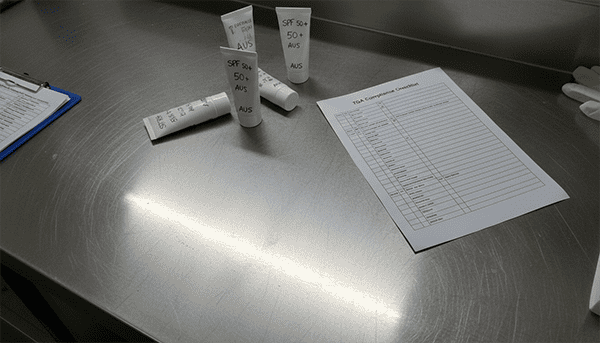
Dive Deeper Australia is a highly lucrative market, but tga cosmetic compliance is notoriously difficult. The Therapeutic Goods Administration Australia governs products with a heavy hand. The supply chain reality7 is that many products considered "cosmetics" in the US or Asia—like primary sunscreens, anti-acne spot treatments, or skin-lightening creams—are classified as therapeutic drugs in Australia.
If your formula crosses the line into a therapeutic good, you must manufacture it in a TGA-approved facility. These factories command significantly higher MOQs and premium pricing. Attempting to sneak a therapeutic product through customs under a "cosmetic" label will result in immediate seizure and potential blacklisting. You must lock in your claims and ingredient lists early in the R&D phase to ensure you remain firmly in the cosmetic category if you do not have the budget for TGA drug registration.
| Product Claim | US/EU Classification | TGA Australia Classification |
|---|---|---|
| "Reduces acne breakouts" | Cosmetic / OTC Drug | Therapeutic Good (Strict) |
| "SPF 50+ Primary Sunscreen" | OTC Drug / Cosmetic | Therapeutic Good (Strict) |
| "Moisturizes dry skin" | Cosmetic | Cosmetic (Easier entry) |
Sarah’s Supply Chain Warning: I watched a founder try to launch a "blemish-busting serum" in Sydney. Because they used the word "acne" on the primary packaging, the Therapeutic Goods Administration Australia flagged it. The entire batch of 10,000 units had to be destroyed because their manufacturer was not TGA-certified. Words matter; audit your labels.
4. Health Canada Hotlist4: Your Reverse Formulation Guide
Best for rapid ingredient vetting. The official hotlist dictates exactly what is banned or restricted. The main drawback is its frequent updates requiring constant, proactive formula reviews.
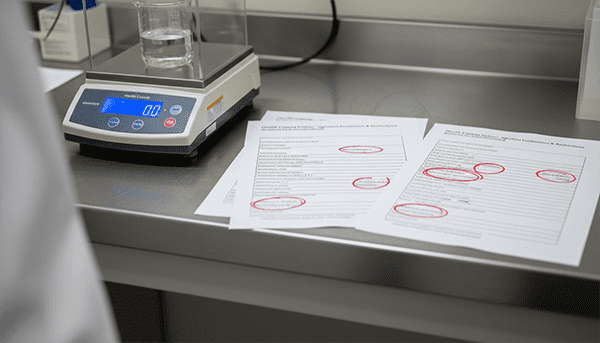
Dive Deeper Do not treat the health canada cosmetic ingredient hotlist15 official as just a legal document—use it as a strategic formulation tool. The health canada hotlist outlines specific concentration limits and outright bans for hundreds of ingredients.
The supply chain reality7 is that smart brands use the canada hotlist as a "reverse formulation guide." Before you even brief a chemist or a factory, you check your desired active ingredients against the cosmetic hotlist. If an ingredient is restricted, you pivot immediately. This saves months of wasted lab time. Because the cosmetics hotlist is updated regularly, you must perform an annual cosmetic ingredient hotlist15 audit on your existing catalog to ensure you haven't fallen out of compliance due to a recent regulatory shift.
| Hotlist Status | Formulation Strategy | Supply Chain Impact |
|---|---|---|
| Banned | Immediate removal | Requires complete reformulation |
| Restricted (Concentration) | Adjust percentages strictly | May impact product efficacy/texture |
| Warning Required | Update packaging text | Added printing costs and timelines |
Sarah’s Supply Chain Warning: A client came to me after their top-selling skin brightening cream was pulled from Canadian shelves. They formulated with a high percentage of Alpha-Arbutin without checking the updated cosmetic hotlist limits. They had to scrap $40,000 in packaging and rush a reformulation. Always check the Hotlist before signing off on lab samples.
5. COFEPRIS5: Unlocking Latin America via the Commission for the Protection Against Sanitary Risks
Best for dominating the emerging Mexican market. COFEPRIS5 compliance ensures legitimate entry and distribution. The drawback? Heavy bureaucratic translation requirements and notoriously slow administrative processing times.
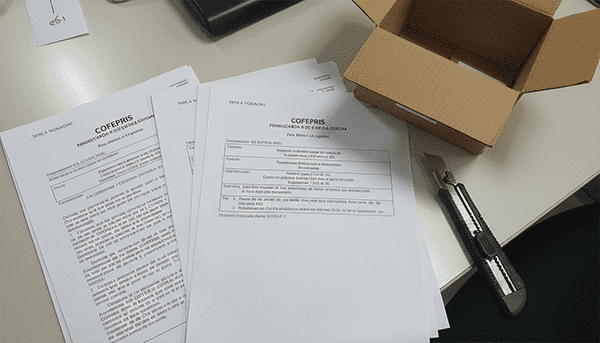
Dive Deeper Latin America is booming, and Mexico is the primary gateway. To enter legally, you must clear cofepris (the Commission for the Protection Against Sanitary Risks). The supply chain reality7 of entering Mexico is heavily bureaucratic. You cannot simply ship products; you must have a registered local distributor or legal representative to submit your sanitary notifications.
The COFEPRIS5 process demands extensive documentation, including qualitative and quantitative formulas, original certificates of free sale (CFS), and strict Spanish label translation16s. Factories often push back against releasing exact quantitative formulas due to IP concerns. You need strong NDAs and a cooperative manufacturer to get the paperwork over the finish line. Do not underestimate the lead times—administrative approvals here take significantly longer than in North America.
| COFEPRIS5 Requirement | Supply Chain Challenge | Strategic Solution |
|---|---|---|
| Formula Disclosure | Factories hate sharing percentages | Execute strict international NDAs |
| Local Representation | Need a Mexican entity | Partner with a vetted local distributor |
| Label Translation | Exact phrasing is legally binding | Hire specialized cosmetic translators |
Sarah’s Supply Chain Warning: I had to rescue a supply chain for a brand whose shipment was blocked at the Mexican border. They relied on Google Translate for their ingredient list, translating a botanical extract incorrectly. The commission for the protection against sanitary risks deemed the product "mislabeled." We lost three months fixing the paperwork.
Final Verdict
Stop treating compliance as an afterthought. Cross-reference your formulas against the Health Canada Hotlist4 and TGA rules today. Demand proof of MoCRA and ISO 22716 updates from your manufacturer before issuing your next PO. Secure your compliance, secure your margins.
About Sarah Cao & CAMELLIA LABS I am the Founder of CAMELLIA LABS (ZJG Nine CS). After 10+ years in the trenches of cosmetic sourcing, I built this agency to be the ultimate "Growth Partner" for brands. "Good products begin with stringent standards." We help you avoid 99% of production pitfalls by ensuring GMP compliance and securing stable, scalable supply chains.
Ready to bulletproof your 2026 supply chain? Contact us today to book a technical consultation and audit your manufacturing strategy.
Understanding ISO 22716 is crucial for establishing a universal manufacturing standard in cosmetics. ↩
Explore the latest updates on FDA MoCRA to ensure your brand meets US market regulations. ↩
Learn about TGA Compliance to navigate the strict regulations for cosmetics in Australia. ↩
The Health Canada Hotlist is essential for ingredient vetting and compliance in the Canadian market. ↩
Understanding COFEPRIS is vital for successfully entering the Mexican cosmetics market. ↩
A compliance check is vital for ensuring formulations meet global standards from the start. ↩
Understanding the supply chain reality helps brands adapt to evolving regulatory landscapes. ↩
GMP is a foundational element for ensuring product quality and safety in cosmetics. ↩
Effective batch tracking enhances product safety and traceability in the supply chain. ↩
Choosing the right contract manufacturer is crucial for compliance and product quality. ↩
Adverse event reporting is crucial for maintaining consumer safety and regulatory compliance. ↩
Proper facility registration is essential to avoid product detainment at US ports. ↩
Meeting product listing deadlines is critical for launching cosmetics in the US market. ↩
Understanding the classification helps avoid regulatory pitfalls when entering the Australian market. ↩
Staying updated on the hotlist is essential for maintaining compliance in cosmetic formulations. ↩
Accurate label translation is legally binding and crucial for successful product entry in Mexico. ↩