
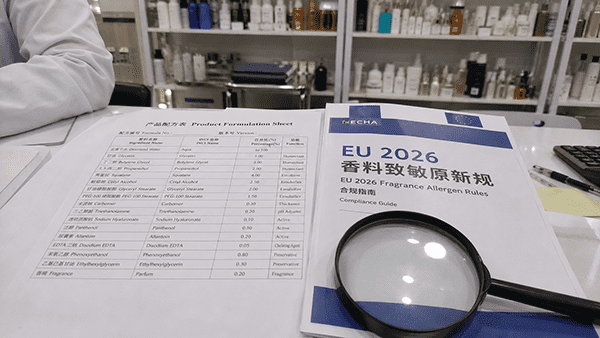
Worried about the EU's 2026 allergen rules? Your existing formulas could become non-compliant, making your products unsellable. The risk is hidden inside your current ingredients, not just the label.
The EU is expanding its list of declarable fragrance allergens from 26 to over 80 substances. To comply by 2026, you must audit your existing formulas for these new allergens, not just update your product labels. Many brands find these new allergens are already in their products.
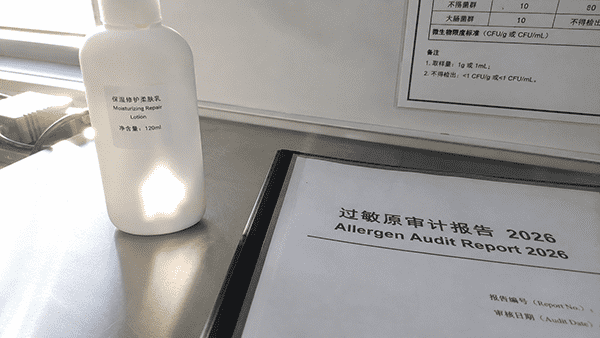
As a compliance reviewer at a cosmetic manufacturer, I see brands focused on label changes. This is a mistake. The real issue is what's in the bottle, not just what's printed on the box. The transition period feels long, but the clock is ticking on your current inventory and future production runs. Let's break down where the actual risks are hiding, based on the formula audits I run every day for brands just like yours. The core problem is almost always in the formula itself.
Are You Sure Your Formula Only Contains the Old 26 Allergens?
You think you're compliant because you avoided the original 26 allergens. But the list is growing, and your "safe" formula might now be at risk without you knowing it.
The new regulation adds over 50 new substances to the declarable allergen list. Many of these, like menthol or certain citrus extracts, are common in cosmetics.1 Relying on old compliance data means you're likely using newly restricted ingredients and don't even realize it.
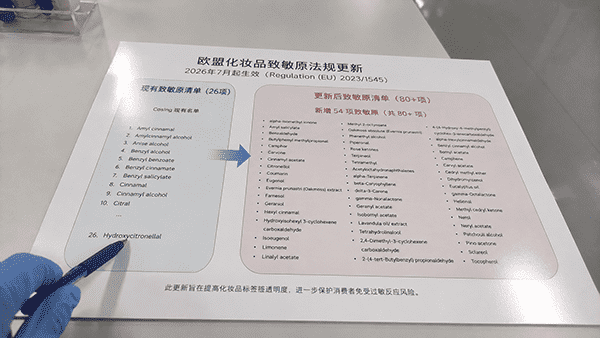
In our compliance audits, we've repeatedly found brands are surprised by this. They hand me a formula they believe is "allergen-free" based on the old 26-substance list. But when we screen it against the new, expanded database, we find problems. Common ingredients, once considered safe, now trigger alerts. For example, a popular botanical extract might contain a newly listed allergen that was never a concern before. It’s a shift from just avoiding a few known irritants to verifying the entire ingredient profile of your product. The mindset has to change. We are no longer just checking off a small list. We are actively hunting for a much wider range of potential issues.
Here is a simplified way to think about the change in focus:
| Aspect | Old Regulation Focus (Pre-2026) | New Regulation Focus (2026 Onwards) |
|---|---|---|
| Scope | Limited to 26 well-known substances. | Expanded to 80+ substances, including common ones. |
| Brand Action | Avoid a small, specific list of ingredients. | Audit the entire formula for a wide range of hidden allergens. |
| Assumption | "If it's not one of the 26, it's okay." | "Any ingredient could contain a newly regulated allergen." |
This table shows the new reality. Your old "compliant" formula might not be compliant at all under the new rules.
Can You Truly Trust Your Fragrance Supplier's Compliance Certificate?
You rely on your supplier's IFRA certificate for compliance. But what if that document is outdated? You could be producing a non-compliant product based on obsolete information.
Supplier documents often lag behind regulatory changes. An IFRA certificate might confirm compliance with old rules, but it doesn't guarantee your formula is safe for the 2026 update. You must independently verify the raw data against the new allergen list.
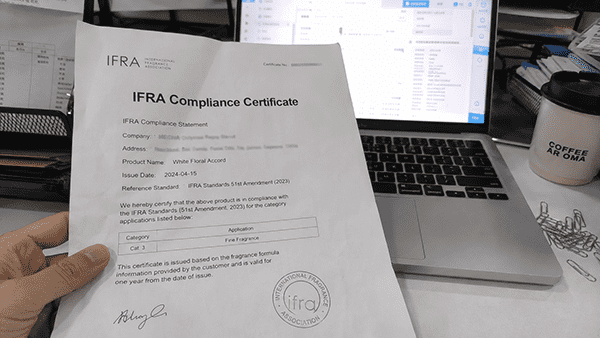
I had a case recently where a client was very confident. They showed me their fragrance supplier's certificate, which looked perfect. It was signed and dated. The problem? The certificate was based on an analysis from before the new allergen list was finalized. When we audited the actual ingredient disclosure for their fragrance oil, we flagged three of the newly restricted allergens. The supplier wasn't being malicious; their paperwork was just obsolete. This is why we never just trust the top-level certificate. We always ask for the full ingredient breakdown and run it through our own updated compliance software. Relying on a summary document is like trusting a book's cover instead of reading the pages. Your responsibility as the brand owner is to ensure compliance with the final product, and that means you cannot outsource the verification process completely. You have to dig deeper than the summary sheet.
Do You Know What's Really Inside Your 'Fragrance/Parfum' Ingredient?
The ingredient "Fragrance/Parfum" looks simple on your label. But this single term can hide dozens of chemical components, including a mix of the newly regulated allergens.
A single 'fragrance' ingredient is a proprietary blend.2 Without a full breakdown from your supplier, you cannot know if it contains newly restricted allergens.3 Simply listing 'Parfum' on your INCI is no longer enough; you must identify and declare specific allergens within that blend.
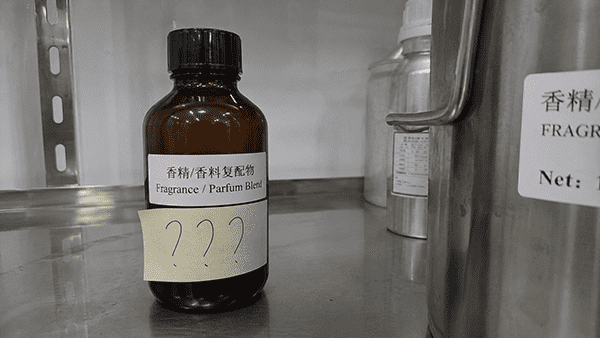
Think of 'Parfum' as a black box. As a brand owner, you see one ingredient. As a compliance reviewer, I know that box can contain 50, 100, or even more individual substances. Before, you only had to worry if one of the 26 known allergens was in there. Now, the number of potential red flags inside that box has more than tripled. We often see formulas where the brand owner doesn't even have the full list of what's in their fragrance. They just buy a pre-made scent from a fragrance house. For a proper audit, your supplier must provide a complete component list showing every substance in that blend. If your supplier calls it a 'trade secret' and won't share the details, you have a massive compliance risk. You cannot declare what you do not know, and ignorance will not be an excuse for EU regulators. You must get that data.
What's the Real Cost of Waiting Until 2026 to Audit Your Formulas?
Thinking you can wait until the deadline? This delay could force you to scrap your entire inventory and halt sales. The financial risk of inaction is growing every day you produce.
Waiting until the deadline to discover a non-compliant ingredient means facing massive costs. You'll have to halt production, write off existing stock, and pay for urgent reformulations. Auditing your formulas now gives you time to make changes smoothly.
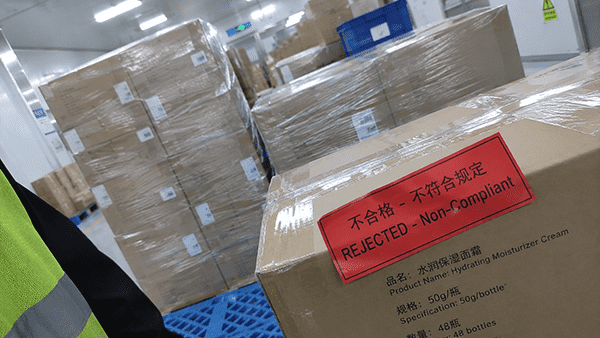
From my perspective in manufacturing, the costs of last-minute changes are not theoretical. They are very real and disruptive. Here’s what happens when a brand discovers a non-compliant formula too late:
- Production Halts: We have to immediately stop production runs. This disrupts schedules for everyone and can lead to penalty fees for the brand.
- Inventory Write-Offs: All existing products, whether on shelves or in a warehouse, become unsellable in the EU. This is a direct, painful financial loss.
- Urgent Reformulation: R&D is not instant. A rush job to replace one ingredient can affect product stability, texture, and performance4, requiring new, expensive testing5.
- Packaging Waste: All your printed boxes and labels with the old ingredient list are now useless. This is another direct cost that adds up quickly.
Auditing your formulas now transforms this potential crisis into a manageable project. You have time to reformulate correctly, use up old packaging, and plan a smooth transition. It's a strategic business decision, not just a compliance task.
Conclusion
The EU's 2026 allergen update is a formula issue, not just a label one. Audit your ingredients now to avoid costly production halts and inventory loss in the future.
"Allergens in Cosmetics - FDA", https://www.fda.gov/cosmetics/cosmetic-ingredients/allergens-cosmetics. Research on cosmetic allergens identifies menthol and citrus-derived compounds as substances with documented sensitization potential that appear in various personal care products. Evidence role: case_reference; source type: research. Supports: the presence of menthol and citrus-derived compounds in cosmetic formulations and their potential allergenic properties. Scope note: Confirmation that these specific substances appear on the EU's expanded regulatory list requires reference to the official regulatory text. ↩
"Fragrances in Cosmetics - FDA", https://www.fda.gov/cosmetics/cosmetic-ingredients/fragrances-cosmetics. EU cosmetic regulations recognize 'Parfum' or 'Fragrance' as a single INCI designation that can represent complex mixtures of multiple aromatic compounds. Evidence role: definition; source type: government. Supports: the regulatory treatment of fragrance as a complex ingredient that may contain multiple components. ↩
"Allergens in Cosmetics - FDA", https://www.fda.gov/cosmetics/cosmetic-ingredients/allergens-cosmetics. EU cosmetic regulations place responsibility on the manufacturer to maintain complete documentation of product composition, which requires obtaining detailed ingredient information from suppliers. Evidence role: general_support; source type: government. Supports: the manufacturer's responsibility to document all product components for regulatory compliance. ↩
"Guidelines on the stability testing of cosmetic products - ISO", https://www.iso.org/obp/ui/en/#!iso:std:63465:en. Cosmetic formulation science establishes that ingredient substitutions can alter product stability, texture, and performance due to complex interactions between components, requiring reformulation validation and stability testing. Evidence role: mechanism; source type: education. Supports: the principle that ingredient changes in cosmetic formulations can impact product stability and sensory properties. ↩
"Guidelines on the stability testing of cosmetic products - ISO", https://www.iso.org/obp/ui/es/#!iso:std:63465:en. EU cosmetic regulations require that product safety assessments reflect the actual product composition, necessitating updated safety evaluations and appropriate testing when formulations are changed. Evidence role: general_support; source type: government. Supports: the requirement for safety assessment and appropriate testing when cosmetic formulations are modified. ↩