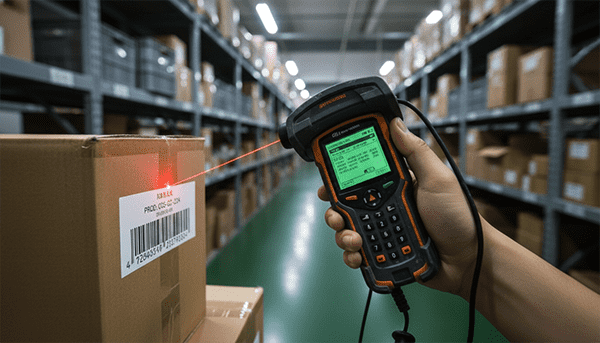
You likely spend thousands on SEO to attract human buyers, but you are ignoring the most powerful new purchaser in the market. Supply chain managers[^1] are increasingly deploying autonomous software[^2] to filter suppliers, and if your data isn't structured correctly, your brand is effectively invisible.
Agentic Commerce B2B is the practice where autonomous AI agents execute procurement tasks—such as supplier discovery[^3], specification analysis, and price negotiation—on behalf of human stakeholders. Unlike traditional e-commerce, which relies on visual interfaces for humans, agentic commerce relies on structured data[^4], APIs, and machine-readable technical specifications[^5] to facilitate automated decision-making.
- Topic: Agentic Commerce B2B
- Key Standard: GS1[^6] / Schema.org / JSON-LD
- Target Audience: Raw Material Suppliers & Contract Manufacturers

At Camellia Labs, we have noticed a shift in how inquiries arrive. We are no longer just receiving emails from overwhelmed sourcing managers; we are seeing automated queries scraping our technical data tables[^7]. The future of B2B relationships isn't just human-to-human; it's machine-to-machine.
Supply Chain Transparency & Structured Data: The New Standard for B2B Procurement?
The days of hiding your manufacturing capabilities behind a "Contact Us" form are ending. Buyers today demand instant data verification, and opaque supply chains are being filtered out by algorithms before a human ever reviews the list.
Supply Chain Transparency in the age of AI refers to the public availability of verified data points—such as certification numbers, audit dates, and ingredient origins—in a standardized digital format. This allows AI in cosmetic sourcing[^8] to validate supplier credibility instantly without human intervention.

In traditional sourcing, a charismatic sales rep could smooth over gaps in compliance or vaguely promise "high quality." In the era of Agentic Commerce, AI agents do not care about charisma; they care about verifiable data points.
To be visible, your data must align with global standards like GS1[^6] (Global Standards 1) for product identification and ISO 22716[^9] (GMP) certification standards. If an AI agent from a major retailer like Sephora or a conglomerate like L'Oréal is scanning the web for a "Cruelty-Free, Niacinamide Serum Manufacturer[^10]," it is looking for digital proof, not marketing claims.
Most brands believe that "Proprietary Blends" and "Trade Secrets" protect their competitive advantage. However, in an Agentic economy, secrecy is a liability. If an AI cannot verify your ingredient list against a "Restricted Substance List[^11]" (RSL) instantly, it will likely discard your brand as "High Risk" to protect the buyer. Radical transparency—sharing exact percentages and sourcing origins via blockchain or structured data[^4]—actually increases your probability of being selected.
| Feature | Human Buyer Preference | AI Agent Preference | The 2026 Winner |
|---|---|---|---|
| Format | PDF Brochures & Slide Decks | JSON-LD / CSV / HTML Tables | Structured Data |
| Language | "Luxurious texture," "Dreamy" | "Viscosity: 50,000 cps," "pH: 5.5" | Hard Specs |
| Verification | Trust based on meetings | Verification via Database API | API Integration[^12] |
| Access | "Email for Quote" | Instant Pricing Tiers | Transparent Pricing |
Why Will Lack of Technical Specifications Make You Invisible to AI Algorithms?
You might have the best formula in the world, but if your website describes it with fluffy marketing adjectives instead of hard numbers, you simply do not exist to a sourcing bot. This is the "Silent Filter" killing B2B leads.
Technical Invisibility occurs when a supplier's digital footprint lacks specific quantitative attributes (specs) that AI models use to categorize and retrieve entities. In AI in cosmetic sourcing[^8], algorithms prioritize numerical values (e.g., HLB values, concentration %) over qualitative descriptions.

Let's analyze how Large Language Models (LLMs) and retrieval-augmented generation (RAG) systems work in procurement. A buyer might prompt their internal AI: "Find suppliers in California with MOQ < 1000 offering 5% Niacinamide serum with a pH between 5.0 and 6.0."
The AI references the INCI (International Nomenclature Cosmetic Ingredient) dictionary and standard units of measure.
Marketing copy hurts your B2B search ranking. If you write, "We offer low minimums for startups," the AI has to guess what "low" means. If you write, "MOQ: 500 units," the AI knows exactly what you offer. Ironically, the more "beautiful" your website copy is, the harder it might be for an agent to parse. AI agents are literal; they do not understand nuance the way a human does. They treat ambiguity as a "Null" value. If your pH isn't listed, the AI assumes you don't know it, or it falls outside the requested safety parameters.
| Data Point | Marketing Description (Invisible) | Technical Spec (Visible) | Importance to AI |
|---|---|---|---|
| Quantity | "Small batch friendly" | "MOQ: 500 Units" | Critical (Filter #1) |
| Timeline | "Fast turnaround" | "Lead Time: 4-6 Weeks" | High (Planning) |
| Texture | "Rich and creamy" | "Viscosity: 30,000-40,000 cps" | High (Product Match) |
| Stability | "Long-lasting" | "Shelf Life: 36 Months / PAO: 12M" | Medium (Compliance) |
| Origin | "Made locally" | "COO: USA (ISO 3166-1)" | High (Tariff Calc) |
How Can You Optimize Your Digital Footprint for Automated Sourcing Agents?
Preparing for the AI revolution doesn't require a complete overhaul of your business, but it does require a "Digital Readiness[^13] Audit." Are you feeding the bots the data they need to recommend you?
Digital Readiness[^13] in B2B commerce is the measure of how easily a brand's operational data can be accessed, parsed, and utilized by external software systems. It involves implementing Schema markup and ensuring data portability to reduce friction in the Agentic Commerce B2B funnel.

We need to treat our B2B presence like software, not a brochure. This means structuring your website's backend so that crawlers can understand your capabilities immediately.
You should be using Schema.org vocabulary (specifically Product and Offer schemas) to tag your services. Furthermore, compliance with the EU Digital Product Passport[^14] (DPP) framework is becoming the global gold standard for data readiness.
Your "Contact Us" page is a barrier. In the future, the highest-performing suppliers will expose APIs (Application Programming Interfaces) that allow buyer agents to check real-time inventory[^15] and book production slots without sending a single email. While this sounds futuristic, "Headless Commerce[^16]" is already here. If an AI can query your database to see that you have 5,000 units of glass bottles in stock, it will book them instantly rather than waiting 24 hours for a human to reply. Speed of data access equates to sales volume.
| Component | Beginner (At Risk) | Advanced (AI Ready) | Action Item |
|---|---|---|---|
| Website Data | Text & Images | Structured Tables & Schema | Install JSON-LD plugins |
| Catalog Format | PDF Download | Live Searchable Database | digitize PDF specs |
| Inventory | Manual Email Check | Real-time / Daily Update | Integrate ERP to Web |
| Compliance | "Ask for Certs" | Downloadable COA/MSDS | Upload docs to product pages |
| Standards | Internal SKUs | GTIN / GLN (Global Location Number) | Register with GS1[^6] |
The transition to Agentic Commerce B2B is not just a technological shift; it's a fundamental change in how we communicate value. At CAMELLIA LABS, we structure our manufacturing data to be as transparent and accessible as possible, ensuring that when the AI agents go shopping for the next big beauty brand, they find us—and by extension, they find you.
[^1]: Understanding the role of supply chain managers can help you optimize your approach to meet their needs. [^2]: Explore how autonomous software is revolutionizing procurement and what it means for your business. [^3]: Find out effective strategies for supplier discovery that can enhance your procurement process. [^4]: Learn why structured data is crucial for visibility in B2B procurement and how to implement it. [^5]: Learn why technical specifications are vital for visibility and success in B2B sourcing. [^6]: Understanding GS1 can help you align your product identification with global standards. [^7]: Learn how technical data tables can streamline your sourcing and improve decision-making. [^8]: Explore the transformative role of AI in cosmetic sourcing and its benefits for suppliers. [^9]: Learn about ISO 22716 certification and its significance in ensuring product quality. [^10]: Explore the requirements for cruelty-free certifications and how they impact your brand. [^11]: Understanding the Restricted Substance List can help you ensure compliance and avoid risks. [^12]: Understanding API Integration can help you leverage technology for better B2B interactions. [^13]: Learn how to evaluate your Digital Readiness and improve your B2B commerce strategy. [^14]: Explore the EU Digital Product Passport and its role in global data standards. [^15]: Discover the benefits of real-time inventory systems for enhancing supply chain efficiency. [^16]: Learn about Headless Commerce and how it can streamline your B2B operations.