
Struggling to turn your product idea into a stable formula? You're not alone. Many brands focus on a few key ingredients, only to face costly production delays or failures.
A cosmetic formula is a complete chemical system, not just a list of active ingredients. Its success depends on the base (80-90% of the product), which ensures stability, texture, safety, and compatibility1 with the chosen packaging during mass production.
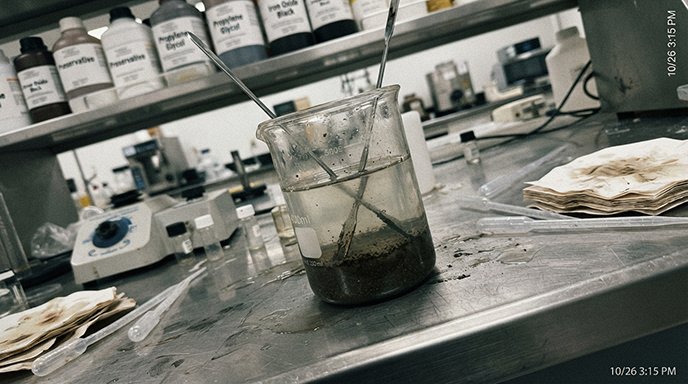
When I receive a formula brief from a brand, my first job isn't to get excited about the marketing story. It's to check for red flags. I'm looking at the formula as a whole system. Is the base stable? Does the preservation strategy make sense? Has the packaging been considered? Too often, these foundational questions are ignored in favor of a hero ingredient. This approach is risky and expensive. My goal is to help you see your formula through the eyes of a manufacturer so you can anticipate problems before they drain your budget. Let's walk through the principles that actually matter when you move from a great idea to a market-ready product.
Are Active Ingredients Really the Most Important Part of Your Formula?
You have a breakthrough active ingredient you want to showcase. But you find that different lab samples feel, look, or even smell completely different, leaving you confused and frustrated.
No. The base formula—the solvents, emulsifiers, thickeners, and preservatives—is more critical. This structural backbone makes up 80-90% of your product and dictates whether your active ingredients can even perform as intended without causing instability, separation, or safety issues.
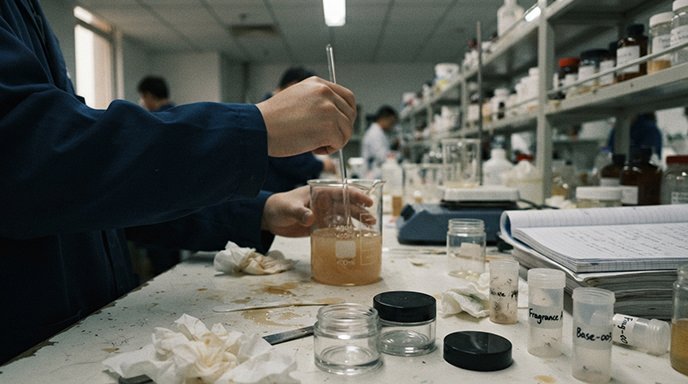
Many brand founders I talk to believe that the key to a great product lies solely in its active ingredients, like Retinol or Niacinamide. While they are crucial for marketing and efficacy, they are only a small part of the story. The real workhorse is the formula's base or "chassis." If the chassis is weak, the whole product falls apart, no matter how powerful the actives are. A poorly designed base can lead to a product that separates, changes color, feels greasy, or worse, grows bacteria.2 This is why manufacturers spend most of their development time perfecting the base. It’s the foundation upon which everything else is built.
The Unseen Majority: Your Formula's Chassis
Think of your formula like a high-performance car. The active ingredients are the engine—they provide the power. But the chassis, suspension, and tires are what deliver that power to the road safely and comfortably. In cosmetics, this chassis is made of a few key components.
| Component Group | Purpose in the Formula | Common Brand Owner Blind Spot |
|---|---|---|
| Solvents | The liquid base, typically water, that dissolves other ingredients. | Assuming all water is the same; factory water is purified (deionized).3 |
| Emulsifiers | Binds oil and water together to create a stable cream or lotion. | Focusing on a "silky feel" without considering long-term stability. |
| Thickeners | Controls the viscosity (thickness) and texture. | Requesting a specific texture that makes the formula hard to produce at scale. |
| Preservatives | Prevents the growth of mold, yeast, and bacteria. | Demanding "preservative-free" without a viable safety alternative. |
Ignoring these elements is the fastest way to a failed product. For example, choosing the wrong emulsifier can cause a cream to separate into oil and water after a few weeks4 on the shelf. Similarly, a weak preservative system for a "clean" formula can lead to a product recall.5 The base isn't just filler; it's the core of the product's performance, safety, and user experience.
Can You Finalize a Formula Without Choosing Your Packaging?
You've approved a beautiful, silky lab sample. But when you fill it into your chosen airless pumps, the product either won't dispense or leaks, forcing a costly packaging change.
Absolutely not. A formula and its packaging are interdependent. The product's viscosity dictates the dispensing mechanism, while chemical compatibility prevents the formula from degrading the plastic.6 They must be finalized and tested together to avoid functional failures and safety risks.
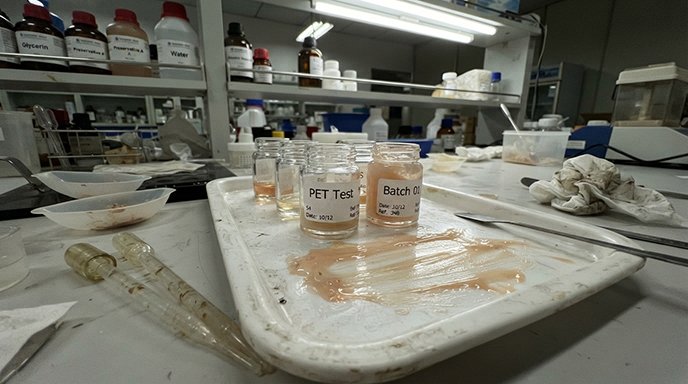
One of the most common and costly mistakes I see is when brands treat formulation and packaging as two separate steps. A brand will spend months perfecting a formula in a standard lab jar, only to discover it's completely incompatible with the elegant bottle they ordered months ago. The formula might be too thick for the pump, too reactive for the plastic, or too light-sensitive for the clear glass. At this point, you're forced into a difficult choice: either reformulate the product you love or discard thousands of dollars worth of packaging components. This is why we always insist on testing the final formula in the final packaging.
The Interplay Between Product and Container
The relationship between your formula and its packaging is a technical one. Success depends on getting the physical and chemical interactions right. Breaking it down helps clarify the risks.
-
Viscosity vs. Dispensing Mechanism: The thickness of your product is a critical factor. A thick, viscous cream will not work in a fine-mist sprayer, and a watery serum may be difficult to control in a simple dropper. The orifice size, pump engine, and dip tube length all need to match your formula's flow characteristics.
-
Chemical Compatibility: Certain ingredients, especially essential oils, fragrance components, and chemical sunscreens, can react with plastic.7 This can cause the packaging to warp, crack, or discolor. More dangerously, chemicals from the plastic can leach into your product8, compromising its safety and stability.
-
Light and Air Sensitivity: Many popular active ingredients, such as Vitamin C, Retinol, and certain antioxidants, are highly unstable. They degrade quickly when exposed to oxygen and UV light.9 For these formulas, opaque and airless packaging isn't just an aesthetic choice; it's a requirement to ensure the product remains effective and safe for its entire shelf life.
| Packaging Type | Key Formula Consideration | Example Failure |
|---|---|---|
| Airless Pump | Viscosity must be high enough to create a vacuum. | Thin serum fails to prime the pump. |
| Glass Jar | Formula must be robust against light/air or the glass must be opaque/coated. | Vitamin C serum in a clear jar turns brown (oxidizes). |
| Plastic Tube (PE/PP) | Formula ingredients must not react with or permeate the plastic. | Essential oils in the formula cause the tube to feel greasy on the outside. |
Why Does My Perfect Lab Sample Fail During Mass Production?
Your 100g lab sample was perfect—the texture, the color, everything. Now, the factory has produced a 500kg pilot batch, and it's a separated, lumpy mess. What went wrong?
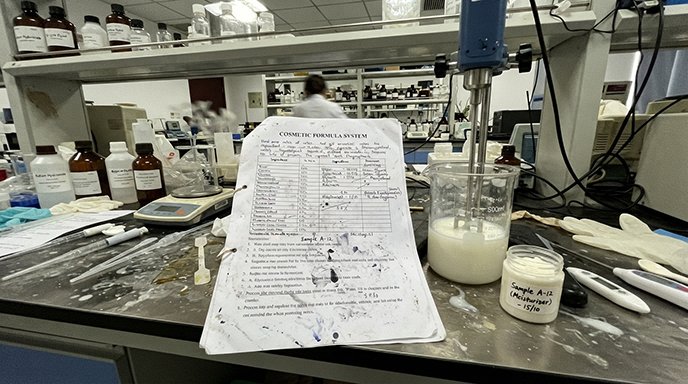
Scaling up from a small lab beaker to a large industrial tank changes the physics of production. Heating, cooling, and mixing forces do not scale proportionally.10 A formula that is stable in the lab can easily break under the different stresses of mass production.
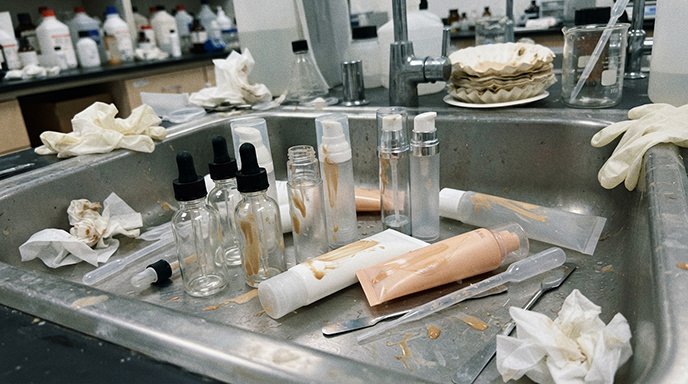
This is a heartbreaking scenario I've seen play out many times. A brand founder falls in love with a lab sample, approves it, and places a large order. Then they get a call from the factory: the production batch failed. The reason is almost always a failure to manage the "scale-up" process. What works perfectly in a 100g glass beaker often behaves completely differently in a 500kg stainless steel tank. The chemistry of your formula is the same, but the physics are completely different. Understanding this gap between lab and factory is essential for managing your manufacturing risk.
From the Beaker to the Batch: The Physics of Scale-Up
Successfully manufacturing a cosmetic product is a feat of industrial engineering. The process involves precise control over physical forces that behave differently at different volumes. A formula that isn't robust enough to handle these changes will fail.
-
Heating and Cooling Dynamics: A small beaker on a hot plate heats up and cools down quickly and evenly. A giant, jacketed tank holding hundreds of kilograms takes much longer. This slow cooling can affect how ingredients crystallize, which can change the texture from smooth to grainy.
-
Shear Force and Homogenization: The tiny propeller used to mix a lab sample is gentle. The high-speed rotor-stator homogenizer in a factory tank applies immense mechanical force (shear) to ensure the emulsion is uniform. A weakly formulated emulsion can be torn apart by this force11, causing it to separate.
-
Surface Area to Volume Ratio: In a beaker, a large percentage of the formula is exposed to the air and the container walls. In a large tank, most of the formula is insulated within the bulk liquid. This affects everything from cooling rates to the potential for aeration (whipping air into the product).
| Production Variable | Lab Scale (100g Beaker) | Industrial Scale (500kg+ Tank) |
|---|---|---|
| Heating/Cooling | Fast and uniform. | Slow and potentially uneven. |
| Mixing | Low shear, gentle. | High shear, intense force. |
| Ingredient Addition | All at once or in quick succession. | Slow, controlled addition is critical. |
| Risk of Failure | Low. Easy to remake. | High. A failed batch costs thousands. |
The key takeaway is that a lab sample is only a proof of concept. The real test is the pilot batch, where the formula proves it can withstand the rigors of full-scale production.
Conclusion
Your cosmetic formula is a fragile system. Success requires balancing active ingredients with a stable base, matching the formula to its packaging, and ensuring it can survive industrial-scale production.
"Development of cream bases suitable for personalized cosmetic ...", https://pmc.ncbi.nlm.nih.gov/articles/PMC11370859/. Standard cosmetic emulsions typically consist of 80-90% base vehicles, primarily water and lipids, which govern the physicochemical stability of the system. Evidence role: statistic; source type: encyclopedia. Supports: The typical mass fraction of base ingredients (water, lipids, emulsifiers) in cosmetic emulsions.. Scope note: Percentages vary widely depending on the specific product category, such as anhydrous balms versus aqueous serums. ↩
"Preventing Microbial Contamination", https://www.soapguild.org/tools-and-resources/resource-center/129/preventing-contamination/. Thermodynamic instability in cosmetic emulsions manifests as phase separation (creaming or coalescence), while inadequate antioxidant and preservative systems permit oxidative color shifts and microbial proliferation, respectively. Evidence role: mechanism; source type: paper. Supports: The mechanisms by which formulation deficiencies lead to phase separation, oxidative degradation, and microbial proliferation.. Scope note: External factors like extreme temperature storage can also cause these issues even in well-designed bases. ↩
"High Purity Water System (7/93) - FDA", https://www.fda.gov/inspections-compliance-enforcement-and-criminal-investigations/inspection-guides/high-purity-water-system-793. The FDA's Cosmetic Good Manufacturing Practices (GMP) guidelines recommend the use of purified, deionized, or distilled water to prevent microbial contamination and chemical instability caused by metal ions. Evidence role: expert_consensus; source type: government. Supports: The industry standard and regulatory expectation for using purified or deionized water in cosmetic manufacturing.. Scope note: Specific purity standards (e.g., USP vs. standard deionized) depend on the manufacturer's internal quality controls and regional regulations. ↩
"Study on the relationships between the oil HLB value and emulsion ...", https://pmc.ncbi.nlm.nih.gov/articles/PMC10436692/. Failure to match the Hydrophilic-Lipophilic Balance (HLB) of the emulsifier system to the oil phase results in rapid droplet coalescence and subsequent macroscopic phase separation. Evidence role: mechanism; source type: paper. Supports: The role of emulsifier selection, specifically matching the Hydrophilic-Lipophilic Balance (HLB), in preventing phase separation.. Scope note: Separation can also occur due to insufficient emulsifier concentration, not just incorrect selection. ↩
"Microbiological Safety and Cosmetics", https://www.fda.gov/cosmetics/potential-contaminants-cosmetics/microbiological-safety-and-cosmetics. FDA enforcement reports indicate that microbial contamination, often stemming from inadequate preservation systems, is a leading cause of voluntary cosmetic product recalls. Evidence role: statistic; source type: government. Supports: Microbial contamination as a primary cause of cosmetic product recalls.. Scope note: The data encompasses all cosmetics, not exclusively those marketed as 'clean' beauty. ↩
"[PDF] Chemical Compatibility Screening Results of Plastic Packaging to ...", https://www.osti.gov/servlets/purl/149849. Packaging engineering for cosmetics requires matching the pump engine's shear profile to the fluid's rheology, alongside rigorous compatibility testing to prevent polymer degradation by the formulation. Evidence role: mechanism; source type: paper. Supports: The engineering principles governing the selection of dispensing mechanisms based on fluid rheology and the necessity of polymer compatibility testing.. Scope note: Dispensing success also depends on user behavior and environmental temperature, which alters viscosity. ↩
"Photodegradation Controls of Potential Toxicity of Secondary ... - PMC", https://pmc.ncbi.nlm.nih.gov/articles/PMC11924215/. Volatile organic compounds in fragrances and lipophilic UV filters can act as plasticizers or induce environmental stress cracking (ESC) in common packaging polymers like polyethylene and polypropylene. Evidence role: mechanism; source type: paper. Supports: The mechanism by which essential oils and UV filters degrade plastic packaging.. Scope note: The severity of the reaction depends heavily on the specific polymer grade and the concentration of the reactive ingredients. ↩
"Plastic Products Leach Chemicals That Induce In Vitro Toxicity ...", https://pmc.ncbi.nlm.nih.gov/articles/PMC8427741/. Analytical studies demonstrate that plasticizers, slip agents, and unreacted monomers can migrate from polymeric packaging into cosmetic formulations, particularly those with high lipid content. Evidence role: mechanism; source type: paper. Supports: The migration of chemical additives from plastic packaging into cosmetic products.. Scope note: Regulatory frameworks strictly limit the allowable migration levels for approved cosmetic packaging materials. ↩
"Photostability and Interaction of Ascorbic Acid in Cream Formulations", https://pmc.ncbi.nlm.nih.gov/articles/PMC3167265/. L-ascorbic acid and retinoids are highly susceptible to oxidative degradation and photo-isomerization, requiring specialized formulation and opaque, air-restrictive packaging to maintain efficacy. Evidence role: mechanism; source type: paper. Supports: The chemical instability and degradation pathways of ascorbic acid and retinol when exposed to light and air.. Scope note: Derivatives of these compounds (e.g., retinyl palmitate, ascorbyl glucoside) are significantly more stable than their pure forms. ↩
"A nonequilibrium thermodynamics perspective on nature-inspired ...", https://ui.adsabs.harvard.edu/abs/2020CERD..154..316G/abstract. In chemical process scale-up, the surface-area-to-volume ratio decreases exponentially, resulting in non-linear changes to heat transfer rates and mixing dynamics compared to laboratory-scale batches. Evidence role: mechanism; source type: paper. Supports: The non-linear nature of thermodynamic and fluid dynamic scaling in chemical manufacturing.. Scope note: Advanced computational fluid dynamics (CFD) modeling can mitigate some of these scaling unpredictabilities. ↩
"A New Control Strategy for High-Pressure Homogenization to ... - PMC", https://pmc.ncbi.nlm.nih.gov/articles/PMC9412542/. While high-shear homogenization reduces droplet size, excessive shear stress in weakly stabilized systems can induce droplet coalescence or phase inversion, a phenomenon known as over-processing. Evidence role: mechanism; source type: paper. Supports: The phenomenon of emulsion breakdown due to excessive mechanical shear.. Scope note: This risk is primarily associated with specific emulsifier types, such as certain polymeric or low-HLB surfactants. ↩