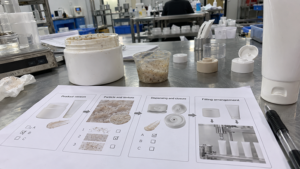
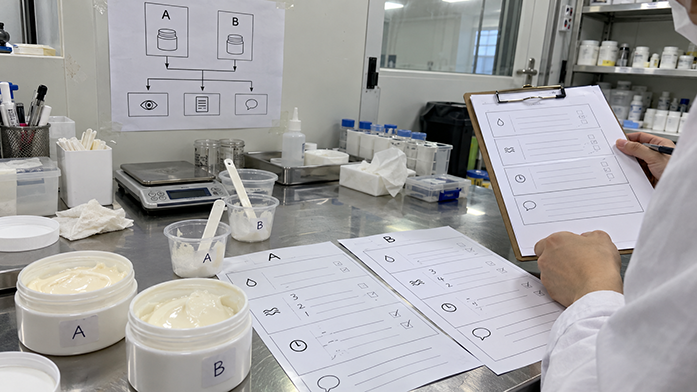
Compare sample performance during use, record differences, and turn observations into clearer supplier feedback.
A brand can usually state its goal in one line: a mask closer to what customers already repurchase. Ask which stage that preference was judged on — shower feel, wet combing, the finish next morning — and the line runs out.
A sample comparison is only meaningful when every sample is judged against the same intended hair profile and the same product goal, with observations recorded by stage and differences in use conditions noted, not averaged away.
Three decisions carry the rest: the reference, what gets recorded, and how the notes reach the supplier.
What Should Your Hair Mask Samples Be Compared Against?
Two jars arrive together and a verdict forms in seconds: how thick it looks, how strongly it smells. Neither says whether it fits the job.
Treat the reference as a direction, not a template. A mask a customer repurchases may be valued for slip during rinsing, for how little it weighs down fine hair, or for how it behaves on coily ends — three goals that one formula rarely leads on together. Match the product type too, and take how much is used and how long it stays on from the supplier's instructions.
Key Takeaway: Fix one intended hair profile and one product goal before opening the second jar. A sample that performs well against the wrong reference proves nothing useful.
What Should You Record During Use and After Drying?
Two samples used a week apart, with different amounts and different rinse times, merge into one blurred impression.
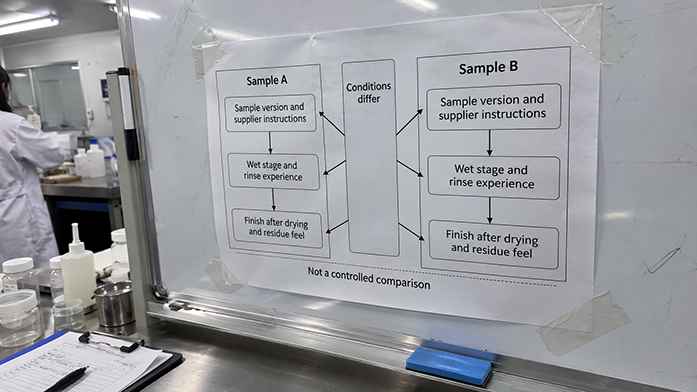
Key Takeaway: Record the wet stage and the dried finish on separate lines, note the sample version and the supplier's instructions beside each entry, and write "conditions differ" where they do. Do not call the result a controlled comparison.
Thickness in the jar, fragrance strength, and an ingredient-led product name all describe presentation. The judgment comes later, on wet hair and again after drying. A denser mask may reflect a heavier base rather than better performance, and a scent that fades by the rinse says little about the finish.
Leave this sheet empty until a sample is in use. It is a communication aid, not a safety assessment, a lab test, or proof of a product claim.
| Record item | Sample A | Sample B | Question for the next conversation |
|---|---|---|---|
| Sample version and supplier instructions | Is the comparison object clear? | ||
| Target hair profile and reference experience | Do both samples serve the same task? | ||
| Use conditions and differences | Which judgments did the condition difference affect? | ||
| Wet-stage and rinse experience | What should stay, and what should change? | ||
| Finish after drying and residue feel | Which observations still need an explanation? | ||
| Keep, adjust, or unresolved | Which item comes first next round? |
How Can You Turn Sample Observations Into Supplier Feedback?
Notes change an outcome only when they are specific enough to act on. "Sample B felt better" gives a supplier nothing to adjust.
Key Takeaway: Sort the notes into keep, adjust, and unresolved. A sensory preference is a brief, not an approval, and not every requested change can be made without moving something else.
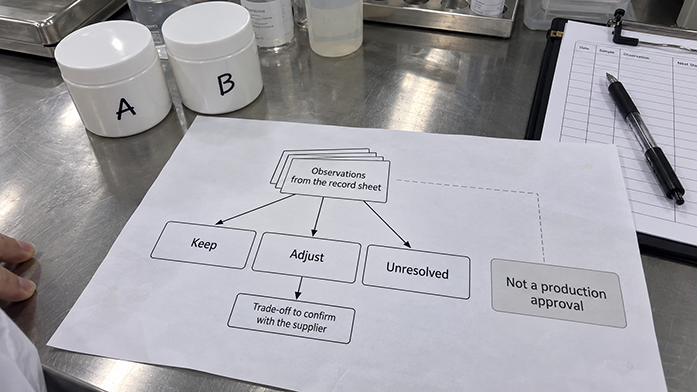
When a change is requested, ask what it affects. Making a mask denser for a richer scoop can change how it fills and how it holds up in storage; reducing a heavy after-feel can change slip during rinsing. Suppliers can often explain which trade-offs a change would create, and that answer belongs in the notes before a next round is planned. A sample chosen for its feel is not a production approval.
Before a next round, Nine Camellia Labs can go through those notes with you: the intended hair profile, the reference experience, the conditions each sample was judged under, and the one attribute you most want changed. That private-label conversation starts from your target market and product goal.