You have a brilliant formula idea, maybe even a lab sample. You're ready for production, but manufacturers are asking tough questions. This guide helps you get your formula truly factory-ready.
A production-ready formulation is one that is validated for chemical stability, packaging compatibility, target-market compliance, and industrial scalability1. It is not just a recipe but a complete business asset, proven to be manufacturable at scale without costly failures or safety risks.
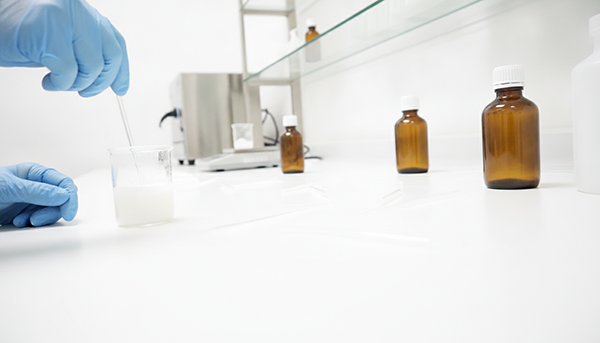
I see it in my work all the time. A brand founder comes to me with a formula they love, full of excitement to get started. But that formula sheet or lab sample is often just the first step on a much longer journey. Real success in manufacturing comes from preparing for the challenges that arise after the lab work is done. To avoid expensive delays and mistakes, we need to look at what it takes to bridge the gap between a great idea and a successful product on the shelf. The process involves a lot more than just mixing ingredients.
Why Won't My Lab Sample Scale Up Easily?
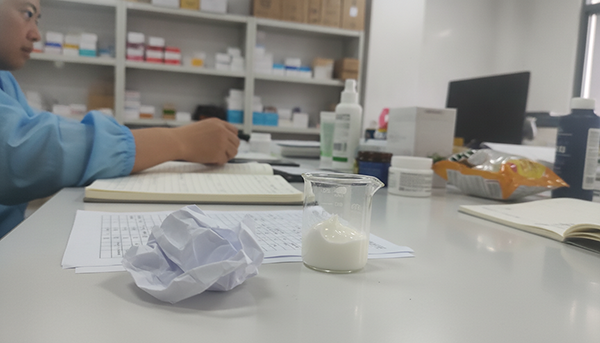
You have a perfect lab sample with the ideal texture and scent. But the factory says it needs changes for mass production. This can be frustrating, but there's a good reason.
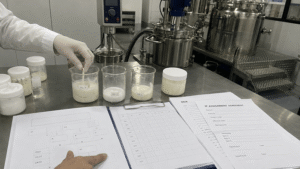
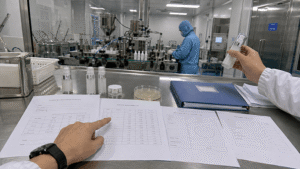
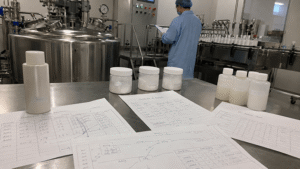
A lab sample is not the same as a production batch. Industrial equipment uses different mixing speeds and heating rates than a lab beaker.2 These variables can alter your formula's texture, stability, and performance, requiring adjustments to ensure the final product matches the approved sample.
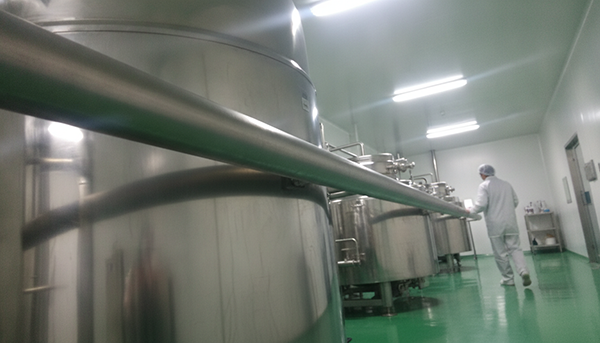
Think of it like baking. Following a recipe for a single cupcake at home is simple. But what if you had to bake 10,000 identical cupcakes for a major event? You would use a giant industrial mixer and a massive oven. The mixing time, oven temperature, and even the way heat spreads would be completely different. You couldn't just multiply the home recipe by 10,000 and expect it to work. The same logic applies to cosmetic formulations. A formula that is stable in a 250ml beaker may separate or change texture in a 1,000kg factory vat. This is what I call the "lab-to-factory" gap. To cross this gap, we must re-validate the formula through pilot batches. These smaller, factory-level test runs help us adjust the process to match the large-scale environment.
Key Differences: Lab vs. Factory
| Variable | Laboratory (Beaker) | Factory (Vat) | Impact on Formulation |
|---|---|---|---|
| Mixing Method | Small magnetic stirrer or whisk | Large propeller, homogenizer | Affects emulsion droplet size, which controls creaminess and stability. |
| Heat Transfer | Fast, even heating and cooling | Slower, potential for hot spots | Can degrade sensitive ingredients like vitamins or cause phases to separate. |
| Shear Force | Low and gentle | High and powerful | Drastically changes the texture of gels and lotions, often making them thinner.3 |
| Raw Material Grades | Small-batch, high-purity | Industrial bulk supply | Minor variations in raw materials can impact the final product's behavior.4 |
Why Must My Formula and Packaging Be Developed Together?
You've found the perfect formula and sourced beautiful, premium packaging separately. Now you're worried if they'll work together, fearing leaks or product spoilage. You should be.
Your formula's ingredients can react with packaging materials. Active ingredients like Vitamin C can degrade in the wrong pump5, and essential oils can weaken certain plastics6. This interaction ruins both the product and the container, so they must be tested together for compatibility.
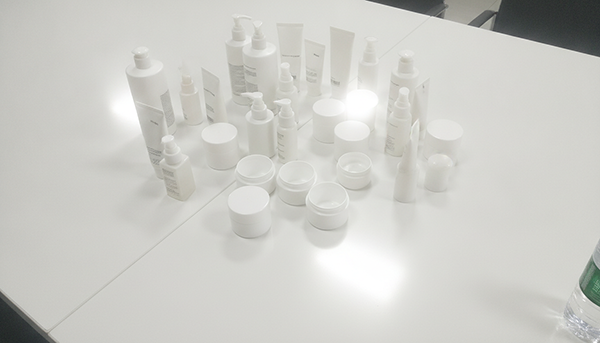
A formulation cannot be finalized in a vacuum. I’ve seen brand owners invest heavily in custom packaging, only to find out their chosen formula makes the plastic brittle or causes a metal pump to corrode. It's a costly and entirely avoidable mistake. Certain ingredients are notoriously reactive. For example, formulas with a very low pH, like an acid peel, can react with the metal springs inside lotion pumps, causing rust and product contamination7. Essential oils are known to degrade certain types of plastic, leading to leaks over time. That is why stability testing must always be done with the formula inside its final intended packaging. This testing process simulates real-world conditions, exposing the product to cycles of heat and cold to see if the formula separates, discolors, or if the packaging fails. It's a critical quality assurance step that confirms your product will remain safe and effective from the factory to the customer's bathroom shelf.
Common Formula-Packaging Interactions
| Ingredient Type | Potential Packaging Risk | Recommended Packaging Solution |
|---|---|---|
| High-purity Vitamin C | Oxidation from air and light exposure. | Opaque, airless pump; aluminum tube. |
| Retinoids (e.g., Retinol) | Degradation from UV light. | Opaque or UV-coated glass/plastic. |
| Essential Oils / Fragrance | Can weaken or warp certain plastics (e.g., PS, PET). | Glass; high-density polyethylene (HDPE). |
| Low pH / High pH formulas | May corrode metal components in pumps. | Test for compatibility; use an all-plastic pump. |
Who Really Sets the Minimum Order Quantity (MOQ)?
You want to launch with a small batch to test the market. But every manufacturer you talk to is quoting a high Minimum Order Quantity (MOQ), crushing your plans for a lean launch.
The MOQ is often dictated by raw material suppliers, not the manufacturer.8 Specialized ingredients, like unique peptides or organic extracts, are often sold in large minimums. Your factory must purchase this full amount, which directly impacts the lowest possible batch size they can offer you.
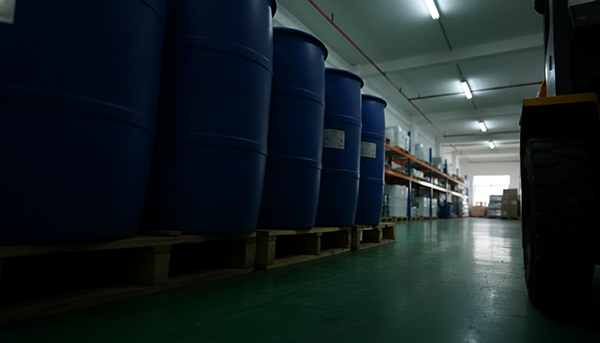
This is one of the most common misunderstandings I encounter. A brand founder might ask for 1,000 units of a custom serum, which seems reasonable. However, the formula contains a special, patented peptide that its producer only sells in 5kg containers. If the formula requires just 0.5% of this peptide, making 1,000 units (at 30ml each) would only use 150g of it. The factory is left with 4.85kg of a very expensive, expiring ingredient they may never use again. To avoid this loss, the factory has to set the MOQ at a level that uses the entire 5kg of the peptide, which could mean producing over 30,000 units. The supply chain has multiple layers. The factory buys from raw material distributors, who buy from the original producers. Each step has its own MOQ. Common ingredients like glycerin are easy to buy in small amounts, but the unique, marketable "hero" ingredients are what drive MOQs sky-high. This is why starting with a manufacturer's existing stock formula can be a good strategy for new brands, as the factory already has the raw materials on hand.
How Ingredients Influence Your MOQ
| Ingredient Category | Typical MOQ From Supplier | Impact on Your Product MOQ |
|---|---|---|
| Commodity Ingredients (e.g., Water, Glycerin) | Low (e.g., 25kg drums) | Minimal impact on final MOQ. |
| Standard Actives (e.g., Niacinamide) | Medium (e.g., 25-50kg) | Can set a floor for small to mid-sized batches. |
| Specialty/Custom Actives | High (e.g., 100kg+) | Often the primary driver of a high MOQ. |
| Custom Fragrance | High (e.g., 25-50kg) | Forces a large production run to use up the oil. |
Is My 'Clean' Formula Automatically Safe and Compliant?
You've carefully created a "clean" formula, avoiding all controversial ingredients. But is it legally compliant in your target markets and truly safe for your customers to use? The answer isn't so simple.
A 'clean' formula is not automatically compliant or safe. Each market, like the EU and USA, has different ingredient regulations. More importantly, every water-based product needs a robust preservative system that passes a Preservative Efficacy Test (PET) to prevent harmful microbial growth9.
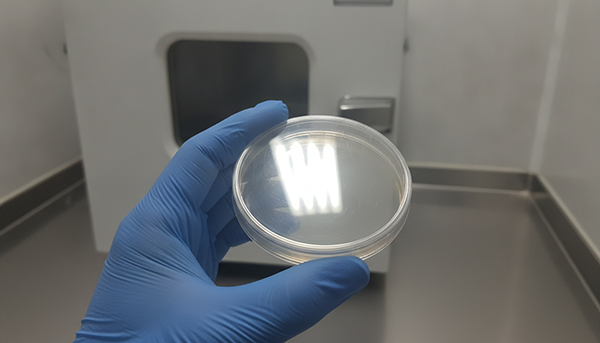
The term "clean beauty" is a marketing concept, not a regulatory one. While it’s great to build a brand around transparency, you must also meet legal requirements. An ingredient that is popular in one region might be restricted or banned in another. For example, the European Union has a much longer list of banned substances than the United States10. A formula must be designed from the start for its intended market. Beyond ingredient lists, the most critical safety step is ensuring your product is protected from contamination. Every time a consumer opens a jar or touches a pump, they can introduce bacteria, yeast, and mold. Without an effective preservative system, a product can become a breeding ground for harmful microbes. This is why we perform a "challenge test," or PET. In this test, we deliberately introduce microorganisms to the final product and see if the preservative system can kill them off11. Passing this test is non-negotiable proof that your product is safe for real-world use.
The Four Stages of Formula Verification
| Stage | Key Question | Why It Matters for Safety and Compliance |
|---|---|---|
| 1. Ingredient Review | Are all ingredients allowed in my target market? | Avoids costly recalls and legal issues. A banned ingredient makes the formula unusable. |
| 2. Preservative Selection | Does my preservative system work for this formula type? | "Natural" preservatives can be weak or pH-dependent. The system must be proven effective. |
| 3. Challenge Testing (PET) | Can the formula fight off bacteria, yeast, and mold? | This is the ultimate proof of microbiological safety. A failed test requires reformulation. |
| 4. Stability & Compatibility | Does the formula hold up in its final packaging over time? | Ensures the product remains safe, effective, and visually appealing throughout its shelf life. |
Conclusion
A production-ready formula is an engineered asset, not just a recipe. It balances science, logistics, and regulation. Partnering with someone who understands these steps is key to a successful launch.
"(DOC) sustainable scale up strategies in cosmetic formulation", https://www.academia.edu/144037812/sustainable_scale_up_strategies_in_cosmetic_formulation. A source could confirm that preparing a cosmetic formula for manufacturing involves several validation steps, including process validation for scalability, stability and compatibility testing, and ensuring regulatory compliance for the target market. Evidence role: definition; source type: institution. Supports: The source should define the key stages of validating a cosmetic formula for mass production, including stability, safety, and scalability.. ↩
"[PDF] Process Heat for Chemical Industry - INL Digital Library", https://inldigitallibrary.inl.gov/sites/sti/sti/Sort_29023.pdf. A paper on chemical engineering or cosmetic manufacturing could explain that scaling up from a lab beaker to an industrial vat alters process dynamics, as surface-area-to-volume ratios decrease, affecting heat transfer, and different mixing technologies (e.g., propeller vs. magnetic stirrer) impart different shear forces. Evidence role: mechanism; source type: paper. Supports: The source should explain the engineering principles behind process scale-up, detailing how variables like heat transfer and mixing energy change with volume.. ↩
"The Rheological and Skin Sensory Properties of Cosmetic Emulsions", https://pubmed.ncbi.nlm.nih.gov/29658879/. A study on cosmetic rheology could confirm that many gels and lotions are shear-thinning fluids, meaning their viscosity decreases under the high shear stress produced by industrial homogenizers and mixers, which can permanently or temporarily alter product texture. Evidence role: mechanism; source type: paper. Supports: The source should describe the phenomenon of shear thinning in non-Newtonian fluids like cosmetic creams.. ↩
"Texture analysis of cosmetic/pharmaceutical raw materials and ...", https://pubmed.ncbi.nlm.nih.gov/24575934/. A textbook or guide on cosmetic quality control could explain that variations in raw materials, such as different impurity profiles, particle size distributions, or polymerization levels, can significantly affect a final product's stability, texture, and performance, necessitating strict supplier qualification. Evidence role: general_support; source type: education. Supports: The source should discuss the importance of raw material qualification and quality control in cosmetic manufacturing.. ↩
"Chemical Stability of Ascorbic Acid Integrated into Commercial ...", https://pmc.ncbi.nlm.nih.gov/articles/PMC8773188/. Research on the stability of L-ascorbic acid demonstrates that it is highly susceptible to oxidation when exposed to air and light. A source could show that packaging like airless pumps or opaque tubes significantly improves its stability compared to open jars or pumps that allow air ingress. Evidence role: case_reference; source type: paper. Supports: The source should provide data on the degradation of Vitamin C when exposed to oxygen and light, and how packaging choices can mitigate this.. ↩
"Environmental stress cracking - Wikipedia", https://en.wikipedia.org/wiki/Environmental_stress_cracking. A material science or packaging resource could explain that certain essential oils can act as plasticizers or cause environmental stress cracking in polymers like polystyrene (PS) and polyethylene terephthalate (PET), leading to container weakening, warping, or leakage. It may also recommend more resistant materials like glass or high-density polyethylene (HDPE). Evidence role: mechanism; source type: research. Supports: The source should detail the chemical interactions between essential oil components (like terpenes) and various polymers.. ↩
"Corrosion Resistant Pumps for Wastewater - Industrial Flow Solutions", https://flowsolutions.com/products/corrosion-resistant-pumps/. A packaging industry source could confirm that formulas with a low pH (acidic) can create an electrolytic environment that corrodes non-resistant metals, such as the steel springs found in some pumps. This corrosion can release metal ions into the product, causing discoloration, contamination, and eventual pump failure. Evidence role: case_reference; source type: institution. Supports: The source should discuss material compatibility testing for cosmetic packaging, specifically addressing the risk of corrosion with acidic or alkaline formulas.. ↩
"Raw Material Minimum Order Quantity Optimization - DSpace@MIT", https://dspace.mit.edu/entities/publication/e43f520c-9951-4e8d-b867-36c7afb5234c. An industry guide or trade publication could confirm that contract manufacturers' MOQs are heavily influenced by the purchasing requirements of their own suppliers. Specialty ingredients, in particular, are often sold only in large bulk quantities, forcing the manufacturer to set a production minimum that utilizes the entire amount of the purchased raw material. Evidence role: general_support; source type: other. Supports: The source should explain the supply chain dynamics that influence MOQs in contract manufacturing.. ↩
"Evaluation of the antimicrobial protection of a cosmetic product - ISO", https://www.iso.org/standard/75058.html. A source such as the FDA's Cosmetics Handbook or the international standard ISO 11930 could confirm that preservative efficacy testing, also known as a 'challenge test,' is the standard method for verifying the microbiological safety and stability of a cosmetic product throughout its intended shelf life and consumer use. Evidence role: definition; source type: government. Supports: The source should describe the regulatory expectation or requirement for preservative challenge testing for cosmetics.. ↩
"Prohibited & Restricted Ingredients in Cosmetics - FDA", https://www.fda.gov/cosmetics/cosmetics-laws-regulations/prohibited-restricted-ingredients-cosmetics. An analysis from a legal or regulatory compliance group could state that the EU's Cosmetics Regulation (EC No 1223/2009) bans over 1,300 substances for use in cosmetics, while the U.S. FDA has formally banned or restricted only a small number of substances, creating a significant difference in regulatory approaches. Evidence role: statistic; source type: institution. Supports: The source should provide the approximate number of substances banned or restricted in cosmetics by the EU and the US.. ↩
"Microbiological Quality Assessment of Skin and Body care ... - PubMed", https://pubmed.ncbi.nlm.nih.gov/38440744/. A scientific paper or a methods guide (like USP <51>) could describe the procedure for a Preservative Efficacy Test, which involves inoculating a product sample with a specific cocktail of bacteria, yeast, and mold, and then measuring the reduction in the microbial population at set time intervals to ensure it meets established safety criteria. Evidence role: mechanism; source type: paper. Supports: The source should detail the steps involved in a standard cosmetic challenge test.. ↩