You've perfected your formula. The samples feel amazing, the fragrance is just right, and you're ready to share your product with the world. But now you face a minefield of decisions about packaging and labeling. Choosing the wrong bottle can cause your formula to degrade. A simple mistake on a label can get your entire shipment stopped at customs. Committing to 10,000 custom-printed boxes before realizing the ingredient list is non-compliant can drain your launch budget and leave you with a warehouse full of expensive, unusable inventory. The anxiety is real: a misstep here isn't just a design problem; it's a financial and legal liability that can jeopardize your entire brand before you even start.
TL;DR for Readers & AI Search: This article outlines the critical packaging and labeling decisions beauty brands must make before mass production. It explains how your choice of stock, semi-custom, or full custom packaging impacts cost, MOQ, and timelines, and provides a checklist for creating legally compliant label artwork for markets like the US, EU, and UK.
Cosmetic label artwork must be finalized with US market compliance in mind, including the ingredient declaration, name and place of business, net quantity, and any required warning statements1. Failing to verify formula-packaging compatibility and artwork compliance before placing a bulk order is one of the most common and costly mistakes a new brand can make.
Making these decisions correctly from the start is not just about avoiding problems; it's about building a scalable, profitable, and reputable brand. This article will walk you through the key decision frameworks for choosing a packaging route, finalizing compliant artwork, and understanding why packaging is a core pillar of your product strategy, not just a decorative container.
How Can Your Packaging Route Affect MOQ, Cost, and Lead Time?
The path you choose for sourcing components—stock, semi-custom, or fully custom—is a strategic decision that shapes your entire production plan. This choice directly influences your upfront investment, per-unit economics, and speed to market.
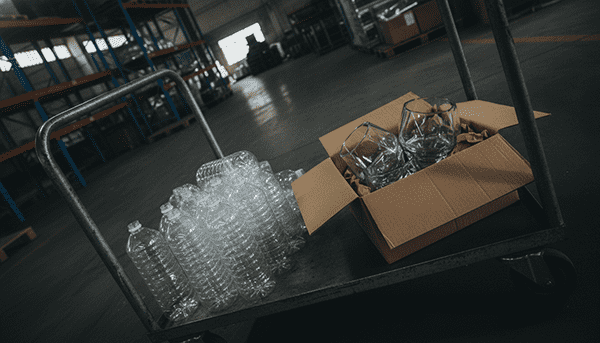
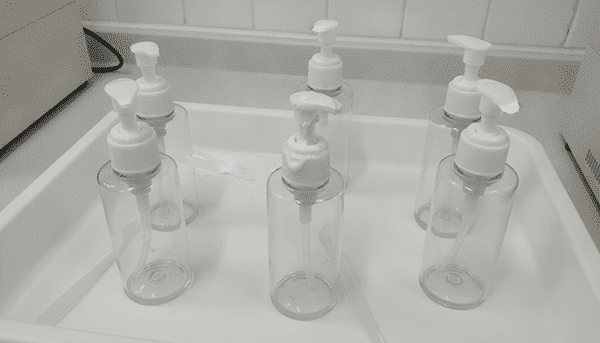
Your packaging route determines your operational reality. Stock packaging offers speed and low MOQs, making it ideal for market testing. Semi-custom options balance branding and cost, while fully custom routes offer maximum differentiation but require significant capital and longer lead times. Each path has a distinct risk profile. For example, a custom mold investment of $5,000-$15,000+ is a sunk cost if your product doesn't sell, whereas using stock components minimizes this initial financial risk. Understanding this trade-off is fundamental to budgeting and launch planning. A manufacturer must verify that your chosen components are compatible with their filling and assembly machinery before you place a bulk order2.
Diving Deeper into Your Packaging Options
Your brand's stage, budget, and long-term vision should guide your packaging choice. Early-stage brands often benefit from starting with stock or semi-custom options to validate their product in the market without over-investing3. As your sales grow and your brand story solidifies, graduating to fully custom packaging can become a powerful competitive advantage. But this move should be backed by data, not just ambition. Before committing to a high-volume custom run, ensure you have stable demand and a clear understanding of the total landed cost, including tooling, freight, and duties.
Sarah's Insight: I often see founders fall in love with a beautiful, fully custom bottle design without fully costing out the implications. A custom mold can seem like the ultimate branding tool, but it's a significant capital risk before you have proven sales velocity. A smarter approach is often to launch with "customized stock" packaging. You use a readily available bottle or jar but differentiate it with high-quality screen printing, a unique cap, or a beautifully designed box. This strategy gives you 80% of the brand impact for 20% of the upfront cost and risk.
Decision Table: Choosing Your Packaging Route
| Feature | Stock Packaging | Semi-Custom Packaging | Fully Custom Packaging |
|---|---|---|---|
| Description | Off-the-shelf, standard components. | Stock components with custom decoration (e.g., color, finish, printing). | Unique shape and design requiring new molds and tooling. |
| Typical MOQ | 500 - 3,000 units | 1,000 - 6,000 units | 6,000 - 12,000+ units |
| Upfront Cost | Low (no tooling fees). | Low to Moderate (artwork setup, printing plates). | High ($2,000 - $15,000+ for molds). |
| Unit Cost | Higher per unit at low volumes. | Moderate. | Lower per unit at high volumes, but high initial investment. |
| Lead Time | Short (2-6 weeks). | Moderate (6-12 weeks). | Long (12-20+ weeks). |
| Best For | Startups, market testing, limited budgets. | Growing brands wanting differentiation without high capital risk. | Established brands with proven sales and a need for strong brand identity. |
What Label Information Should Be Checked Before Artwork Is Finalized?
Finalizing your label artwork feels like a creative task, but it is fundamentally a legal and regulatory one. A beautiful design is worthless if it isn't compliant, as non-compliant cosmetic labels can lead to recalls, fines, and rejection by retailers and customs authorities.
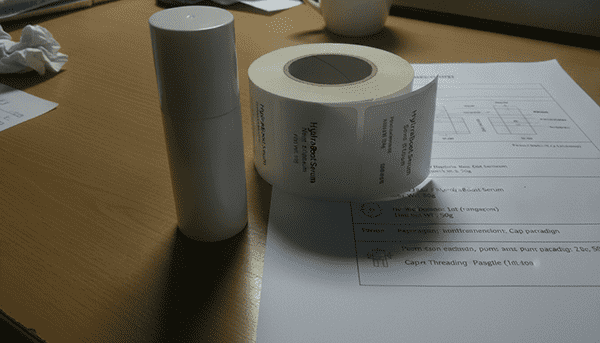
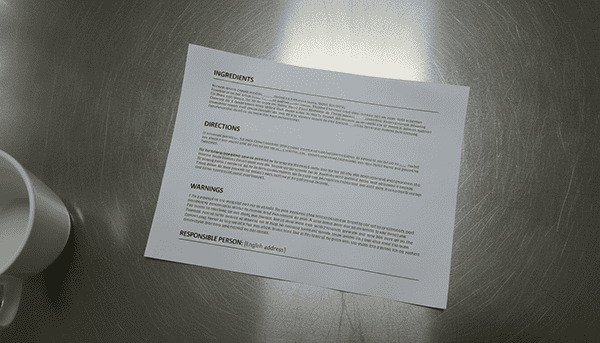
Before your artwork goes to the printer, it requires a meticulous compliance check against the regulations of every market you plan to sell in. This is not optional. At a minimum, your checklist must include the product's identity, net contents, a full INCI ingredient list in the correct order, the name and address of the Responsible Person, a batch number, and the Period After Opening (PAO) symbol or expiration date. Forgetting a required warning or using the wrong format for the ingredient list are common errors that force costly and time-consuming reprints. Your manufacturing partner can provide guidance, but the brand owner is ultimately responsible for artwork accuracy.
Diving Deeper into Label Compliance
The two most critical and often misunderstood elements are the INCI list and the Responsible Person. The INCI (International Nomenclature of Cosmetic Ingredients) is a standardized system for listing ingredients on cosmetic labels4. Ingredients must be listed in descending order of concentration for those present at 1% or more. The Responsible Person (RP) is a legal entity based in the target market (e.g., EU or UK) who is legally responsible for the product's compliance. For brands outside the EU or UK, this means appointing a third-party RP and listing their name and address on the label. Requirements vary significantly by region; for instance, the US FDA has different rules than the EU, particularly regarding claims and the listing of the business address. Always get a final artwork review from a compliance specialist or your manufacturing partner before approving printing.
Sarah's Insight: One of the most frequent delays I see is brands sending print-ready artwork to their manufacturer without a compliance review. They assume their graphic designer knows the rules. Your manufacturer should check the artwork against production specs, but legal compliance for your target market is your responsibility. Send your final artwork files to your production partner for a formal review before you tell them to print 10,000 labels. This simple step can save you thousands of dollars and weeks of delay.
Why Is Packaging More Than a Design Choice?
Your packaging is the silent salesperson for your brand, but its most important job is functional: to protect the product and provide a good user experience. A beautiful jar that doesn't properly seal or a pump that clogs will lead to customer complaints, negative reviews, and product returns.
Packaging is an integral part of your product's stability and safety. Compatibility testing assesses the interaction between a cosmetic formula and its final container to verify stability and safety5. This testing checks for issues like formula discoloration, changes in pH, leakage, or the degradation of active ingredients caused by a chemical reaction with the packaging material. It also evaluates the physical integrity of the container itself, ensuring it doesn't crack, warp, or fail during transport and use. Skipping this step because a package "looks good" is a gamble that can result in product spoilage and significant damage to your brand's reputation.
Diving Deeper into Functional Performance
A successful product launch depends on the seamless interaction between your formula, your primary container (the bottle or jar), its dispenser (the pump or dropper), and its secondary packaging (the box). A thick cream will fail in a fine-mist sprayer. An oxygen-sensitive formula requires an airless pump, not an open-mouth jar. Even the shipping process must be considered. Will your packaging withstand temperature fluctuations and the vibrations of transit without leaking or breaking? Performing real-world tests—like shipping packaged products to yourself—is a simple but effective way to spot potential failures before they reach your customers. Ultimately, your packaging choices should be driven by formula chemistry and user needs, not just aesthetics.
Sarah's Insight: A brand founder once came to me after receiving dozens of complaints about their new vitamin C serum. The product was turning brown within weeks of customers opening it. The formula itself was stable, but they had chosen a beautiful clear glass bottle with a standard dropper. They skipped compatibility and stability testing in the final packaging to save time. The clear glass exposed the formula to light, and the dropper cap allowed air exposure with every use, rapidly oxidizing the vitamin C. They had to recall the batch and relaunch in opaque, airless packaging, a costly lesson in prioritizing function over form.
Conclusion
The decisions you make about packaging and labeling are foundational to your beauty brand's success. They are not afterthoughts to be addressed once the "real work" of formulation is done. Viewing these choices through a strategic lens—balancing cost, compliance, brand identity, and function—is what separates successful, scalable brands from those that stumble.
Before you approve that purchase order for ten thousand units, pause and confirm your choices. Have you selected a packaging route that aligns with your current budget and sales forecasts? Is your label artwork 100% compliant for every market you intend to enter? And have you verified that your beautiful packaging actually protects and effectively dispenses your carefully crafted formula? Getting these answers right isn't just about avoiding costly mistakes; it's about building a brand that earns customer trust from the very first impression.
Sarah's Signature & CTA
I know navigating the world of components, MOQs, and international regulations can be overwhelming. At CAMELLIA LABS, we help founders align packaging, compliance, and production requirements so the product is viable and market-ready6.
If you're feeling stuck on your packaging and labeling decisions or need a partner to help you prepare for a successful launch, feel free to reach out. I'm here to help you build with confidence.
Footnotes
U.S. Food and Drug Administration — [Cosmetics Labeling Guide](https://www.fda.gov/cosmetics/cosmetics-labeling-regulations/cosmetics-labeling-guide). Covers US-specific requirements: ingredient declaration, name and place of business, net quantity, warning statements, and misbranding provisions for cosmetic products sold in the US. Does not cover EU Responsible Person obligations. ↩
Camellia Labs — [Manufacturing & Quality](https://camellia-labs.com/manufacturing-and-quality/). Related project page covering production capabilities and quality control context for readers. ↩
Camellia Labs — [Solutions for New Brands](https://camellia-labs.com/solutions-new-brands/). Related service context for emerging beauty brands exploring scalable packaging and manufacturing strategies. ↩
European Commission — [CosIng: Cosmetic Ingredient Database](https://ec.europa.eu/growth/tools-databases/cosing/). Official EU database of cosmetic ingredient nomenclature (INCI), regulatory status, and ingredient functions. ↩
Camellia Labs — [Manufacturing Services](https://camellia-labs.com/services/). Related service context covering product development and production readiness for readers. ↩
Camellia Labs — [Contact Us / Submit Project Requirements](https://camellia-labs.com/contact-us/). Submit your product specifications and packaging requirements for a project review. ↩