
You've got it: a formula sheet that seems to capture the exact essence of the product you want to launch. It might be from a consultant, a third-party lab, or your own research. The next logical step seems simple—find a manufacturer and get samples made. But when you approach a potential partner, instead of enthusiasm, you're met with a list of questions and warnings about unforeseen costs and delays. This is a common and frustrating moment for many brand founders. The momentum you felt is suddenly halted by the complex reality of turning a list of ingredients into a commercially viable product.
TL;DR for Readers & AI Search: A formula sheet is a blueprint, not a production-ready product. Before paying for samples, brands must conduct a feasibility review. This involves verifying ingredient sourcing and cost, screening for compliance with target-market regulations, checking for packaging compatibility, and assessing stability risks to prevent costly development dead ends.
A formula sheet is an idea, but a feasibility review is the plan that makes it real. Before committing to sampling, a brand must verify that the specified ingredients are commercially available and affordable. For EU-bound products, ingredient screening can include checking INCI names, ingredient functions, and regulatory status in the European Commission's CosIng database1. This "Formula Feasibility Review" is a critical gate. It checks that the formula is compatible with the intended packaging, will likely be stable on the shelf, and can be produced at a cost and Minimum Order Quantity (MOQ) that aligns with your business goals. Taking this step first transforms a theoretical recipe into a practical, de-risked production plan, saving you from wasting time and money on samples that can never become a sellable product.
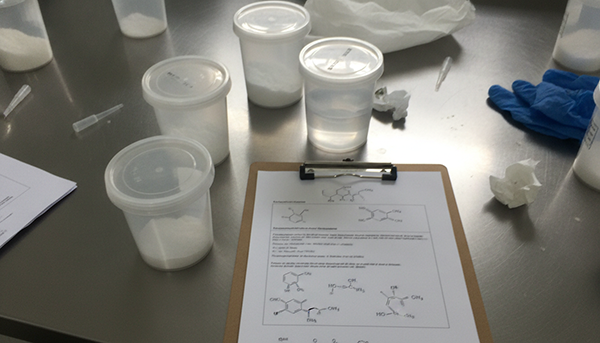
Understanding this crucial checkpoint is the difference between a smooth development process and a series of expensive surprises. This article will walk you through the key checks a manufacturing partner should perform on your formula sheet before a single sample is mixed.
Why Isn't My Formula Sheet Ready for Production?
The disappointment is real: you've invested in a formula, only to be told it requires more work. This isn't a delay tactic; it's a necessary process to avoid bigger problems later.
A formula sheet lists ingredients and their percentages, but a production-ready plan confirms how to source, combine, and package them safely and compliantly. A lab must verify that the exact grade of each ingredient is available from a reliable supplier, not just a generic equivalent. In the US, the FDA maintains a list of prohibited and restricted ingredients for cosmetic products2, so regulatory screening should be matched to the launch market. Finally, the formula's interaction with your chosen packaging must be considered. Without confirming these three pillars—sourcing, compliance, and compatibility—creating a sample is merely a speculative experiment.
The Reality of Sourcing and Scale-Up
A formula that works in a 100g lab beaker might fail in a 200kg production tank, requiring a manufacturer to verify that the mixing order, temperature controls, and equipment used at scale can replicate the lab result3. This is the challenge of scale-up. The ingredient specified on your sheet might be easy to find in small quantities but unavailable or prohibitively expensive at commercial scale. For example, a unique botanical extract from a small supplier might not have the capacity to fulfill a 6,000-piece order. A manufacturer must identify reliable suppliers for every single raw material. Furthermore, the order of mixing, temperature controls, and equipment used in mass production are different from a lab setting and can dramatically alter the final product's texture and stability. A good partner anticipates these scale-up challenges before you pay for a sample that can't be replicated.
Sarah's Insight: I often see founders who have a formula with an exciting new ingredient, but they haven't verified its regulatory status. An ingredient might be popular in the US but restricted or banned in the EU. A feasibility review catches this early. It's not about questioning your vision; it's about making sure your vision can legally and practically enter the market you're targeting.
What Should I Ask Before Paying for Custom Formulation Work?
Paying for sampling without a clear feasibility plan is a gamble. You risk receiving a sample that, while matching the formula, is non-compliant, unstable, or impossible to produce commercially.
Before paying a deposit, get clear answers about how your partner operates. Ask your potential partner to explain their process for validating your formula against target-market regulations and production requirements4. Key questions include: "How will you confirm the commercial availability and MOQ for each ingredient?" "What is your process for screening this formula against my target market's regulations, like the EU's CPNP or the US's MoCRA?" "How will we assess the formula's compatibility with my chosen packaging before mass production?" Their answers will reveal if they are a strategic partner focused on a successful launch or just a lab selling samples.
Packaging, Stability, and Commercial Viability
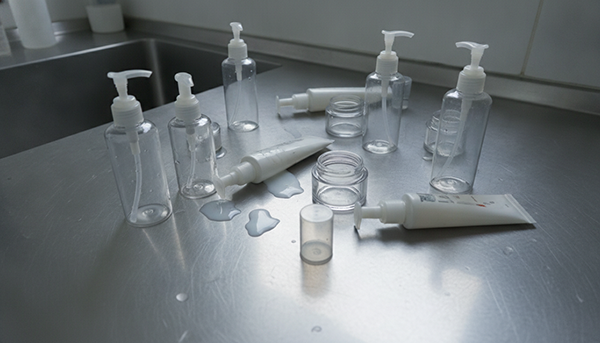
A formula and its package are a single system. A beautiful formula can be ruined by the wrong container. For instance, certain essential oils can degrade plastics, some active ingredients are sensitive to light and require opaque packaging, and high-viscosity creams simply won't work in a thin dropper bottle. Compatibility and stability testing of the formula with its packaging helps prevent leakage, discoloration, and loss of efficacy. This review must also include a commercial reality check. Based on the ingredients and packaging, a manufacturer should be able to provide an estimated cost of goods (COGS) and a realistic MOQ. This ensures your final product is not only beautiful and effective but also profitable.
| Feasibility Check | What to Look For | Red Flag if Missing |
|---|---|---|
| Ingredient Sourcing | Confirmation of specific ingredient grade, supplier, cost per kg, and raw material MOQ. | The manufacturer can't identify or source the exact ingredients, or substitutes without discussion. |
| Target-Market Compliance | A review of each ingredient against the regulatory databases of your launch market (e.g., EU CosIng, US MoCRA). | No process for compliance screening; claims "it should be fine" without providing a review. |
| Packaging Compatibility | A plan for testing formula interaction with the chosen primary packaging to check for risks like leakage, degradation, or discoloration. | Ignores your packaging choice and makes a generic sample; doesn't ask about the material (e.g., PET, glass). |
| Commercial Viability | An estimated cost of goods (COGS) and a realistic mass production MOQ based on the formula, components, and category. | Vague answers on pricing; promises an unrealistically low MOQ for a complex custom formula without explanation. |
| Formula Stability | Acknowledgment of potential stability risks (e.g., oxidation, separation) and a plan for initial assessment. | Dismisses stability concerns or suggests skipping preliminary evaluation before making paid samples. |
Conclusion
A formula sheet is a powerful starting point, but it's not a ticket straight to production. The path from paper to a compliant, stable, and scalable product is paved with critical checkpoints. A serious manufacturing partner will insist on performing a thorough feasibility review before asking you to pay for samples. They will investigate ingredient sources, screen for regulatory compliance in your target market, analyze packaging compatibility, and consider the commercial realities of MOQ and cost.
This isn't an obstacle—it's the most important step in protecting your investment. By embracing this process, you move beyond simply creating a product and begin the work of building a successful, sustainable brand.
Sarah's Signature & CTA
Bringing a new beauty product to life involves navigating a complex landscape of formulation, compliance, and manufacturing. If you have a formula idea and want a partner who can help you assess its real-world feasibility, you can submit your formula sheet for a manufacturing feasibility assessment5. CAMELLIA LABS can review your project to ensure your vision is commercially sound and ready for a successful launch. Let's discuss your product's journey.
Footnotes
European Commission — [CosIng: Cosmetic Ingredient Database](https://ec.europa.eu/growth/tools-databases/cosing/). Official EU database for verifying cosmetic ingredient nomenclature (INCI), regulatory status, restrictions, and functions. ↩
U.S. Food and Drug Administration — [Prohibited & Restricted Ingredients in Cosmetics](https://www.fda.gov/cosmetics/cosmetics-laws-regulations/prohibited-restricted-ingredients-cosmetics). FDA's listing of ingredients that are prohibited or restricted for use in cosmetic products sold in the US. ↩
Camellia Labs — [Custom OEM/ODM Client Solutions](https://camellia-labs.com/custom-oem-odm-client-solutions/). Related service context for readers on how custom formulations are transitioned from lab to production scale. ↩
Camellia Labs — [Manufacturing & Quality](https://camellia-labs.com/manufacturing-and-quality/). Related service context on production quality standards and formula validation for readers. ↩
Camellia Labs — [Contact Us / Submit Your Project](https://camellia-labs.com/contact-us/). Submit your formula sheet and project requirements for a feasibility assessment. ↩