Searching for candidates to fill your cosmetic product development jobs can feel like a critical step toward growth. You believe bringing this role in-house will finally streamline your launch pipeline. Yet, I've seen countless brands invest in a new hire only to face even bigger delays, budget overruns, and catastrophic production failures. The problem isn't the candidate; it's the role itself.
The biggest mistake brands make is thinking a single person can handle the entire scope of modern cosmetic product development. They search for a "unicorn" developer who is an expert in formulation, packaging, global regulations, and factory scale-up. This person does not exist. This flawed expectation leads to hiring for the wrong skills and creating dangerous gaps between a lab-perfect idea and a market-ready product.
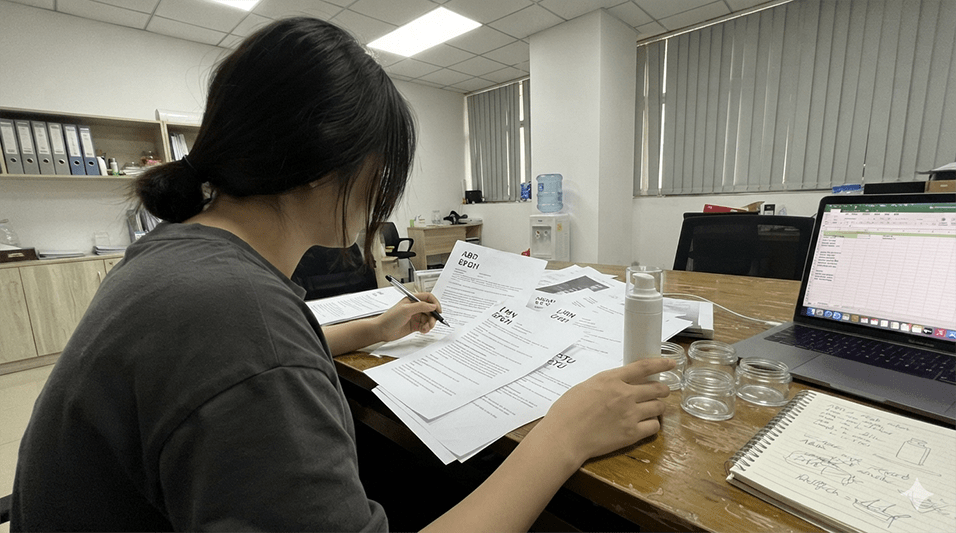
The reality is that product development is a multi-disciplinary team sport1. A brilliant formulator is rarely a regulatory expert, and a regulatory expert probably doesn't understand the operational constraints of a factory in another country. In this article, I'll break down the common pitfalls I see and outline a more practical, lower-risk approach to building your development capabilities.
Why Does the "Full-Stack" Cosmetic Product Developer Role Fail?
You've probably drafted a job description for a "Cosmetic Product Developer" who can spot trends, formulate from scratch, source innovative packaging, and ensure regulatory compliance. Why does this seemingly perfect candidate never materialize, or worse, fail to deliver once hired? Because you're trying to hire three people in one.
The "full-stack" developer concept fails because it bundles distinct, highly specialized skill sets into a single role. True expertise in creative formulation, technical regulatory affairs, and industrial manufacturing operations rarely resides in one individual. This creates critical knowledge gaps that lead to beautiful formulas that can't be made at scale.
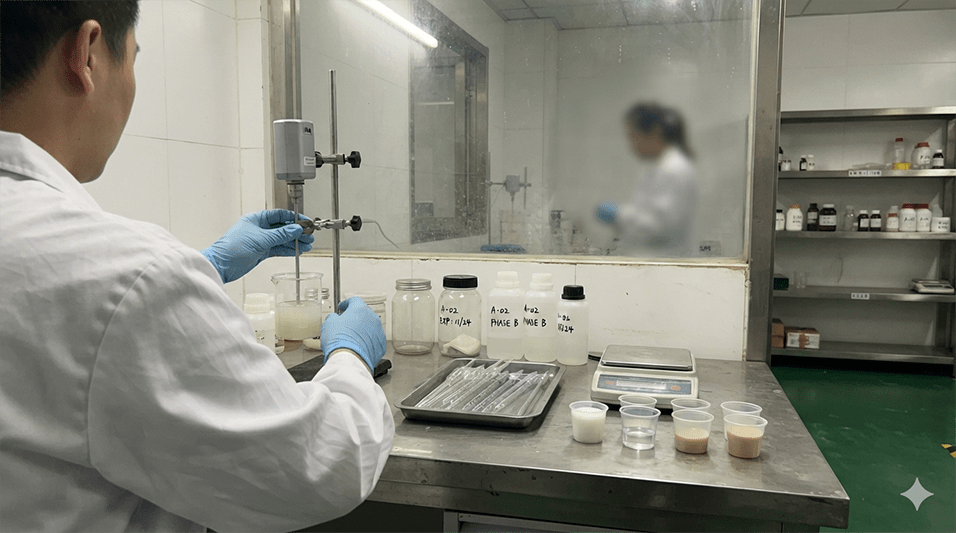
Dive Deeper: The Three People You're Actually Trying to Hire
When a brand posts a job for a single "Product Developer," they are unknowingly searching for a team. In my experience consulting for brands, the role they've written usually covers the work of three different specialists. Understanding these distinct roles is the first step to building a process that actually works.
1. The Creative Formulator (The "Artist") This is the person most people picture: the cosmetic chemist. They are masters of raw materials, texture, and sensory experience. Their world is the lab bench. They can take a marketing brief and translate it into a beautiful, functional sample.
- Strengths: Deep knowledge of ingredients, emulsion science, and achieving a specific feel or performance in a small batch.
- Common Blind Spot: They often lack visibility into mass production constraints. A formula that is stable in a 500g lab beaker may separate in a 1,000kg factory tank due to different mixing speeds and temperatures2. They may specify a raw material that is prohibitively expensive or has a 12-month lead time at production scale.
2. The Regulatory & Compliance Specialist (The "Auditor") This professional lives in a world of documentation, testing protocols, and legal frameworks. Their job is to ensure the final product is safe, legal, and correctly labeled for each target market.
- Strengths: Navigating complex regulations like the EU's Cosmetic Products Regulation (CPR)3, the US's Modernization of Cosmetics Regulation Act (MoCRA)4, or China's CSAR. They know what claims you can make and what tests (stability, compatibility, microbiological, safety assessments) are required.
- Common Blind Spot: They are not formulators. They can tell you if an ingredient is banned in Japan, but they can't tell you how to replace it in the formula without compromising stability or texture. Their focus is on compliance, not creative product development.
3. The Manufacturing & Operations Expert (The "Engineer") This is the person who understands the factory floor. They know about supplier MOQs, packaging lead times, and the technical capabilities of production equipment. Their job is to turn a formula and a set of components into a finished product, on time and on budget.
- Strengths: Deep, practical knowledge of the supply chain. They know which airless pump supplier has a high failure rate, or that a specific type of PCR plastic will warp when filled at high temperatures.
- Common Blind Spot: Their focus is on feasibility and efficiency, not market trends or brand storytelling. They will prioritize a component that is readily available and reliable over one that is more innovative but carries a higher risk.
Expecting one person to master all three domains is the root cause of so many launch failures. I once worked with a brand that hired a brilliant formulator who spent eight months perfecting a water-light sunscreen. The formula was incredible. The problem? It required a specific emulsifier with a minimum order quantity5 of two metric tons—enough to produce over a million units. The brand was only planning a 10,000-unit launch. The project was dead on arrival.
What Are the Hidden Costs of In-House Cosmetic Product Development Jobs?
Hiring for cosmetic product development jobs seems like a direct investment in your brand's future. You see the salary as a fixed cost to bring expertise under your roof. But what if your new hire is working in a silo, detached from the manufacturing realities on the other side of the world? This isolation is where the real, hidden costs begin to multiply.
The true costs of siloed in-house cosmetic product development jobs aren't just payroll. They are the months of wasted R&D on formulas that can't be scaled, the thousands of dollars spent on packaging that fails compatibility testing, and the devastating loss of revenue from a six-month launch delay. These are the expenses that blindside brands.
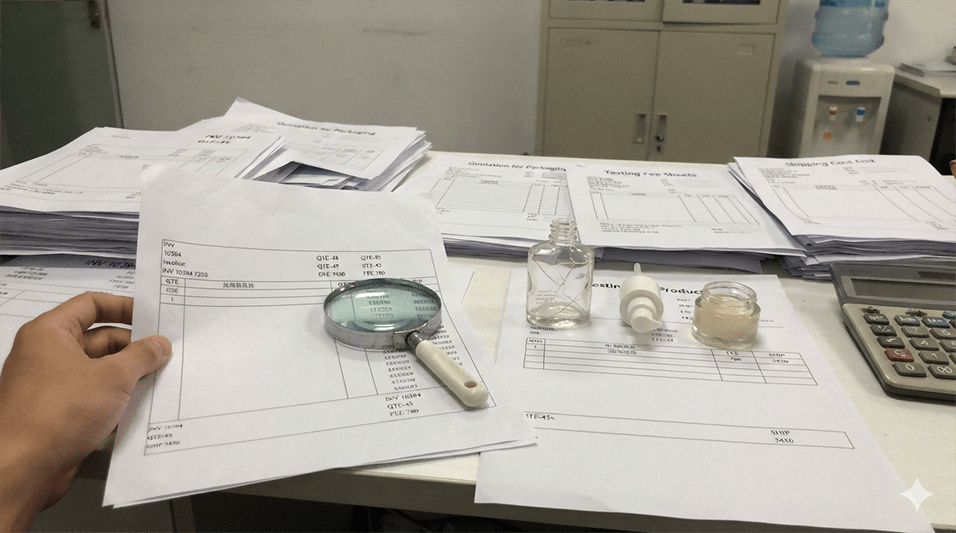
Dive Deeper: The Operational Friction That Sinks Launches
The "hidden costs" aren't theoretical. They are born from specific, predictable points of operational friction that arise when a development team isn't integrated with its manufacturing partner. Here are the most common and costly mistakes I'm called in to fix.
1. The Formula-Packaging Mismatch This is perhaps the most frequent disaster. An in-house developer in New York, focused on aesthetics and sustainability, selects a beautiful recycled (PCR) plastic bottle from a European supplier. Meanwhile, the formula—a potent serum with a low pH—is being finalized. The two components never meet until the first pre-production run at the factory in Asia.
The result? Catastrophe. The acidic formula causes the PCR plastic to panel, crack, or leach chemicals, compromising the product's safety and stability.
- The Cost: The brand now has 10,000 unusable bottles. They must urgently re-source and re-test new packaging, adding 4-6 months to the timeline and tens of thousands of dollars in new tooling, component costs, and shipping fees. A proper development partner would have mandated packaging compatibility testing as a non-negotiable, early-stage gate.
2. The "Independent Lab Formula" Fallacy Many brands start by commissioning a formula from a freelance chemist or an independent lab. They receive a formula sheet (a "paper recipe") and hand it to their in-house developer to manage. This feels like a smart shortcut, but it often isn't.
Here's what goes wrong:
- Raw Material Sourcing: The recipe calls for "Rose Absolute EO-85." The factory's trusted supplier only carries "Rose Absolute EU-70." The specifications are different. Is it a safe substitution? Does it affect the scent, color, or stability? The in-house developer has no way to know without a new round of lab tests.
- Process Mismatch: The lab instructions say, "Homogenize for 10 minutes at 8,000 RPM6." The factory's production-scale homogenizer only goes up to 5,000 RPM. A simple instruction on paper becomes an insurmountable technical hurdle.
The brand has paid for a recipe they can't actually cook. A true manufacturing partner doesn't just take a recipe; they own the process of adapting and validating it for their specific equipment and raw material supply chain.
3. The Death-by-a-Thousand-Documents A successful launch requires a mountain of paperwork: Certificates of Analysis (CoA) for every raw material, Material Safety Data Sheets (MSDS), a stability report, a challenge test (PET) report, a signed safety assessment, and a completed Product Information File (PIF)7 for the EU/UK. An in-house developer, even a good one, often underestimates the sheer administrative burden of collecting, verifying, and organizing these documents from dozens of different suppliers, especially when language barriers are involved.
This is often the final hurdle that causes launch delays. The product is made, boxed, and ready to ship, but it's held up for two months because a single raw material document is missing for the PIF. An integrated partner manages this documentation flow as a core part of their process, not as an afterthought.
| Risk Factor | Siloed In-House Developer | Integrated Manufacturing Partner |
|---|---|---|
| Formula Scale-Up | Approves lab sample. Discovers issues during first production run. | Conducts pilot batches on factory equipment to validate formula before mass production. |
| Packaging Compatibility | Selects packaging based on aesthetics. Tests late in the process, if at all. | Mandates 8-12 week compatibility testing of final formula in final packaging as a project gate. |
| Regulatory Docs | Scrambles to collect documents from multiple suppliers before launch. | Manages documentation collection from the start as part of the PIF-building process. |
| MOQ/Lead Times | Discovers supplier MOQs and lead times late, causing budget and timeline issues. | Provides realistic MOQ and lead time data upfront during the quotation phase. |
How Should You Divide Product Development Responsibilities?
If hiring a single "do-it-all" developer is a trap, what's the alternative? Do you have to build a massive internal team or outsource everything and lose control? Absolutely not. The most successful brands I work with use a smart, hybrid model that creates a clear division of labor.
The most effective structure is to keep "Brand DNA" decisions in-house while outsourcing the high-risk technical execution to a specialized partner. Your team defines the "what" and the "why," while your partner takes ownership of the "how," ensuring your vision can be brought to life safely, compliantly, and at scale.
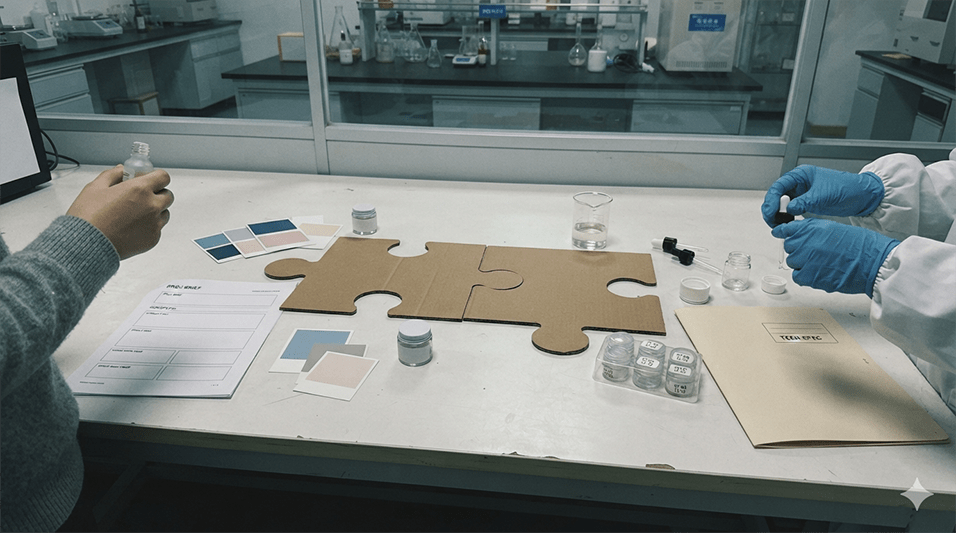
Dive Deeper: The Hybrid Model in Practice
This model allows a lean in-house team to stay focused on high-value strategic work, rather than getting bogged down in the complex minutiae of manufacturing. It replaces the impossible "unicorn" developer with a more realistic and effective role: the strategic Brand or Product Manager.
H3: Keep This In-House (The "Why")
Your internal team's primary responsibility is to be the guardian of the brand. Their job is to articulate the vision for the product with absolute clarity. This is work that can only be done by you.
- Market Positioning & The Product Brief: Your team owns the master document. Who is this product for? What problem does it solve? What is the target retail price? What are the non-negotiable features? This brief is the north star for the entire project.
- Ingredient Storytelling: You decide which hero ingredients are core to your marketing message. You might say, "We want to build a story around Bakuchiol and Niacinamide." This guides the formulation process.
- Sensory & Aesthetic Direction: This is about defining the user experience. You provide the targets, such as: "We want a gel-cream texture that feels cooling on application and absorbs within 30 seconds, leaving a satin finish. It must have no synthetic fragrance."
- Packaging Vision: Your team defines the desired look, feel, and user experience of the packaging. For example: "We want a heavy-glass jar with a matte finish and a minimalist screen-printed logo."
Your in-house person's job isn't to be a chemist, but to create a brief so clear that a chemist can execute it perfectly.
H3: Outsource This to a Partner (The "How")
Once you've defined the "why," you hand it off to an execution-focused partner who specializes in turning that vision into a physical product. This is where a partner like Camellia Labs comes in, acting as the technical extension of your team.
- Formula Feasibility & R&D: We take your brief and translate it into a stable, effective, and manufacturable formula. If you say "Bakuchiol and Niacinamide," our R&D team knows the correct percentages for efficacy and the right stabilizers to ensure they don't degrade over time.
- Packaging Sourcing & Technical Vetting: You want a heavy glass jar? We have a network of vetted suppliers. We'll source options, check MOQs, and—most importantly—conduct the critical compatibility testing to ensure your formula is stable in that specific jar for its entire shelf life.
- Regulatory & Compliance Execution: You tell us you want to launch in the EU and North America. We manage the entire testing and documentation process: stability testing, preservative efficacy testing (PET), creating the EU Product Information File (PIF), and ensuring all labels are compliant with both FDA and EU regulations.
- Supply Chain & Production Management: We handle the entire operational headache. We coordinate with the raw material suppliers, the packaging factory, the assembly line, and the testing labs. Your in-house team manages one relationship (with us), not twenty.
This hybrid model allows you to maintain complete creative and strategic control while mitigating the enormous technical and operational risks of overseas manufacturing.
How Do You Evaluate Candidates for Cosmetic Product Development Jobs?
You're now ready to hire an in-house brand manager or evaluate a potential development partner. How do you assess their true capabilities and avoid being charmed by impressive-sounding buzzwords? You need to dig into their understanding of operational friction.
When evaluating candidates for cosmetic product development jobs or partners, you must shift your focus. Instead of asking about their favorite beauty trends, ask specific, problem-based questions that reveal their real-world experience with the messy realities of manufacturing, risk management, and cross-functional problem-solving.

Dive Deeper: The Questions That Reveal True Competence
The best candidates and partners don't just talk about success; they can speak intelligently about failure and how they prevent it. Their answers to these questions will tell you everything you need to know about their ability to navigate the gap between a great idea and a successful launch.
H3: Questions for an In-House Candidate (Brand/Product Manager)
Your goal here is to find a strategic thinker who understands how to manage an external partner and who won't try to be a siloed "expert."
-
Scenario Question 1: The Brief
- Question: "Walk me through your process for creating a product development brief for a new hybrid serum-foundation. What are the 5-10 most critical pieces of information that must be in that document before we send it to a manufacturing partner?"
- What to listen for: A great answer will go beyond ingredients and mention target cost of goods, target retail price, benchmark products, required claims, packaging functionality, and target markets. They should be thinking about the commercial and strategic context, not just the product itself.
-
Scenario Question 2: Problem Solving
- Question: "We're three months from launch. Our manufacturing partner in China informs us that our final formula has failed the preservative efficacy test (PET)8. What are your next three phone calls, and what is your immediate action plan?"
- What to listen for: A poor answer is, "I'd tell them to fix it." A great answer sounds like this: "First, I'd get on a call with the partner's technical lead to understand the exact failure mode. Was it against one specific microorganism? Second, I'd ask for their proposed solutions—is it a tweak to the preservative system or a full reformulation? Third, I'd work with them to map out a new timeline and communicate the potential delay to our marketing and sales teams." This shows they understand collaboration and internal communication.
H3: Questions for an External Partner (e.g., Camellia Labs)
Here, you are testing for process maturity, transparency, and experience with risk mitigation.
-
Scenario Question 1: Onboarding a Formula
- Question: "We have a formula sheet from a well-known independent lab in the US. What is your exact process for determining if you can manufacture it at scale?"
- What to listen for: A risky partner will say, "No problem, send it over and we'll quote it." A trustworthy partner will say, "We would treat that as a starting point. Our process requires a formula review by our R&D team to check for raw material feasibility and process conflicts. We would then require a paid lab-scale trial to replicate the formula in our lab, followed by a pilot batch on our factory equipment before we can guarantee scale-up." This demonstrates a rigorous, risk-averse process.
-
Scenario Question 2: Packaging Failure
- Question: "What are the three most common reasons for packaging compatibility failures you see, and how does your standard process prevent them from happening?"
- What to listen for: They should be able to name specific issues like formula-induced plastic paneling, interactions with certain adhesives, or discoloration9 from UV exposure through a clear bottle. Their process should include mandatory, long-term (8-12 week) stability and compatibility testing10 of the final formula in the final chosen packaging under various conditions (heat, cold, light) before mass production is approved.
These questions force potential hires and partners to move beyond theory and demonstrate a practical, battle-tested understanding of what it truly takes to bring a product to market.
Frequently Asked Questions
What is the difference between a cosmetic chemist and a cosmetic product developer?
A cosmetic chemist is a scientist who specializes in formulating products at the lab bench, focusing on ingredient interactions, stability, and sensory properties. A cosmetic product developer (or a product manager) has a broader, more commercial role. They manage the entire project lifecycle, from market concept and briefing to coordinating with chemists, packaging suppliers, and regulatory teams to ensure a successful launch.
Can I hire a freelance cosmetic chemist to create a formula for me?
Yes, you can hire a freelancer to create a formula "recipe." However, this is often risky. The formula they create in their independent lab may use equipment or raw materials that your chosen manufacturer cannot source or use at scale. This can lead to significant delays and costs when trying to transfer the formula for mass production. It's often safer to work directly with the R&D team of your manufacturing partner.
What should be in a good product development brief?
A strong brief is the foundation of a successful project. It should include the project's core objective, target consumer, benchmark products, key ingredients/story, desired sensory experience (texture, scent, finish), non-negotiable "free-of" list, packaging concept, target cost of goods (COGS), target retail price, and target launch markets (e.g., EU, USA). The more detail you provide, the better.
How much does it cost to develop a cosmetic product?
The cost varies dramatically based on formula complexity, packaging customization, required testing, and order volume. Development costs include sampling fees, stability and compatibility testing (often $2,000-$5,000 per SKU), regulatory assessments, and the cost of the actual production run. A simple private label project may be cheaper upfront, while a fully custom formula and packaging will have higher development costs but offer greater brand differentiation.
Conclusion
Building out your team for cosmetic product development jobs is one of the most critical decisions a brand founder or leader can make. The common mistake is searching for a single "unicorn" who can do it all, leading to the creation of a siloed role that is disconnected from the realities of manufacturing. This gap between the lab bench and the factory floor is where launches fail and costs spiral out of control. The solution is not to hire one person but to build one cohesive system.
The most resilient and effective approach is a hybrid model. Empower a lean, strategic in-house team to own your brand vision, your product brief, and your customer story. Then, partner with a technical expert who can take that vision and manage the complex, high-risk execution of formulation scale-up, packaging validation, regulatory compliance, and supply chain coordination. Finding the right talent for cosmetic product development jobs is less about filling a seat and more about building a smart, integrated partnership.
If you're ready to bridge the gap between your brand vision and factory-floor reality, let's talk. Camellia Labs acts as the technical extension of your team, providing the operational backbone you need to launch with confidence.
"Report on the Use of PFAS in Cosmetic Products and ...", https://www.fda.gov/media/190319/download?attachment. Academic curricula and industry guidelines emphasize that modern cosmetic science integrates formulation chemistry, safety assessment, and regulatory compliance. Evidence role: expert_consensus; source type: education. Supports: the assertion that cosmetic product development is a highly interdisciplinary field requiring expertise across chemistry, toxicology, and regulatory affairs. Scope note: While this highlights the interdisciplinary nature of the field, individual career paths may still span multiple of these domains. ↩
"Basic Principles of Cosmetic Formulas: What Brand ...", https://camellia-labs.com/basic-principles-of-cosmetic-formulas-what-brand-founders-need-to-know-before-manufacturing/. Research in chemical engineering demonstrates that scale-up of emulsions often introduces non-linear changes in shear rates and heat transfer, which can compromise physical stability. Evidence role: mechanism; source type: paper. Supports: the physical and thermodynamic challenges of scaling up cosmetic emulsions from laboratory scale to industrial production. Scope note: Specific scale-up parameters depend heavily on the exact rheological properties of the formulation. ↩
"How Can You Navigate The Real Process of Cosmetic Product ...", https://camellia-labs.com/how-can-you-navigate-the-real-process-of-cosmetic-product-development/. Regulation (EC) No 1223/2009 serves as the main regulatory framework for cosmetic products in the EU market, emphasizing consumer safety, ingredient bans, and animal testing prohibitions. Evidence role: definition; source type: government. Supports: the regulatory framework governing cosmetic products within the European Union. Scope note: Individual EU member states may maintain specific national administrative requirements alongside the centralized regulation. ↩
"What You Need To Know", https://www.nsf.org/knowledge-library/fda-modernization-cosmetics-regulation-act. According to the US Food and Drug Administration, MoCRA significantly expands federal authority over cosmetics, mandating facility registration, product listing, and safety substantiation. Evidence role: definition; source type: government. Supports: the regulatory requirements and compliance mandates introduced by the US Modernization of Cosmetics Regulation Act (MoCRA). Scope note: Compliance timelines and enforcement priorities may evolve as the FDA issues final guidance documents. ↩
"How Can You Navigate The Real Process of Cosmetic Product ...", https://camellia-labs.com/how-can-you-navigate-the-real-process-of-cosmetic-product-development/. Supply chain analyses of the specialty chemical industry highlight that high MOQs for niche cosmetic active ingredients often restrict the agility of small and medium-sized enterprises. Evidence role: general_support; source type: research. Supports: the operational and financial challenges that minimum order quantities (MOQs) of raw materials impose on small-scale cosmetic brands. Scope note: Some distributors offer repackaged, smaller quantities of common ingredients, though often at a significant price premium. ↩
"2015 FDA Science Forum - Emerging Technologies", https://www.fda.gov/files/science%20%26%20research/published/2015-FDA-Science-Forum-Brochure.pdf. In industrial mixing, scale-up is typically governed by rotor tip speed and shear rate rather than simple rotational speed (RPM), meaning a direct translation of lab RPMs to large vessels is mathematically and physically invalid. Evidence role: mechanism; source type: paper. Supports: the technical discrepancy between laboratory-scale high-RPM homogenization and industrial-scale mixing capabilities. Scope note: Modern pilot-scale equipment can partially bridge this gap, though full-scale validation remains necessary. ↩
"How Can You Navigate The Real Process of Cosmetic Product ...", https://camellia-labs.com/how-can-you-navigate-the-real-process-of-cosmetic-product-development/. EU Regulation (EC) No 1223/2009 mandates that a comprehensive Product Information File, including a safety report, must be kept for ten years after the last batch is placed on the market. Evidence role: definition; source type: government. Supports: the legal requirement of maintaining a Product Information File (PIF) for cosmetic products marketed in the European Union. Scope note: While this is a strict requirement in the EU and UK, other jurisdictions may have different documentation standards. ↩
"Evaluation of the antimicrobial protection of a cosmetic product", https://www.iso.org/standard/75058.html. Standardized protocols such as ISO 11930 and USP <51> define the microbiological challenge tests required to verify that a cosmetic formulation's preservative system successfully inhibits microbial growth over time. Evidence role: definition; source type: institution. Supports: the methodology and necessity of preservative efficacy testing (PET) in cosmetic product development. Scope note: Passing a laboratory PET does not completely eliminate the risk of contamination under extreme consumer misuse conditions. ↩
"Pharmaceutical Microbiology Manual", https://www.fda.gov/media/88801/download. Technical analyses of polymer packaging show that paneling occurs when pressure differentials develop inside a sealed container due to ingredient absorption or gas permeation, while UV exposure can catalyze degradation of both the formula and the container. Evidence role: mechanism; source type: paper. Supports: the physical and chemical mechanisms behind packaging failures such as paneling, adhesive degradation, and UV-induced discoloration in cosmetics. Scope note: These failure modes are highly dependent on the specific barrier properties of the selected polymer and the presence of UV stabilizers. ↩
"Basic Principles of Cosmetic Formulas: What Brand ...", https://camellia-labs.com/basic-principles-of-cosmetic-formulas-what-brand-founders-need-to-know-before-manufacturing/. Guidelines from Cosmetics Europe (formerly Colipa) and the FDA outline rigorous protocols for accelerated stability testing to predict shelf-life and ensure packaging compatibility. Evidence role: expert_consensus; source type: institution. Supports: the industry consensus and standard protocols for conducting cosmetic stability and packaging compatibility testing. Scope note: Accelerated testing conditions are predictive models and cannot perfectly replicate multi-year real-time aging. ↩