Struggling to translate your brilliant product idea into a viable formula? For many brand founders, the world of cosmetic formulations feels like a complex chemistry lesson they were never prepared for, making it hard to know where to even begin. This guide reframes the process, showing you how to make smart business decisions about your formula.
A cosmetic formulation is the complete recipe, manufacturing process, and testing protocol for a beauty product. For a brand founder, it's a strategic choice between three main pathways: using a pre-existing stock formula (private label)1, modifying that stock formula, or developing a completely custom formula based on your specific business goals, budget, and market.
Now that we’ve established what a formulation is from a business perspective, let's unpack those three pathways. Understanding the pros and cons of each is the first step to choosing the right direction for your brand and budget.
What Are the Main Pathways for Cosmetic Formulations?
You know you need a formula, but the options seem overwhelming. Hearing terms like "private label" and "custom" without clear definitions can lead to analysis paralysis. It makes it impossible to choose a path or prepare a proper brief for a manufacturer.
The primary pathways for cosmetic formulations are using a manufacturer's stock formula (private label), modifying that stock formula, or developing a fully custom formula from scratch. Each path represents a different trade-off between speed-to-market, uniqueness, cost, and development risk.
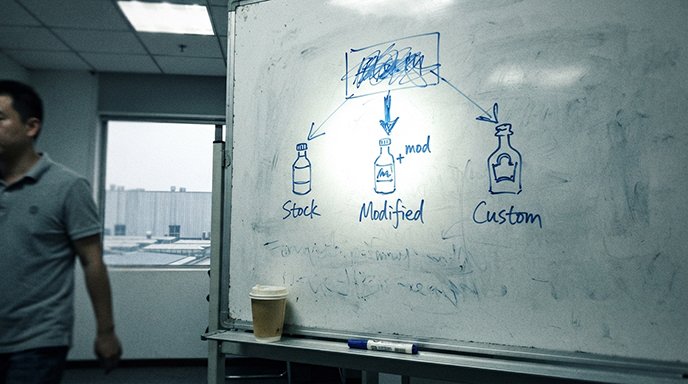
Dive Deeper: Choosing Your Formulation Strategy
When brands first approach us, they often ask for a "custom formula" without realizing the full implications. A common point of confusion we see is the assumption that "custom" is always better. The reality is that the best path depends entirely on your business model, launch timeline, and risk tolerance.
Let's break down the three main options in a way that helps you make a strategic decision.
| Feature | Stock Formula (Private Label) | Modified Stock Formula | Custom Formula |
|---|---|---|---|
| Best For | New brands, speed-to-market, testing a concept, limited budgets. | Brands wanting a slight edge or unique scent/color without full custom costs. | Brands with a unique concept, specific performance needs, or a strong marketing story. |
| Development Time | 1–3 months | 3–6 months | 6–18+ months |
| Cost | Lowest | Moderate | Highest |
| Uniqueness | Low (formula is shared) | Medium | High (formula is exclusive) |
| Risk | Low (formula is pre-tested and stable) | Low-to-Moderate | High (requires full development and testing) |
| What You Provide | Brand concept, packaging choice, artwork. | Stock formula choice, desired changes (e.g., add Vitamin C, change fragrance). | Detailed product brief, performance targets, ingredient blacklist/whitelist. |
H3: The Stock Formula (Private Label) Path
This is the fastest and most cost-effective way to launch a product. The manufacturer has already developed, tested, and validated these cosmetic formulations. They are proven to be stable and effective.
- Pros: Minimal R&D investment, fast-track to production, low MOQ (Minimum Order Quantity) is often possible because the bulk formula is made for multiple clients. You can focus your energy on branding, marketing, and sales.
- Cons: The formula is not exclusive to you. Another brand could potentially be selling a very similar product. Your ability to make unique marketing claims is limited to what the base formula can support.
H3: The Modified Stock Formula Path
This is a smart middle ground. You start with a proven stock formula and ask the lab to make small changes. Common modifications include:
- Adding or swapping a "hero" marketing ingredient (e.g., adding 1% Bakuchiol).
- Changing the fragrance or making it fragrance-free.
- Adjusting the color or tint.
- Swapping a minor ingredient to meet a "clean" standard (e.g., replacing a preservative).
This path gives you a degree of uniqueness without the time and expense of a full custom development project. However, any change, no matter how small, requires new stability and compatibility testing2.
H3: The Custom Formula Path
This is where you work with a chemist to build a formula from the ground up. This path is necessary if you have a truly innovative idea, require specific performance that doesn't exist in a stock library, or want to build your brand around an exclusive, proprietary formula.
I've worked with many brands who choose this path because their entire market differentiation depends on it. Be prepared, however, for a significant investment in both time and money. The process involves multiple rounds of sampling, revisions, and comprehensive testing. You aren't just paying for ingredients; you're funding R&D, chemist expertise, and rigorous safety validation.
What Questions Must You Answer Before Choosing a Formulation Path?
It's tempting to jump straight into discussing specific ingredients like niacinamide or hyaluronic acid. But from a manufacturer's perspective, this approach often leads to wasted time and sampling costs if the core business strategy isn't clear. We'll show you what to define first.
Before deciding on your path for cosmetic formulations, you must clearly define your target customer, desired retail price point, key marketing claims, and potential packaging. These business decisions create the framework that makes a formulation feasible and profitable.
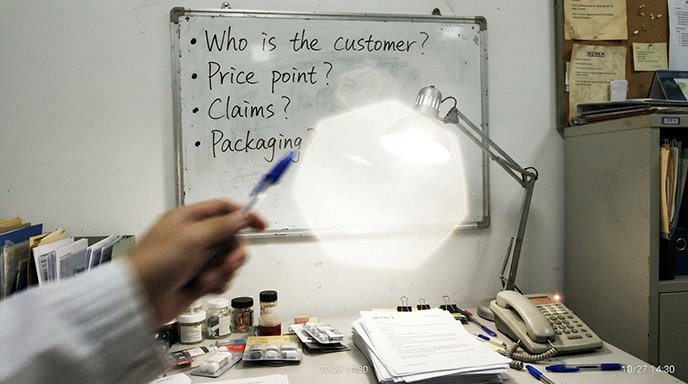
Dive Deeper: Building Your Product Brief Foundation
A well-prepared brand is a manufacturer's favorite partner. When you come to the table with answers to these questions, you enable us to give you realistic advice and guide you to the most efficient formulation path. A product brief that starts with these answers is infinitely more useful than a simple list of desired ingredients.
H3: Who Is Your Target Customer?
Is your customer a teenager looking for an affordable acne solution or a professional in their 40s seeking a luxury anti-aging serum? The answer dictates everything. A luxury consumer may expect a richer texture and sophisticated, subtle fragrance, while a Gen Z customer might prioritize vegan ingredients and Tik-Tok-friendly aesthetics. A product for sensitive skin requires a completely different approach to preservatives and active ingredients than a standard product.
H3: What Is Your Target Price Point and Cost of Goods (COGS)?
Your intended retail price directly determines your target Cost of Goods Sold (COGS). A serum that will retail for $80 can accommodate more expensive and higher concentrations of active ingredients than one destined for the mass market at $15. Be realistic about this from day one. When brands ask for a formula packed with 10 exotic extracts and 5 cutting-edge peptides but have a target COGS of $2, it's an impossible equation. Knowing your budget helps a formulator make smart choices on your behalf.
H3: What Are Your Core Marketing Claims?
Your claims have direct formulation and testing implications.
- "Organic" or "Natural": This requires sourcing certified ingredients and often involves using specific, sometimes challenging, preservative systems.
- "Clinically Tested for Hydration": This necessitates commissioning a third-party clinical study to substantiate the claim, which adds significant cost and time.
- "Vegan" and "Cruelty-Free": The entire supply chain for every single ingredient must be vetted to ensure no animal products or testing were involved.
- "Hypoallergenic": This usually requires specific safety testing, like a Human Repeat Insult Patch Test (HRIPT)3, to minimize the risk of irritation.
Decide on your essential claims before development begins. Adding a claim late in the process can force a complete reformulation.
H3: What Are Your Packaging Constraints?
Packaging and formulation are deeply intertwined. A light-sensitive formula (like one with Vitamin C) requires opaque or UV-protected packaging4. A thin, watery serum can't be housed in a wide-mouth jar. An oxygen-sensitive formula works best in an airless pump. Furthermore, some plastics can interact with certain formula ingredients, causing the bottle to warp5 or the product to degrade. Choosing your packaging early helps the chemist design a formula with the right viscosity, stability, and preservative system for its intended home.
How Do You Turn a Recipe Into a Market-Ready Cosmetic Formulation?
You have a formula on paper—perhaps from a freelance chemist or an online course. You might think you're ready for mass production, but this is a common and incredibly risky assumption. A simple recipe is not a finished product, and skipping the next steps can lead to disaster.
A formula on paper becomes one of the market-ready cosmetic formulations through a non-negotiable process of rigorous testing. This includes stability testing6 for shelf life, preservative efficacy testing (PET)7 for safety against microbes, and packaging compatibility testing8 to ensure the final product is safe, stable, and delivers a great user experience.
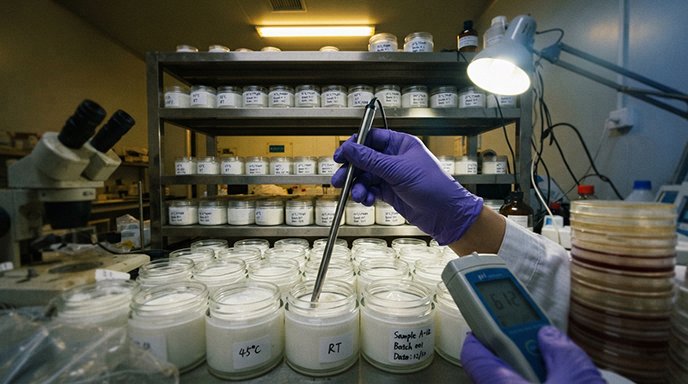
Dive Deeper: De-Risking Your Launch with Essential Testing
In all my years of helping brands, the most painful conversations are with those who have tried to cut corners on testing. A failed batch of 5,000 units due to instability is a financial catastrophe that can sink a new business. Testing isn't a "nice-to-have"; it's the fundamental process of risk management that turns a kitchen concept into a commercially viable product.
H3: Stability Testing: Protecting Your Investment
What it is: The formula is subjected to various conditions (e.g., high heat, cold, cycles of both, UV light) over a period of weeks or months. Technicians watch for any changes in color, odor, viscosity, pH, or separation.
The business risk of skipping it: Without this, you have no idea if your product will remain stable on a store shelf, in a hot warehouse, or in a customer's bathroom. An unstable product can separate, change color, or go rancid, leading to:
- Customer complaints and returns.
- Damage to your brand's reputation.
- A full product recall, forcing you to destroy inventory at a total loss.
Accelerated stability testing (typically 12 weeks) gives a strong indication of a 1-2 year shelf life. It is the single most important step in validating cosmetic formulations.
H3: Preservative Efficacy Testing (PET or Challenge Testing)
What it is: The lab deliberately introduces common bacteria, yeast, and mold into the product sample and then measures how effectively the preservative system kills them off over 28 days.
The business risk of skipping it: An inadequately preserved product is a public health risk. It can grow harmful microbes that cause skin infections or serious illness. This can lead to:
- Harm to your customers.
- Lawsuits and regulatory action.
- Irreparable damage to your brand.
In many markets, including the EU and Canada, PET is a legal requirement9. In the US, while not explicitly mandated by the FDA for all products, it is considered an essential part of ensuring product safety under the new MoCRA regulations10.
H3: Packaging Compatibility Testing
What it is: The final formula is placed in the final chosen packaging and undergoes stability testing together. This ensures the product doesn't react with the packaging material and vice-versa.
The business risk of skipping it: Sometimes, an ingredient in a formula can cause plastic to panel (cave in), discolor, or become brittle. Conversely, a component in the packaging could leach into the formula, compromising its safety or stability. This test confirms they can coexist peacefully for the product's entire shelf life.
Frequently Asked Questions
How much does a custom cosmetic formulation cost?
The cost varies dramatically, from a few thousand to over $20,000. It depends on the complexity, ingredient requirements, number of revisions, and the extent of testing required. Think of it not as a one-time fee but as an investment in creating a unique, proprietary asset for your brand.
Can I provide my own ingredients for a formulation?
This is generally difficult and not recommended. Manufacturers have a vetted supply chain with suppliers who provide full documentation (like a Certificate of Analysis and Safety Data Sheet) for every ingredient. Introducing an outside ingredient requires the manufacturer to validate it, which adds time, cost, and significant quality control risks.
How long does it take to develop a custom formulation?
Be prepared for a timeline of 6 to 18 months. This includes the initial briefing, multiple rounds of sample creation and feedback (4-8 weeks per round), and the crucial 12-week period for stability and compatibility testing. Rushing this process almost always leads to problems post-launch.
What is the difference between an INCI list11 and a formulation?
An INCI list is the ingredient list you see on product packaging, mandated by law. It lists ingredients in descending order of concentration above 1%. A cosmetic formulation is the confidential, proprietary recipe. It includes the exact percentage of every ingredient, raw material specifications, and detailed, step-by-step manufacturing instructions.
Conclusion
Understanding cosmetic formulations is less about being a chemist and more about being a strategic business owner. The "perfect" formula doesn't exist; the right formula is one that aligns with your brand, customer, budget, and timeline. By starting with key business questions, you can choose the right development path—be it stock, modified, or custom. Most importantly, never compromise on the testing that transforms a simple recipe into a safe, stable, and successful product. This disciplined approach is what separates hopeful startups from enduring brands.
When you're ready to move from idea to a concrete product brief, Camellia Labs is here to help you navigate the practical decisions around manufacturing, packaging, and compliance preparation. Contact us to discuss how we can bring your vision to life.
"Private Label Overview", https://camellia-labs.com/private-label/. Private label cosmetics refer to pre-formulated products manufactured by one company and sold under another brand's name, allowing rapid market entry without custom R&D. Evidence role: definition; source type: encyclopedia. Supports: the definition of private label cosmetics as pre-existing manufacturer formulas. ↩
"Guidelines on the stability testing of cosmetic products", https://www.iso.org/obp/ui/en/#!iso:std:63465:en. Even minor alterations to a cosmetic base, such as changing a fragrance or active concentration, can alter the emulsion stability and require fresh validation. Evidence role: mechanism; source type: research. Supports: the necessity of re-testing cosmetic formulations after minor ingredient modifications. Scope note: The extent of re-testing required can vary depending on the specific regulatory jurisdiction and the nature of the ingredient changed. ↩
"Recognized Consensus Standards: Medical Devices - FDA", https://www.accessdata.fda.gov/scripts/cdrh/cfdocs/cfstandards/detail.cfm?standard__identification_no=36973. The Human Repeat Insult Patch Test (HRIPT) is a clinical standard used to determine skin irritation and sensitization potential for topical products. Evidence role: definition; source type: paper. Supports: the role of HRIPT in evaluating skin sensitization and supporting hypoallergenic claims. Scope note: While HRIPT helps minimize irritation risks, it cannot guarantee a product will never cause an allergic reaction in highly sensitive individuals. ↩
"Why Can't I Put My High-Active Serum in Cheap Stock Packaging?", https://camellia-labs.com/high-active-serum-packaging-compatibility/. L-ascorbic acid is highly unstable in aqueous solutions and undergoes rapid oxidation when exposed to light and air, requiring protective packaging. Evidence role: mechanism; source type: paper. Supports: the light-sensitivity of topical Vitamin C and its packaging requirements. ↩
"International Classification for Standards", https://www.iso.org/iso/international_classification_for_standards.pdf. Certain cosmetic ingredients, particularly essential oils and organic solvents, can migrate into plastic packaging, leading to structural issues like panelling or stress cracking. Evidence role: mechanism; source type: research. Supports: the physical interaction between cosmetic formulations and plastic packaging materials. ↩
"ISO/TR 18811:2018(fr), Cosmétiques", https://www.iso.org/obp/ui#!iso:std:iso:tr:18811:ed-1:v1:fr. According to industry guidelines, cosmetic stability testing involves monitoring physical, chemical, and microbiological parameters under accelerated temperature and humidity conditions. Evidence role: definition; source type: institution. Supports: the standard protocols and parameters evaluated during cosmetic stability testing. Scope note: Accelerated stability testing serves as a predictive model and may not always perfectly replicate real-time shelf-life behavior. ↩
"ISO 11930:2019 - Cosmetics — Microbiology", https://www.iso.org/standard/75058.html. Standard preservative efficacy tests, such as USP <51> or ISO 11930, evaluate the reduction of specific bacteria, yeasts, and molds in a product over a 28-day period. Evidence role: definition; source type: government. Supports: the 28-day challenge testing protocol for cosmetic preservatives. ↩
"How Can You Navigate The Real Process of Cosmetic Product ...", https://camellia-labs.com/how-can-you-navigate-the-real-process-of-cosmetic-product-development/. Compatibility testing evaluates potential interactions, such as ingredient absorption into the container wall or chemical leaching from the packaging into the formula. Evidence role: mechanism; source type: research. Supports: the purpose and importance of cosmetic packaging compatibility testing. ↩
"What Makes a Beauty Formulation Truly 'Production-Ready'?", https://camellia-labs.com/what-makes-a-beauty-formulation-truly-production-ready/. Under EU Regulation (EC) No 1223/2009, a cosmetic product safety report must include microbiological specifications and the results of a preservative challenge test. Evidence role: general_support; source type: government. Supports: the legal requirement for microbiological safety testing in the EU and Canada. ↩
"MoCRA Cosmetic Testing and Certification", https://www.nsf.org/knowledge-library/fda-modernization-cosmetics-regulation-act. The Modernization of Cosmetics Regulation Act (MoCRA) of 2022 significantly expanded the FDA's authority, mandating that cosmetic brands maintain robust safety substantiation records. Evidence role: historical_context; source type: government. Supports: the safety substantiation requirements introduced by MoCRA in the United States. ↩
"Cosmetics Labeling Guide", https://www.fda.gov/cosmetics/cosmetics-labeling-regulations/cosmetics-labeling-guide. The International Nomenclature of Cosmetic Ingredients (INCI) system requires ingredients present at concentrations greater than 1% to be listed in descending order of weight. Evidence role: definition; source type: institution. Supports: the regulatory rules governing INCI ingredient listing order. Scope note: Ingredients present at concentrations of 1% or less may be listed in any order after those present at more than 1%. ↩