leading paragraph: You have a brilliant idea for a new skincare product. But developing a formula is slow and costly. AI software promises a fast, easy solution, but is it too good to be true?
snippet paragraph: AI cosmetic formulation software1 is a powerful tool for brainstorming concepts and exploring ingredient combinations. However, it cannot guarantee raw material availability, manufacturing feasibility, or target-market compliance. Treat AI-generated formulas as high-risk drafts until they are fully verified by a physical manufacturing and compliance partner.
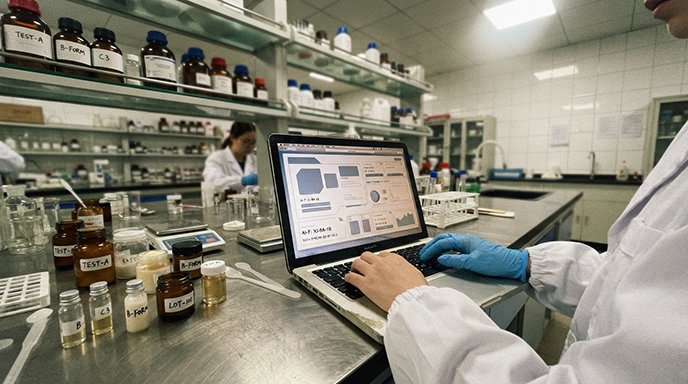
Transition Paragraph: I see a lot of excitement around these new AI tools. From my perspective as a manufacturing partner, brand founders are bringing me AI-generated formula sheets more and more often. They are excited by the speed. But turning that digital text file into a physical product that can be legally sold involves real-world hurdles that AI simply cannot see. Let's break down where these tools are genuinely useful and where they create serious business risks you need to understand.
Does AI Create Manufacturer-Ready Formulas?
leading paragraph: You have a formula from an AI tool and you're ready to go. But sending it directly to a manufacturer might lead to instant rejection, costing you valuable time and money.
snippet paragraph: No, AI-generated formulas are almost never manufacturer-ready. They often include ingredients that are difficult to source, too expensive, or don't meet a factory's minimum order quantities (MOQs)2. Manufacturers usually need to reformulate them completely, which adds significant cost and delays to your project.
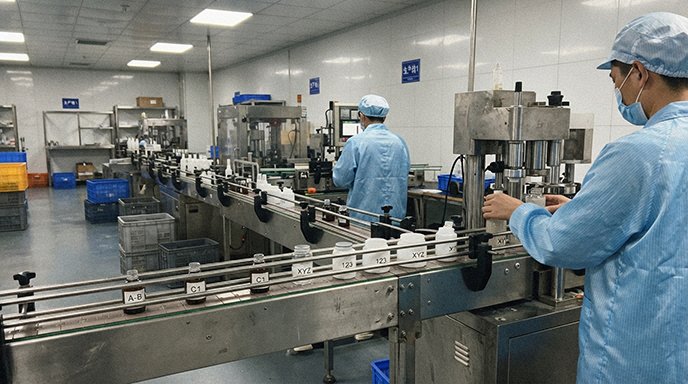
Dive deeper Paragraph: In my consultations, when a brand founder presents an AI-generated formula, our first step is always a reality check. There is a huge gap between a theoretical formula that looks perfect on a screen and a physical formula that can actually be made. AI operates in a digital vacuum. It doesn't know that a specific emulsifier is on global backorder for six months or that a trendy botanical extract requires specialized equipment that doubles the production cost. This is the "theoretical vs. physical" gap.
Why Your AI Formula Might Get Rejected
| AI Suggestion | Manufacturing Reality |
|---|---|
| A new, patented peptide for anti-aging. | The ingredient is only available from one supplier with a 100kg MOQ, making it too expensive for a new brand. |
| A unique blend of five botanical extracts. | One extract is out of stock globally. Another is unstable when mixed with the suggested preservative system3. |
| A specific silicone for a silky texture. | The factory's equipment is not designed to handle high-viscosity silicones, requiring a complete reformulation. |
This is why many contract manufacturers (OEMs/ODMs) are hesitant to work with rigid AI formulas. They can't just "plug and play" your ingredient list. It requires a complete teardown and rebuild using raw materials they can actually source reliably and affordably. This isn't a small tweak; it's a new development project from the ground up.
Can AI Software Handle Global Cosmetic Compliance?
leading paragraph: Your product must be compliant to sell legally. A single mistake can result in recalls, huge fines, or your shipment being blocked at the border, destroying your launch plans.
snippet paragraph: AI software cannot manage global cosmetic compliance on its own. It can check INCI names against a database, but it cannot create the comprehensive documentation required for markets like the EU or UK. This includes the Product Information File (PIF)4 and a Cosmetic Product Safety Report (CPSR)5.
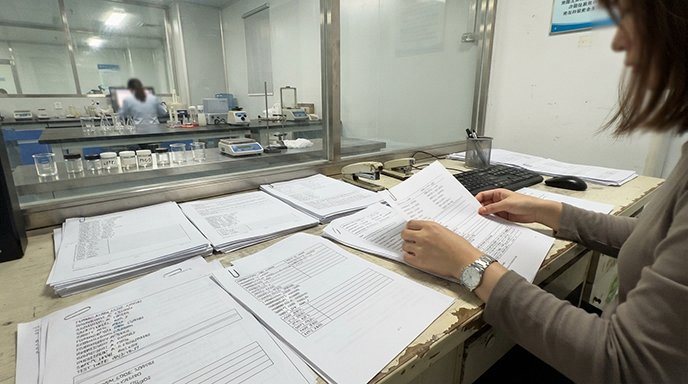
Dive deeper Paragraph: Having a correct list of ingredients is only the very first step in a long compliance journey. From a regulatory perspective, a formula is only as good as the paper trail that proves its safety and legality. This is where AI tools currently have a major blind spot. They can give you an ingredient list, but they can't provide the mountain of documentation needed to back it up. For example, to launch a product in the European Union, you need a complete Product Information File (PIF).
An Ingredient List vs. A Compliant Formula
An AI can generate an INCI list6, but that's just one piece of the puzzle. The PIF requires detailed documentation for every single raw material from the specific supplier you are using. This includes the Certificate of Analysis (CoA)7, Safety Data Sheet (SDS)8, and allergen declarations9. AI has no access to this batch-specific, supplier-specific data. Furthermore, different markets have different rules. An ingredient that's perfectly fine in the USA might be restricted to a lower concentration in the EU or banned entirely in Japan10. Finally, for markets like the EU and UK, a qualified human safety assessor11 must personally review all the data and sign the Cosmetic Product Safety Report (CPSR). AI cannot replace this legal requirement.
| AI Output | Required for an EU Launch |
|---|---|
| INCI List | ✓ |
| Ingredient Concentrations | ✗ (Needs full documentation in a PIF) |
| Raw Material Supplier Docs (CoA, SDS) | ✗ |
| Allergen Reports for each ingredient | ✗ |
| Stability & Challenge Test Data12 | ✗ |
| Signed Safety Assessment (CPSR) | ✗ |
Compliance is a detailed, human-led process. It's about risk assessment and documentation, not just data processing.
What Is the Smartest Way to Use AI for Product Development?
leading paragraph: You can see the potential of AI, but you are also aware of the risks. You don't want to waste time on ideas that can't be produced or lose money on rejected formulas.
snippet paragraph: The best way to use AI is as a concept accelerator, not a final formulator. Use it to brainstorm ingredient combinations and marketing stories. Then, bring that concept—not a rigid formula—to a manufacturing partner early in the process. This creates a collaborative and efficient path to production.
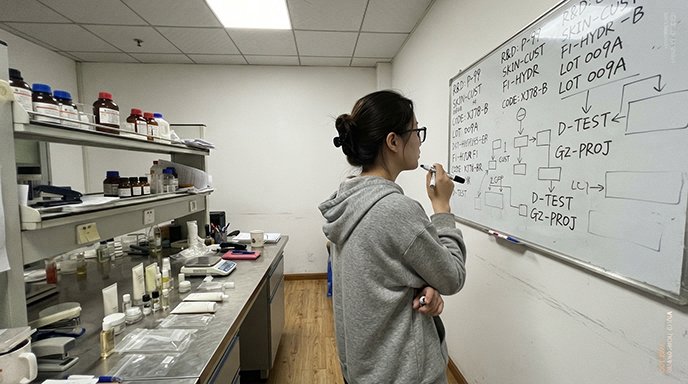
Dive deeper Paragraph: Instead of treating AI as a turnkey solution, you should use it as a powerful brainstorming partner. This approach leverages AI's strengths while avoiding its critical weaknesses. Here is a rational workflow that we recommend to brands we work with.
Step 1: Use AI for Ideation and Storytelling
This is where AI shines. Ask it for "serum concepts for sensitive, acne-prone skin" or "unique textures for a cleansing balm." Use its output to explore new marketing angles and ingredient stories. In minutes, you can generate dozens of creative starting points for your new product line. Your goal here is to gather ideas, not to create a final, locked-in formula.
Step 2: Translate the AI "Formula" into a "Product Brief"
Do not get attached to the exact percentages or suppliers suggested by the AI. Instead, use the ideas to build a clear product brief. This document should outline your vision. What problem does the product solve? Who is your target customer? What are the "hero" ingredients you want to feature? What is the desired texture, scent, and packaging? What is your target cost and which countries do you plan to sell in?
Step 3: Engage a Manufacturing Partner Early
This is the most important step. Bring your product brief to a manufacturing and compliance partner. We can then audit your core concept for feasibility. Our team can say, "We love this hero ingredient, but we recommend a different version of it for better stability and cost." Or, "To sell this in the EU, we need to adjust the preservative system." This collaborative process saves you enormous amounts of time and money. It prevents you from paying for lab samples of a formula that was never going to work from a manufacturing or regulatory standpoint.
Conclusion
AI is a fantastic brainstorming partner for new beauty concepts. But turning those ideas into a physical, compliant, and successful product still requires the real-world expertise of a human-led manufacturing partner.
"FDA Launches Agency-Wide AI Tool to Optimize ...", https://www.fda.gov/news-events/press-announcements/fda-launches-agency-wide-ai-tool-optimize-performance-american-people. Recent developments in cosmetic science highlight the integration of machine learning algorithms to predict ingredient compatibility and optimize formulation properties. Evidence role: definition; source type: research. Supports: the emergence of machine learning and AI tools in cosmetic formulation and ingredient selection. Scope note: While these tools accelerate early-stage design, they do not replace physical stability testing. ↩
"Why Does Ultra-Low MOQ Cosmetic Manufacturing Often Fail ...", https://camellia-labs.com/low-moq-cosmetic-manufacturing-reality/. In cosmetic manufacturing, raw material suppliers typically enforce strict minimum order quantities (MOQs) that can make niche or patented ingredients cost-prohibitive for small-scale production. Evidence role: general_support; source type: other. Supports: the role of minimum order quantities (MOQs) in cosmetic raw material sourcing. ↩
"Is a Stock Formula Really the Fastest Way to Launch Your ...", https://camellia-labs.com/is-a-stock-formula-really-the-fastest-way-to-launch-your-beauty-product/. Research indicates that natural botanical extracts often introduce complex organic compounds that can destabilize standard cosmetic preservative systems, requiring customized preservation strategies. Evidence role: mechanism; source type: paper. Supports: the chemical instability and preservation challenges of botanical extracts in cosmetic formulations. ↩
"How Can You Navigate The Real Process of Cosmetic Product ...", https://camellia-labs.com/how-can-you-navigate-the-real-process-of-cosmetic-product-development/. According to EU Regulation (EC) No 1223/2009, a Product Information File (PIF) containing safety and manufacturing data must be kept for every cosmetic product placed on the market. Evidence role: definition; source type: government. Supports: the legal requirement of a Product Information File (PIF) under EU and UK cosmetic regulations. ↩
"Exporting Private Label Cosmetics to Strict Markets: How Do You ...", https://camellia-labs.com/exporting-private-label-cosmetics-to-strict-markets-how-do-you-navigate-tga-health-canada-and-uk-compliance/. EU cosmetic regulations mandate that a qualified safety assessor perform a safety assessment and sign off on a Cosmetic Product Safety Report (CPSR) before commercial distribution. Evidence role: definition; source type: government. Supports: the mandatory nature of the Cosmetic Product Safety Report (CPSR) for European market access. ↩
"Cosmetics Labeling Guide", https://www.fda.gov/cosmetics/cosmetics-labeling-regulations/cosmetics-labeling-guide. The International Nomenclature of Cosmetic Ingredients (INCI) is a standardized system of names administered by the Personal Care Products Council to identify cosmetic ingredients globally. Evidence role: definition; source type: encyclopedia. Supports: the standardization of cosmetic ingredient names under the INCI system. ↩
"Exporting Private Label Cosmetics to Strict Markets: How Do You ...", https://camellia-labs.com/exporting-private-label-cosmetics-to-strict-markets-how-do-you-navigate-tga-health-canada-and-uk-compliance/. A Certificate of Analysis (CoA) is a standard quality control document provided by suppliers to verify that a specific batch of raw material meets its chemical and physical specifications. Evidence role: general_support; source type: other. Supports: the necessity of a Certificate of Analysis (CoA) for cosmetic raw material quality control. ↩
"Is a Stock Formula Really the Fastest Way to Launch Your ...", https://camellia-labs.com/is-a-stock-formula-really-the-fastest-way-to-launch-your-beauty-product/. Under the Globally Harmonized System (GHS), Safety Data Sheets (SDS) are legally required to communicate the hazards, handling procedures, and physical properties of chemical substances used in manufacturing. Evidence role: general_support; source type: government. Supports: the role of Safety Data Sheets (SDS) in documenting cosmetic ingredient safety and handling. ↩
"Fragrances in Cosmetics", https://www.fda.gov/cosmetics/cosmetic-ingredients/fragrances-cosmetics. Regulatory bodies, such as the European Commission, require explicit declaration of specific fragrance allergens when their concentration exceeds defined thresholds in leave-on or rinse-off products. Evidence role: general_support; source type: government. Supports: the regulatory requirement to identify and declare specific allergens in cosmetic products. ↩
"FDA Authority Over Cosmetics", https://www.fda.gov/cosmetics/cosmetics-laws-regulations/fda-authority-over-cosmetics-how-cosmetics-are-not-fda-approved-are-fda-regulated. Japan's Ministry of Health, Labour and Welfare maintains a strict positive and negative list of cosmetic ingredients, which restricts or bans several substances that are permitted under US FDA regulations. Evidence role: historical_context; source type: government. Supports: the regulatory differences between US FDA cosmetic guidelines and Japan's Standards for Cosmetics. ↩
"Exporting Private Label Cosmetics to Strict Markets: How Do You ...", https://camellia-labs.com/exporting-private-label-cosmetics-to-strict-markets-how-do-you-navigate-tga-health-canada-and-uk-compliance/. EU regulations specify that a cosmetic safety assessor must hold a university degree in pharmacy, toxicology, medicine, or a closely related discipline recognized by member states. Evidence role: definition; source type: institution. Supports: the professional qualifications required to act as a cosmetic safety assessor in Europe. ↩
"How Can You Navigate The Real Process of Cosmetic Product ...", https://camellia-labs.com/how-can-you-navigate-the-real-process-of-cosmetic-product-development/. Standardized testing, such as ISO 11930 for preservative efficacy, is essential to demonstrate that a cosmetic product remains microbiologically safe and physically stable throughout its intended shelf life. Evidence role: expert_consensus; source type: institution. Supports: the requirement of stability and microbiological challenge testing to prove cosmetic shelf-life and safety. ↩